dailynewsnblog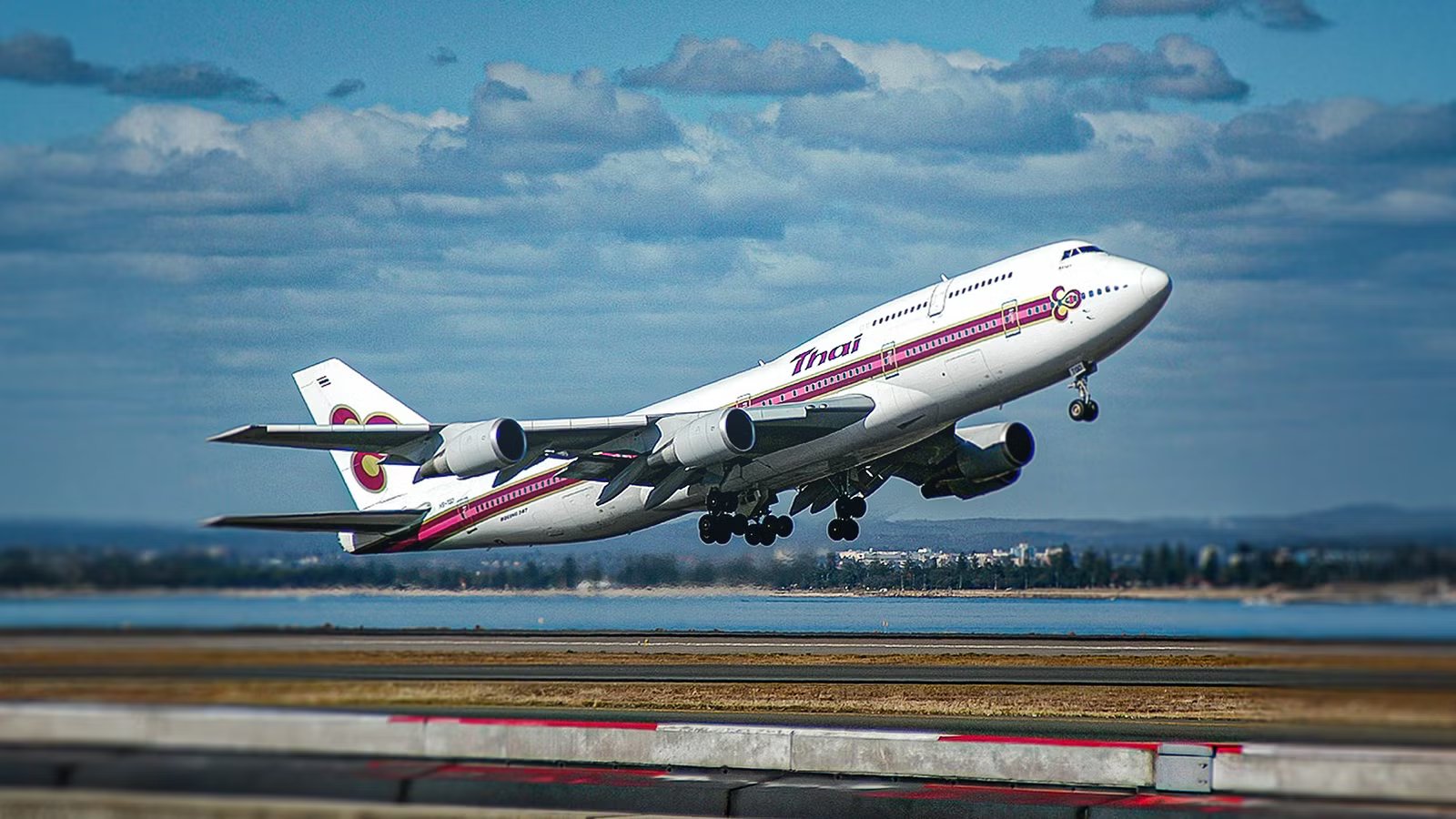
The Boeing 747-300 is often remembered as the shortest-lived member of the Boeing 747 family, sandwiched between the hugely successful 747-200 and the revolutionary 747-400. However, that history overlooks its most important achievement.
Indeed, the aircraft introduced the stretched upper deck that became the defining feature of every passenger 747 that followed. In many ways, the 747-300 was not a failed jumbo, but rather the aircraft that proved Boeing had underestimated what airlines actually wanted from the iconic hump. That creates an obvious question.
Specifically, if the stretched upper deck transformed the economics of the Boeing 747 and ultimately became the blueprint for the bestselling 747-400, why did the 747-300 itself sell only 81 aircraft? The answer lies in an unusual combination of innovation and compromise. Boeing created an aircraft with a dramatically better cabin, but paired it with technology that already belonged to an earlier generation.
Boeing Solved The 747’s Biggest Cabin Limitation Without Redesigning The Airplane

When the original Boeing 747 entered service in 1970, its upper deck was little more than a byproduct of the aircraft’s distinctive nose design. Because Boeing initially envisioned the 747 as a future freighter, the cockpit was positioned above the main deck so the nose could eventually swing open for cargo loading. The resulting ‘hump’ created a small upstairs lounge that quickly became one of commercial aviation’s most recognizable spaces, but it represented only a fraction of the aircraft’s total cabin.
By the late 1970s, airlines increasingly viewed the upper deck as valuable real estate rather than a novelty. Premium cabins were becoming more sophisticated, business travel was expanding, and operators wanted additional seats without redesigning the entire aircraft. Boeing’s answer was surprisingly simple. Instead of developing an all-new fuselage, engineers extended the upper deck by 23 feet 4 inches (7.11 meters), creating what became known as the Stretched Upper Deck.
The modification fundamentally changed the aircraft’s appearance. Earlier 747s featured a relatively short hump that ended just behind the wing root. The 747-300 extended that profile much farther aft, creating the silhouette most people now associate with a Boeing 747.
Just as importantly, Boeing abandoned the iconic spiral staircase connecting the two decks and replaced it with a straight staircase that occupied less cabin space and improved passenger flow. Those changes made the upper deck substantially more useful, but appearance alone does not convince airlines to buy a new aircraft. The real question was whether the larger upper deck actually improved the economics enough to justify replacing existing 747s.
The Stretched Upper Deck Delivered More Seats Without A Meaningful Weight Penalty

Airlines quickly discovered that the stretched upper deck was far more than an aesthetic improvement. According to Boeing’s analysis, as reported by Simple Flying in 2021, the redesign increased passenger capacity by approximately 10% while adding only about 2% to the aircraft’s operating empty weight. That translated into roughly a 5% reduction in fuel consumption per seat-mile, a significant gain for airlines operating long-haul routes where even small improvements could produce substantial savings.
The additional space also gave airlines greater flexibility in configuring their cabins. Some carriers installed extra premium seating on the enlarged upper deck, taking advantage of its quieter environment and exclusive feel. Others used the added floor area to increase total passenger capacity on high-demand leisure routes, allowing the aircraft to generate more revenue without requiring additional flight frequencies.
Unlike later 747 variants, the 747-300 achieved these gains without introducing major aerodynamic or structural changes. Boeing retained the basic airframe developed for the 747 Classic family while making only modest refinements that increased cruise speed from Mach 0.84 to Mach 0.85.
The real breakthrough was not a faster airplane, but one that extracted significantly more value from an existing design through smarter use of cabin space. The numbers made a compelling business case, and airlines noticed. Some carriers were so convinced by the economics that they chose not only to buy the new variant, but to modify aircraft they already owned. That raises an even more interesting question: if the stretched upper deck worked so well, why did Boeing build so few 747-300s?
Boeing Had Improved The Cabin, But Not The Technology Behind It

Wikimedia Commons | Simple Flying
The 747-300’s greatest strength also highlighted its biggest weakness. While passengers immediately noticed the larger upper deck, pilots and airline executives recognized that beneath the redesigned cabin was essentially an upgraded 747-200 Classic, like the jet shown above. Boeing had invested heavily in making the aircraft more attractive to travelers, but it stopped short of delivering the technological leap many airlines were beginning to expect from a new generation of widebody aircraft.
The cockpit remained largely unchanged from the earlier 747 Classic family. Flight crews still operated the aircraft using an analog instrument panel and a three-person flight deck, requiring a captain, first officer, and flight engineer. As noted by Ready For Takeoff, engine choices also remained familiar, with airlines selecting variants of the Pratt & Whitney JT9D, General Electric CF6, or Rolls-Royce RB211.
These were all proven powerplants, but ones that were increasingly being challenged by newer engine technology entering the market during the 1980s. The cabin represented Boeing’s clearest response yet to airline feedback, but the systems powering the aircraft reflected a philosophy developed more than a decade earlier.
Airlines certainly appreciated the additional seats and improved economics, yet many also recognized that another technological step would soon be necessary if the 747 was to remain competitive against increasingly efficient long-haul aircraft. This positioning explains why aviation historians often describe the 747-300 as a transitional variant rather than a true next-generation aircraft. It introduced the feature airlines wanted most, while postponing many of the technological upgrades Boeing was already developing.
In hindsight, the 747-300 almost resembles a large-scale demonstration project, proving one major concept before an even more ambitious redesign arrived. However, if Boeing already knew a more advanced 747 was on the horizon, it begs another question: why did airlines embrace the stretched upper deck so enthusiastically that some were willing to modify aircraft they already owned?
Airlines Proved Boeing Had Been Right About The Upper Deck All Along

The strongest endorsement of the 747-300 did not come from new aircraft orders. It came from airlines that decided the stretched upper deck was valuable enough to retrofit onto existing 747-200s. Among the most prominent examples were KLM Royal Dutch Airlines and UTA, both of which invested in converting portions of their 747-200 fleets with the extended upper deck rather than waiting exclusively for new aircraft deliveries.
That was an expensive undertaking requiring extensive structural modifications, yet the airlines concluded the additional premium seating and improved cabin flexibility justified the investment. It is difficult to find a stronger vote of confidence in an aircraft design than customers paying to rebuild airplanes they already own in order to replicate it.
Major 747-300 Operators | |
|---|---|
Airline | Total |
Singapore Airlines | 14 |
Japan Airlines | 13 |
Saudia | 10 |
Qantas | 6 |
Swissair | 5 |
The market also demonstrated that the 747-300’s customers were some of the world’s leading long-haul airlines. As detailed by Travel Update,  Singapore Airlines became the largest operator with 14 aircraft. Carriers generally deployed the aircraft on high-demand international routes where additional premium seating or greater passenger capacity translated directly into stronger revenue potential.
However, the production line told a different story. The 747-300 entered commercial service with Swissair in March 1983, but within only a few years, Boeing’s attention had shifted toward an aircraft that combined the stretched upper deck with a completely modern flight deck and substantially improved operating economics. Airlines had effectively shown Boeing which part of the 747-300 they valued most. The company’s next move was to redesign almost everything else around it.
The 747-400 Became Famous Because The 747-300 Had Already Proven The Formula

When the Boeing 747-400 entered service in 1988, it was easy to view it as an entirely new aircraft. In reality, Boeing had already learned one of its most valuable lessons from the 747-300. Airlines had shown that the stretched upper deck was not simply an attractive styling cue. It was a commercial advantage that generated more revenue, improved premium cabin flexibility, and lowered seat-mile costs without requiring a completely new fuselage.
The 747-400 therefore retained the stretched upper deck almost unchanged while modernizing nearly everything around it. Boeing introduced a two-pilot digital glass cockpit that eliminated the need for a flight engineer, reducing crew costs and simplifying flight deck operations. New, more efficient engine options, winglets, upgraded avionics, and aerodynamic refinements further improved the aircraft’s economics.
Rather than asking airlines to choose between a better cabin and new technology, the 747-400 delivered both in a single package. The market’s response reflected that combination. Boeing ultimately built 694 Boeing 747-400s, making it by far the most successful passenger variant of the 747 family. By comparison, production of the 747-300 ended after just 81 aircraft. Looking only at those figures might suggest the -300 was a commercial disappointment, but that interpretation misses its broader significance.
The aircraft that sold in relatively small numbers introduced the one design feature that became standard on the variant that sold almost nine times as many. The irony is difficult to ignore. The feature most passengers associate with the Boeing 747 is often credited to the 747-400, even though it first became a factory standard on the 747-300. As such, if the 747-300’s most important contribution was shaping every jumbo that followed, should it really be remembered as the forgotten member of the family?
The 747-300’s Real Legacy Is Written Into Every Modern Jumbo’s Profile

The  Boeing 747-300 occupies an unusual place in aviation history because its influence is greater than its production numbers suggest. It never became the flagship of the 747 family, nor did it usher in the technological revolution that came with the 747-400. Instead, it solved a practical problem that airlines had identified for years: the original upper deck simply was not making the best use of one of the aircraft’s most distinctive features.
The success of the stretched upper deck demonstrated that airlines valued additional premium cabin space enough to reshape the economics of the aircraft. That lesson extended beyond the 81 aircraft Boeing ultimately produced. Operators such as KLM and UTA invested in retrofitting older 747-200s with the stretched upper deck because the financial benefits outweighed the considerable cost of modifying an existing airframe.
Few design changes receive a stronger endorsement than customers voluntarily paying to replicate them across aircraft already in service. Looking back more than four decades later, the 747-300 can be seen as the aircraft that bridged two generations of jumbo jets. It preserved the proven systems and reliability of the 747 Classic while validating the cabin design that Boeing would carry into its most successful passenger variant.
Without the commercial proof provided by the 747-300, the 747-400 may have looked very different. Instead, Boeing entered the next chapter of the jumbo era with confidence that airlines had already chosen the silhouette they wanted. The 747-300 may not have become the best-selling jumbo, but it quietly defined what the world’s best-selling jumbo would become.