dailynewsnblog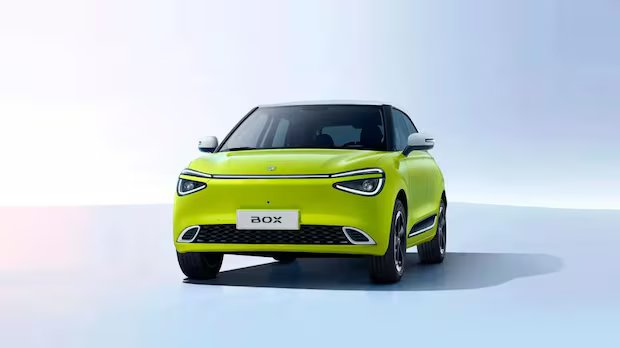
Dongfeng is China’s latest automaker to unveil its electric vehicle offering in Montreal’s Old Port, as Chinese EV manufacturers look to make their entry into the Canadian market.
Two of Dongfeng’s EV models, which are being showcased to media Wednesday afternoon, are currently undergoing the certification process required to be sold in Canada. The process includes demonstrating full compliance with Canadian motor vehicle safety and regulatory requirements.
One of the models, the BOX 01, is a compact EV. The other is the Vigo, an electric SUV. Both models will be priced under $35,000, according to Julie Mazorra Fernández. She’s the director of North World Industry, the designated Canadian distributor for the Chinese automaker.
“We want to provide Canadians with affordable vehicles,” Mazorra Fernández told CBC Wednesday morning.
The company’s goal, Mazora Fernández said, is to have these two models available sometime next year.

Reduced tariffs spark increased interest
In 2024, the Justin Trudeau government set a 100 per cent tariff on Chinese EVs. Prime Minister Mark Carney, following a trip to China in January, agreed to lower the tariff to 6.1 per cent.
Carney’s deal would allow the import of 49,000 Chinese EVs annually, with a maximum six-month quota of 24,500 cars. The plan is to increase that allowance to 70,000 cars over five years.
A clause in the agreement stipulates that half of the quota will be reserved for vehicles under $35,000 Cdn.
Data from Global Affairs Canada shows that more than 3,500 Chinese EVs made their Canadian debut in May, under the new tariff rate. The majority of those were reportedly Teslas made at its Shanghai factory.
The Lotus Eletre, manufactured by China’s auto giant Geely, was part of the first shipment of Chinese EVs to arrive in Canada. It was also shown off in Old Montreal during a media presentation earlier this month.

According to Benoit Charette, automotive columnist and editor in chief of L’Annuel de l’Automobile, the Lotus Eletre has a base price of $129,000 — “which obviously isn’t the kind of affordable vehicle consumers have been hoping for,” Charette said in an interview with Radio-Canada Wednesday morning.
Lotus reportedly plans to open a half dozen Canada dealerships this year — just to sell a few hundred cars, Lotus CEO Feng Qingfeng previously said in an interview.
China’s national champion BYD, now the world’s largest EV maker, is planning to open six dealerships in Canada, an advisory firm scouting locations for BYD told Reuters. BYD has also started compliance procedures to import two passenger cars to Canada, regulatory records show.
Why the focus on Quebec?
As for why Dongfeng is launching in Quebec, Charette believes it’s because the province is the most attractive market to electric vehicle makers.
“Consumers here are already familiar with electric vehicles. We also have inexpensive electricity, which makes EV ownership more appealing,” Charette said.
“There’s a high level of public awareness and acceptance of electric vehicles in Quebec, and Dongfeng knows that. So they’re beginning their Canadian expansion in a market that’s already receptive to these products.”
After its launch in Quebec, Charette said the Chinese automaker would expand into British Columbia — the second most attractive market for companies making electric vehicles — followed by Ontario.
Canada considered a gateway to the U.S. market
These Chinese automakers’ aggressive moves into Canada come despite the meager prospects for sales and profits here anytime soon.
Canada is believed to offer something far more valuable, though: The perfect beachhead for what many industry experts view as the inevitable invasion of Chinese cars into the United States, despite current U.S. policies effectively banning them.
Canada offers more than proximity to advance Chinese automakers’ U.S. ambitions. Unlike Mexico, where cheaper cars rule, Canada’s car market is almost identical to the United States in consumer tastes and industry regulations.
“Canada is the practice run for the U.S.,” Robert Kerwal, director of automotive solutions at JD Power Canada, told Reuters in June.
The only major difference is market size: 1.9 million cars sold last year in Canada, compared to more than 16 million in the United States.
Trump administration officials have said that Canada would regret its deal with China, and said the cars would not be allowed to enter the United States.
Impact on consumers
Canada’s big three automakers — Ford, General Motors and Stellantis — said in an earlier statement that the entry of these EVs “undermines” the domestic auto industry and opens Canadians up to “cyber risks.”
“China does not adhere to many of the rules-based trade and investment principles that have been fundamental to the success of the auto industry and the Canadian economy,” Brian Kingston, president and CEO of the Canadian Vehicle Manufacturers Association, said last month.
Meanwhile, industry experts believe the lower-priced Chinese vehicles may force North American automakers to become more competitive with their prices.
“It will put pressure, so prices of electric vehicles start to come down,” said Daniel Breton, the president and CEO of Electric Mobility Canada, a national EV industry association.
“And that’s what we’re already starting to see. So I think this could be potentially good news for consumers.”
Details of where consumers will be able to buy Dongfeng’s two EVs are expected to come once their certification is complete.