dailynewsnblog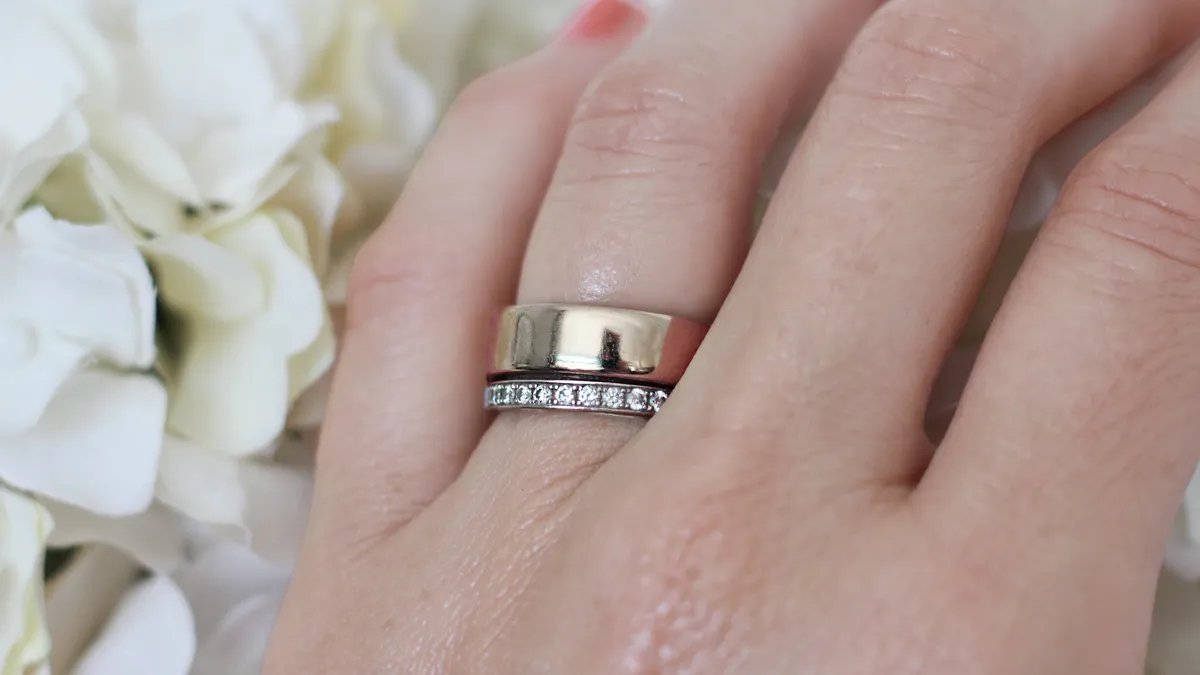

Pros
- Almost half the size of other smartwatches
- Light and comfortable to wear 24/7
- Better scratch resistance
- Eight-day battery life
- Simple interface that flags when something needs attention
Cons
- $400 starting price ($50 more than Gen 4)
- Requires a $6 monthly subscription to unlock its best features
- App can be too quiet about things like low battery warnings
Editor’s Note: The Oura Ring 5 is the best smart ring we’ve tested. Its slimmer, jewelry-like design makes it more comfortable to wear around the clock, while its intuitive app and robust health features, including illness detection and menstrual cycle tracking, help it stand out from the competition. That balance of comfort, design and long-term health insights has earned it a CNET Editors’ Choice Award for 2026.
I’ve been wearing the Oura Ring 5 for over a month now and have no plans to take it off. In fact, half the time I don’t even notice it on my finger. It’s comfortable enough that it doesn’t get in the way and discreet enough to pass as jewelry.
For as long as I’ve been reviewing wearables, companies have chased the same goal: make the technology disappear. The Oura Ring 5 is the closest any wearable has come to achieving that goal without sacrificing function.
The smaller design is what first grabs your attention, but its upgraded sensors, tougher finish and longer battery life are what make this one of the few year-over-year wearable upgrades I’d confidently recommend, especially for women.
If you’ve already decided a smart ring fits your lifestyle, place your order now. The Oura Ring 5 is the best one I’ve tested.
But at $400 (starting price) plus a $6 monthly membership, it’s also a pricey leap of faith if you’re still deciding whether you even need a smart ring in the first place. That’s perhaps the harder question.
Gold Oura Ring 5.
Making the case for a smart ring
Smart rings aren’t smartwatch competitors so much as complements. They solve a different problem. A smartwatch is better for workouts, GPS navigation, notifications and glanceable information. But it’s also high maintenance. It needs to be charged daily, and it buzzes or pings you frequently. It’s also bulky enough that many people, myself included, skip wearing one to bed or on a date, which means it misses some of the most valuable health data.
A smart ring trades the real-time feedback for consistency. You wear it because there’s almost never a reason to take it off. The week-plus battery life, combined with a design that’s easy to forget you’re wearing it, makes 24/7 tracking feel effortless. And that constant connection is what makes it possible to spot long-term health trends and early signs of illness.
After a month of testing, I think Oura finally got the formula right — and why some people might be better off saving some money with the Oura Ring 4, which is still available, instead.
The Oura Ring 5 is one of the few pieces of tech I own that could genuinely pass as jewelry.
Finding the right fit
Getting the sizing before you buy it is key. Even if you know your ring size — or owned a previous model — I recommend ordering the sizing kit. The new, slimmer Oura Ring 5 sits differently on your finger, and the fit can vary throughout the day.
The kit has plastic versions of each size that you can wear for 24 hours. If, like me, your fingers change sizes overnight, this is important. One size I tested felt perfect during the day but ended up too snug by morning.
It’s also a good chance to rethink placement. I used to wear the bulkier version on my middle finger, but the slimmer design is comfortable enough that I now wear it on my dominant hand’s ring finger — sometimes even swapping it in for my wedding band (but don’t tell my husband).
Design and durability: A win and an almost win
The fact that I have to hold my gold Oura Ring 5 under a bright light to spot any scratches tells you a lot about its durability. Even in dim light, my Ring 4, by comparison, looks like it got into a fight with a cat (and lost).
The Oura Ring 5 (top) is 40% smaller than the Oura Ring 4 (bottom) and more scratch resistant.
That’s not to say the Ring 5 is scratch-proof. After more than 30 days of wearing it 24/7, the ring has a few faint marks. But it’s a significant improvement in real-world use. I’ve scraped it against the concrete edge of a pool while swimming laps, knocked it against textured iron barbells during workouts and definitely not gone out of my way to keep it out of harm’s way.
The company says it improved the coating, but I suspect the smaller design deserves some of the credit too. Because the Ring 5 sits lower on my finger, it’s less likely to come into contact with weights and countertops than its chunkier predecessor, which is much thicker in height.
At 6mm wide and 2mm thick, the Oura Ring 5 is still larger than my actual wedding band, but it’s just as comfortable to wear and feels dramatically smaller than the other smart rings I’ve tested, like the Oura Ring 4 and Ultrahuman Ring Pro.
It’s also a subtler, more realistic shade of gold now: less costume jewelry, more symphony-night gold. Oura also added deep rose to its lineup, a rich copper-toned finish that joins the existing silver, black, brushed silver and stealth options in sizes 6 through 13. The catch is that most models (aside from the silver and black) will cost $100 more.
The App Is Where the Ring Comes to Life
You don’t wear an Oura Ring because it’s a ring. You wear it because of what happens after months of data collection.
Unlike my smartwatch, checking the Oura app isn’t part of my morning routine. I usually end up opening it at night while I’m procrastinating bedtime. That’s partly intentional and also because the app doesn’t send you a morning digest like other wearables I’ve tested.
Unless I’m sure I got a solid night’s sleep, I avoid checking my Readiness score in the morning. If it’s lower than I expected, that sets the tone for the rest of my day. The dashboard highlights metrics based on what’s most relevant at that specific time, but the key ones are sleep, readiness (how recovered my body is) and activity. The interface is clean enough that I rarely have to hunt for information, and if something deserves my attention, Oura surfaces it on the home screen (in red) before I even know to look.
The Oura Ring App (pictured with the Oura Ring 4) surfaces the most relevant information about your body at the top.
One of my favorite features is Symptom Radar, which looks for subtle changes across your temperature, heart rate, respiratory rate and other metrics that could suggest you’re getting sick and should take it easy. It’s the wearable equivalent of the nurturing parent asking, “Are you sure you’re OK to go to school today?” For those of us who gaslight ourselves into thinking we’re totally fine, it’s a welcome gut check. I haven’t been sick during this review period, but previous Oura rings have caught illnesses before I fully admitted to myself that something was off, even pausing my activity goals to encourage me to rest.
Symptom Radar has also expanded beyond illness detection into a broader set of features Oura now calls Health Radar, which I haven’t had a chance to test yet. These flag signs associated with sleep apnea, atrial fibrillation and elevated blood pressure trends. None are FDA-approved yet; they’re intended more as the kind of nudge that gets you to a doctor who can actually diagnose what’s going on. Oura has shared stories from owners who sought medical attention after repeated alerts, with some people later discovering serious conditions like lymphoma. These situations are anecdotal but a reminder that these features can sometimes prompt conversations people might not have otherwise had.
Oura Ring’s Symptom Radar flags signs of strain on the body and suggests recovery days.
Cycle tracking is another standout feature. The ring continuously monitors your body temperature and correlates subtle fluctuations with your cycle to pinpoint ovulation and estimate your fertile window. If you’re trying to better understand your cycle or track signs of menopause — or simply looking for an explanation for why this week’s workouts suddenly feel impossible — this feature is worth its weight in gold. It’s one of the best cycle trackers I’ve tested on any wearable, wrist or finger.
I also like Oura’s Heart Health section, which estimates your cardiovascular age. Plenty of wearables can surface your fitness level, but framing it as “your heart is eight years younger than you are” hits harder and gives you a tangible benchmark. Who doesn’t want to turn back the clock in at least one area of life? You can also dig into trends for blood oxygen, HRV, stress and respiratory rate if you like getting lost in your own data.
Oura Ring’s Cardiovascular Age measures heart health over time.
If you like to quantify everything, you’ll lose an hour exploring the Trends tab. If not, the app does a good job surfacing the handful of stats that actually need attention.
And if you have more time, you can strike up a conversation with Advisor, Oura’s built-in AI coach. To me, it feels like a nice bonus rather than a reason to buy the ring, as I’ve mostly used it the way I use ChatGPT or Claude, but with the advantage that it already knows my health history. I can ask: “What does my sleep debt mean, and how do I pay it back?” and it does a surprisingly good job of contextualizing health jargon. But I forget it’s there since it’s tucked into a corner and doesn’t surface as much as Google’s health coach or even Whoop’s AI coach, which is not necessarily a bad thing.
Testing accuracy on the Oura Ring 5
One change I was especially curious to test was the Ring 5’s redesigned sensor array. To shave off 40% of its body, Oura reduced the number of optical signal pathways from 18 to 12. On paper, that sounds like a step backward, but Oura says the tradeoff is brighter, more powerful LEDs that produce a stronger signal, particularly during movement and across different skin tones.
Sleep tracking lines up with my bedtime habits (for the most part), consistently matching when I actually fell asleep, how long I slept and those inevitable middle-of-the-night wake-ups, courtesy of having three kids. Though it occasionally logged phantom naps when I was parked on the couch doomscrolling, that might be less of a bug and more of a shaming strategy. (The jury’s still out.)
One feature I didn’t expect to appreciate is Chronotype. It analyzes your sleep habits and recommends a bedtime to match your body’s patterns. Apparently, I’m a night owl, surprising no one. Instead of trying to convince me to become one of those mythical 10 p.m.-to-6 a.m. people, Oura said, “Midnight is fine as long as you still get seven hours.”
Heart rate was one area I watched particularly closely. During a four-mile run, the Ring 5 finished just two beats below my Apple Watch’s average heart rate and four beats below its peak. Considering the Apple Watch tracks almost identically to a Polar chest strap in my previous testing, that’s no small feat.
But workout summaries only show part of the picture. Without easy access to minute-by-minute heart rate data — or the ability to see it during a workout — it’s impossible to know whether it tracked that closely throughout the run or simply landed on similar averages. If you’re training by heart rate zones, you’ll still want a smartwatch or chest strap.
Automatic workout detection has improved, although it’s still learning your habits. Early in my testing, the Ring 5 completely ignored a 30-minute Pilates session where my heart rate reached 138 bpm yet somehow credited me for two separate “housework” workouts that involved cleaning up after my kids. After weeks of manually tagging Pilates sessions, though, it now identifies them automatically about 90% of the time.
Should You Buy the Oura Ring 5?
The Oura Ring 5 is the best smart ring you can buy. The design, the sensors, the battery life, the app — nothing else in the category comes close. At $400 plus a $6 monthly membership, it’s expensive, but I think it’s worth it.
If you’re still on the fence about smart rings in general, the Ring 5 makes a compelling case, but requires being honest with yourself. Its biggest strength is how little it asks of you. You wear it, forget about it and let it collect data for days at a time.
The full lineup of Oura Ring 5 options with two new finishes (a lighter gold and deep rose).
But the ring alone can’t make you change your habits. You still have to open the app and decide what to do with that information. Those doomscrolling nights aren’t going to fix themselves.
For women, especially, this is about as easy of a decision as it gets when it comes to smart rings. The slimmer, lighter design feels like jewelry instead of tech, and the cycle tracking is one of the strongest reasons to buy an Oura in the first place. Once you get used to wearing something this comfortable, it’s hard to go back.
For men (or anyone who prefers a more substantial ring), the Oura Ring 4 is a solid deal. It’s also getting many of the same software improvements, including Health Radar, as well as improved automatic workout detection and live workout tracking, but at a discounted price ($50 less depending on retailer).