dailynewsnblog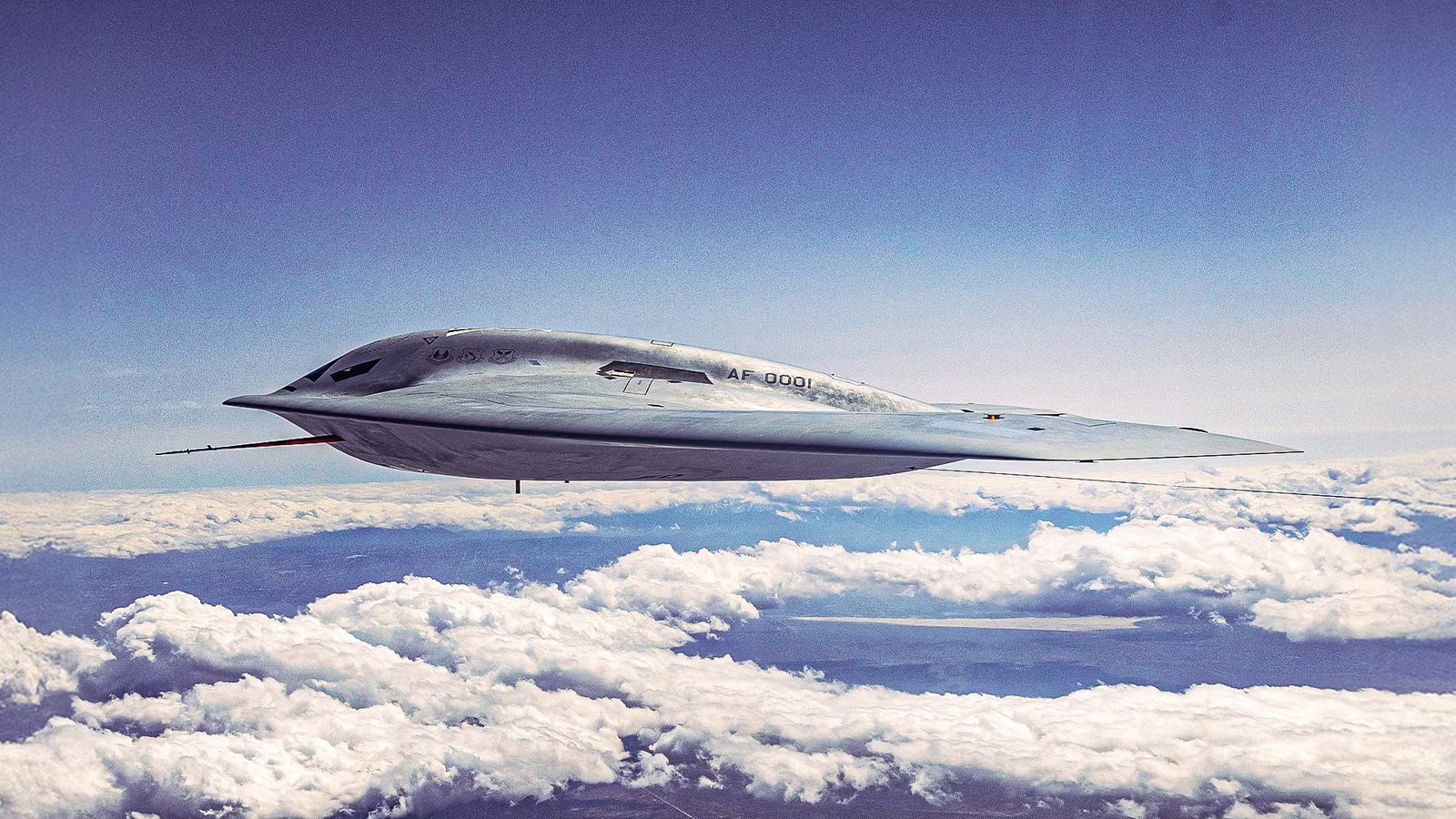
Commander of the US Navy Pacific Command, Admiral Samuel Paparo, has expressed support for the US Air Force to drastically increase its procurement plans for the Northrop Grumman B-21 Raider. The initial program goal was to build 100 of the world’s first sixth-generation stealth bombers. Air Force leaders and lawmakers are already pushing to increase that number up to at least 145, with other advocates seeking 185. Now, the Navy is championing a fleet of 200 to strengthen the combined-arms strategy that makes joint operations between the different US service branches and regional allies.
As the People’s Republic of China expands its development of hypersonic missile technology and next-gen stealth aircraft, the US Navy’s carrier strike groups are exposed to many more advanced threats in the Pacific. Increasing the Air Force Global Strike Command’s fleet of flying-wing stealth bombers enables the two services to conduct joint operations more effectively in a contested environment. The B-21 is a powerful tool for both services as both a deterrent to aggression and a virtually unstoppable air penetration platform if hostilities break out.
B-21: The Ultimate Stealth Bomber

The B-21 Raider represents more than just an iterative improvement on its predecessor, the B-2 Spirit, but a major step forward in stealth technology and battlefield performance across the board. The B-21 was made to be more than just a stealthier plan; it is also a much more rugged and reliable airplane that requires far less ‘white glove’ care. Still, the plane has been built with multispectral stealth technology that surpasses any other aircraft ever made.
The B-21 accomplishes major improvements in both stealth and readiness thanks to its ‘baked-in’ radar-absorbent material. The RAM coating on the Raider is not a surface-level paint application as on the B-2 and all preceding stealth aircraft, but rather co-cured with the composite materials that make up its skin. At the same time, the plane is actually smaller, which both reduces its complexity and makes all of its signatures smaller across the spectrum, including radar, electromagnetic, thermal, and visual.
The fact that the B-21 is smaller is a crucial element of making the plane a superior platform under the Air Force’s new focus on agile combat employment doctrine. It has two fewer engines, which makes it stealthier, cheaper, and easier to maintain, and its smaller footprint also allows it to fit into standard infrastructure built for fighter jets during the Cold War. The Raider can access airbases around the world that the B-2 could not, and just as importantly, it can be parked outside in all weather without fear of any critical malfunctions.
The one and only B-2 ever lost in service crashed after takeoff from Andersen Air Force Base in Guam after being subjected to monsoon rains overnight. The B-21 eliminates this vulnerability, which allows it to deploy to virtually any airfield in the Pacific that a fighter jet can land at. Not only does this make it a more useful tool for combat leaders, but it also makes it a more lethal platform and a more unpredictable adversary for the enemy. All of these qualities make it an excellent support platform for the US Navy forces in the Indo-Pacific.
The Living Legacy Of Doolittle’s Raiders

The B-21’s presence in the Pacific as a major strategic asset is a fitting mission that reflects its storied namesake. Looking back at joint operations between the US Air Force and US Navy, there is none more famous than the daring Doolittle Raid that took place at the outbreak of World War II. In the wake of the attacks on Pearl Harbor, a group of exceptionally skilled and brave US Army Air Corps crews flew their stripped-down B-25 Mitchell bombers off the decks of USN aircraft carriers to strike back at the heart of their foe.
Fast-forward to 2026, the threat has emerged in the East China Sea where Chengdu J-20 Mighty Dragon fighters of the People’s Liberation Army Air Force patrol overhead new aircraft carriers built for the PLA Navy. American and allied forces are under more pressure than ever as China rolls out new carrier-capable stealth fighters and continues to make iterative improvements to its long-range anti-ship missiles.
In the calamitous event that hostilities were to break out in the region between the major actors, the B-21 would be the key to delivering a strike at the heart of the enemy just as Doolittle’s Raiders did so many decades before. The Navy’s organic Anti-Access/Area-Denial is enhanced through collaborative engagement with the USAF’s B-21, as Air & Space Forces magazine covered. With a path cleared by the Raider, the Navy’s combined forces of surface, subsurface, and aviation units would be able to perform their missions free from the danger of advanced surface-to-air threats.
Stopping The Carrier Killers With The B-21

China has spent years building up its integrated air defense systems and long-range anti-ship missile batteries, including land-based DF-21D and DF-26 ballistic missiles. The range of these weapon systems is beyond the reach of most Navy weapons platforms. Simultaneously, the PLA relocates missile launchers periodically to avoid continuous tracking by space-based assets. This is where the B-21 comes in. The Raider is undetectable, completely undetectable to virtually all passive and active targeting systems across the spectrum.
While a satellite may be predictable and a submarine is dependent on targeting coordinates from other assets, the Raider can penetrate IADS, find the ‘carrier killer’ missiles, and not only strike on its own, but relay more targets back to joint forces over a data link. A single Raider may only carry a payload of 20,000 pounds (9,100 kg), but by acting as a ‘mothership,’ the magazine depth of the B-21 is only limited by the arsenal of every other joint platform in range.
Functioning as the ‘quarterback’ in the battlefield ‘kill web,’ the B-21 can feed data back to the Navy’s ships and submarines, which allows them to strike targets with long-range cruise missiles. The 6,000 nautical mile (11,000 km) range of the Raider allows it to take off from a base thousands of miles away from its target and penetrate deep behind enemy lines undetected. It also allows it to loiter over contested airspace for extended periods of time and to provide targeting data to joint forces.
Before even addressing the high threat level presented by weapons on the coast of China’s mainland, the South China Sea features heavily defended chokepoints around island chains. Every vessel in the Navy’s Pacific fleet is enhanced by teaming up with the B-21 in the event of a near-peer adversary conflict. The weapon of choice on USN Virginia-class fast-attack submarines or Arleigh Burke-class destroyers is Tomahawk cruise missiles or RIM-174 Standard Extended Range Missiles (SM-6). The B-21 provides terminal guidance, allowing the Navy to sink enemy fleets from hundreds of miles beyond the reach of PLA weapons.
Eye In The Sky: Persistent Stealth Maritime Patrol

The Carrier Strike Group relies heavily on its sensors to defend against long-range anti-ship ballistic missiles and cruise missiles. However, the curved horizon limits a ship’s radar, and turning on shipboard radars reveals the carrier’s exact position. The Raider also enhances combined-arms tactics by helping the CSG find contacts through its passive sensors or, when necessary, using its highly sensitive Active Electronically Scanned Array radar.
The B-21 serves as a flying data node for the Marine Air-Ground Task Force, just as it does for the CSG. Under modern naval doctrines like Expeditionary Advanced Base Operations, US Marines and Army multi-domain task forces scatter across small, austere islands to set up mobile anti-ship missile sites, like NMESIS or HIMARS. These troops on the ground are essentially blind without external intelligence.
In advance of an amphibious landing, the Raider can identify ground targets like hidden enemy radar sites, mobile surface-to-air missile launchers, and coastal defense artillery. Once ashore, the B-21 can also help garrisoned forces strike against naval threats. A Marine unit on a remote island can fire an anti-ship missile at a Chinese destroyer that is completely invisible to the Marines’ own ground radars, guided entirely by the B-21 loitering overhead.
Bottling Up The Enemy Fleet: The B-21’s Anti-Ship Arsenal

In a shooting battle, knowing exactly where the adversary’s surface fleets and submarines are located is half the battle. The B-21 can loiter at high altitudes deep inside contested maritime zones for hours. It does this without needing the constant, vulnerable aerial refueling that shorter-range fighters require. Instead of broadcasting active radar signals that would give away its position, the B-21 uses highly advanced electronic warfare sensors to ‘sniff’ the battlespace.
Leveraging its ‘god’s eye view’ over the battlefield, the B-21 Raider serves as a massive airborne magazine for the US military’s most advanced anti-ship munitions. This allows the USN’s surface fleet to control the open waters of the South China Sea, protecting international shipping lanes and enabling amphibious operations.
A B-21 loaded with AGM-158C Long-Range Anti-Ship Missiles can deploy semi-autonomous cruise missiles that do not rely on GPS or active radar emissions that could alert the target. The missiles use thermal imaging to target the engine room of an enemy vessel and strike its most vulnerable part. A flight of B-21s can launch a massive, coordinated salvo of LRASMs from stand-off ranges, overwhelming a Chinese Carrier Strike Group’s air defense systems through sheer volume and stealth.
The Raider can also carry the Navy’s next-generation Quickstrike-ER (Extended Range) winged smart mines to deploy near ports like Hainan Island, and where Navy surface ships cannot get close enough to lay mines safely. Flying at high altitude, a single B-21 can drop dozens of these precision-guided mines from long distances into strategic chokepoints, straits, and harbor entrances. These stealthily deployed minefields bottle up enemy warships and submarines inside their ports.
The Raider can also be armed with the AGM-158B Joint Air-to-Surface Standoff Missile or GBU-53/B StormBreaker Smart Bomb and is slated to receive hypersonic missiles in the future. The JASSM-ER is much like the LRASM but optimized for land targets like fortified dry docks, naval command bunkers, port facilities, and pier-side warships. While the StormBreaker is effective against targets like swarms of enemy coastal patrol boats or landing craft. Meanwhile, its modular open systems architecture will allow it to quickly integrate hypersonic missiles when they become available, as well as any other future ordnance created to counter emerging threats.