dailynewsnblog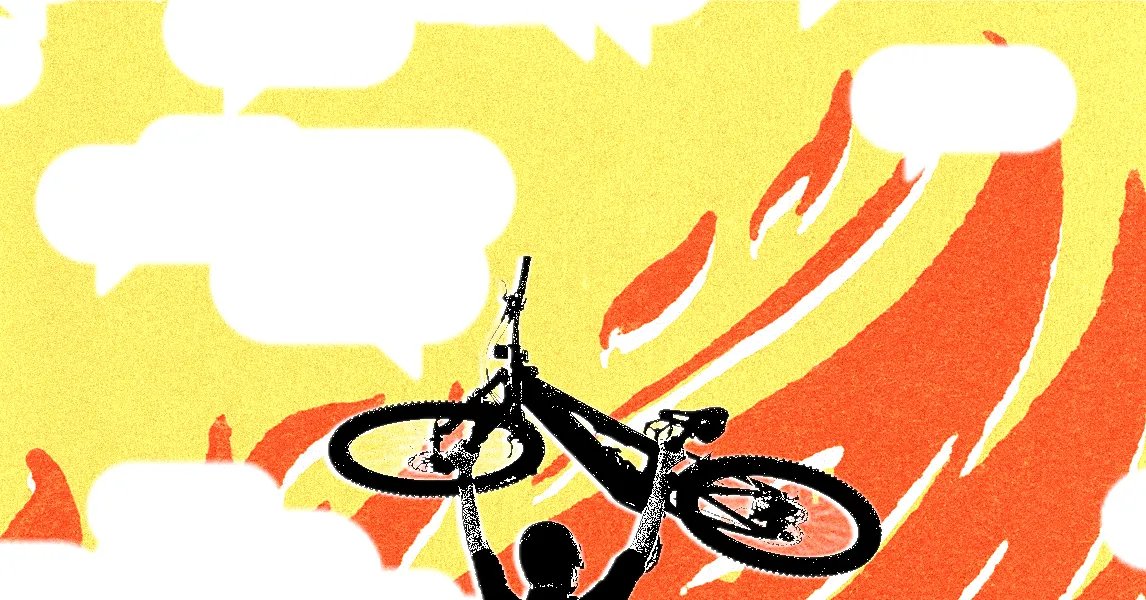
A few months ago, my fiancée and I splurged on a pair of ebikes. We live in an especially hilly area of Atlanta, which is an especially hilly city, and we’d both just gotten bonuses at work, making the nearly $2,000 per bike feel, for a moment, digestible.
We placed our orders online, and days later, my fiancée’s beautiful, feature-rich bike arrived at our door. Mine, bought separately from a different retailer, was delayed, then delayed again, and again.
Finally, one Wednesday evening, I got a text from FedEx confirming that my bike had been delivered to our address and signed for. This seemed impossible, considering that when the text arrived, I was standing in my kitchen, bicycle-less, air-frying a batch of chicken thighs.
I checked outside our apartment; my package wasn’t there. So, I checked my order confirmation, only to learn the bike had been signed for by someone with the mysterious initials “M.M.,” which don’t match those of myself, my fiancée, or anyone in our building. Whether it was stolen, misplaced, or delivered to the wrong address didn’t matter as much as finding a solution. I set out to do that the following day by calling FedEx’s customer service line for help.
What followed was a monthslong descent into the bowels of customer service hell, during which I spent hours in virtual, chatbot-governed waiting rooms—with FedEx, the bicycle company, my bank, my credit card company, and even my local police department—desperately trying to find a real, living person who would speak to me, let alone solve my $2,000 problem.
The New “Sludge”
Perhaps the strangest thing about my situation is how incredibly normal it has become. In recent years, corporations have employed artificial intelligence with a particular verve in their customer service arms, often at the cost of human employees.
In a survey of customer service leaders published in April, 31 percent said they have already reduced or are planning to reduce headcount due to AI adoption. A majority of the surveyed leaders say they are shifting their human agents into new roles or adding new tasks to their workload rather than simply laying them off.
Some leaders have been more brazen, though. Verizon CEO Dan Schulman recently told Bloomberg that AI will likely replace a “large percentage” of the company’s customer service work, noting that it’s one of the business sectors most exposed to changes brought on by the technology.
For consumers like myself, this has led to a less human, more acute version of the demoralizing wait times, on-hold music, and non-answers that have characterized bad customer service for decades. What’s more, these systems are sometimes employed intentionally, via an industry tactic known as “sludge,” in an attempt to discourage customers seeking resolution.
As Ryan Hamilton, a marketing professor and consumer psychology researcher at Emory University, points out, AI has simply given sludge a new face.
“Sludge existed before AI,” Hamilton says. “But AI, like with everything else, has just sort of ramped up the dystopian nature of it.”
Whether it’s due to organically bad experiences, intentional sludge, or some combination of both, it’s clear that shoppers are not happy with the state of AI-led customer service. In a report published in May and featuring consumers from the US, UK, and Canada, 59 percent said they were frustrated with AI customer service agents. Meanwhile, 85 percent said they’d prefer to speak with a real person.
My Personal Chatbot Hell
When my ebike went missing, nearly every phone call led me to a chatbot, with FedEx’s AI agents often ignoring my requests to speak with a human representative.
Even my local police department made the dilemma more inhuman. When I called them to file a missing property report, I was prompted to leave my information with a chatbot and wait for an officer to contact me back.