dailynewsnblog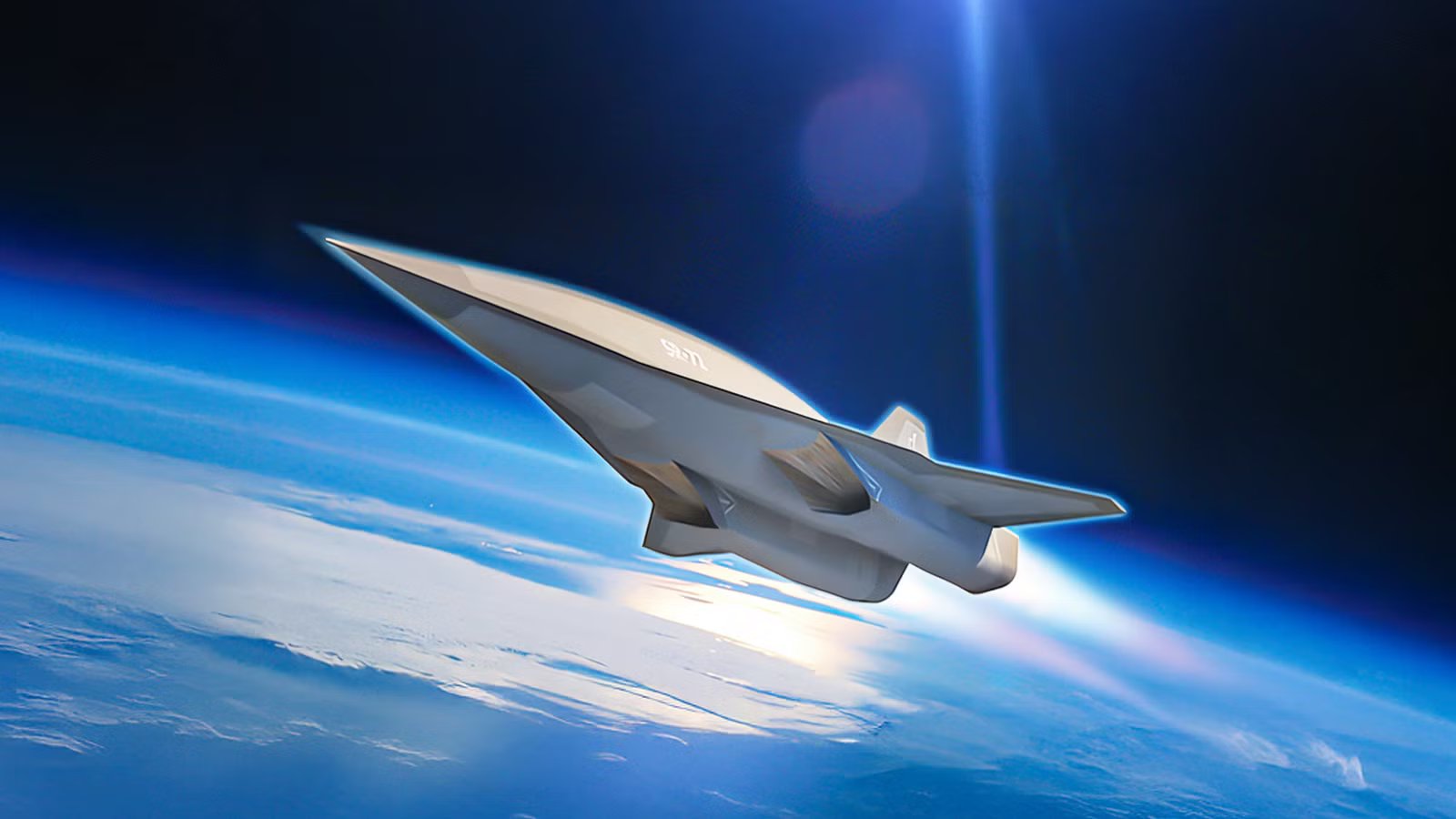
The Lockheed SR-71 Blackbird was a marvel of Cold War engineering, and to the perplexity and dismay of many, it was retired in 1989 (temporarily) and 1998 (permanently) without a direct replacement. Many enthusiasts were happy when Lockheed Martin publicly unveiled the SR-72 “Son of Blackbird” spiritual successor program in 2013, before the program went dark again. It’s now 2026, and the aircraft is not yet known to have flown.
To understand these aircraft, it is important to know some of the backstory and the missions they are (or were) intended to fill. It is also not possible to understand these aircraft without also understanding something of the budgetary realities that the Air Force must contend with. It should be remembered that the best solution for the Air Force is not necessarily the most capable platform. Affordability, maintenance, lead times, geopolitical realities, industrial concerns, and more are also often pivotal concerns.
The SR-71: A Pre-Satellite Platform

As the US and USSR resigned themselves to the Cold War, the US was left largely blind as to what was happening within the USSR. The Soviet Union had largely closed its borders, and in some cases, the best images the US had of parts of the western parts of the country were WWII German aerial photographs. The US developed the high-altitude Lockheed U-2 spy plane to fly out of reach of interceptor fighter jets and map the interior of the country.
But the development of rocket technology saw the USSR develop interceptor missiles. This rendered the U-2 vulnerable at 70,000 feet (21,330 meters), something confirmed in 1960 and 1962 when they were downed by missiles. The US raced to develop the SR-71 that could overcome the new ground-based threats. The SR-71 was engineered to fly at around 80,000 feet (24,400 meters) at Mach 3+ with an early reduced radar cross-section.
Over 4,000 missiles are said to have been fired at the jet over the course of its career, with the aircraft outrunning all of them and never being intercepted. But the exquisite engineering, the expense, its extreme operating environment, and more proved to be its undoing.
Overengineered For A Bygone Era

As the Cold War wore on, the rocket technology that had led to the development of interceptor missiles also allowed putting other payloads in space, including astronauts and satellites. Satellites come with a range of advantages and disadvantages. By the late 1980s and 1990s, they could not fully fill the role of the SR-71, but they could fill much of it, and reduced the need for the expensive manned spy plane.
At the same time (late 1980s), relations with the Soviet Union were thawing, and by the 1990s, the USSR was gone. The tense geopolitical environment of the Cold War was no more, and with it, some of the imperative for spy platforms. Another factor was that flying manned aircraft over sovereign airspace is geopolitically sensitive, but orbiting satellites is not. The usefulness of the SR-72 eroded relative to their cost as satellites, updated U-2s, and other intelligence assets assumed more of its missions.
At this time, the SR-71 was aging, had not been modernized, was expensive to maintain, and had become mixed up in interdepartmental politics in Washington. The “peace dividend” following the collapse of the USSR also meant the Air Force needed to learn to be more frugal. Updated Lockheed U-2 Dragon Ladies produced in the 1980s could handle spy roles in non-contested airspace, while satellites, various spy drones, and signals intelligence could fill more of the role in other areas. The SR-71 started to look like a relic of a bygone era.
The Niche Role For SR-72

The SR-71 hails from a time when “you can run, but you can’t hide.” This was a time when increased speed was seen as a logical part of the next aircraft iteration. The B-52 bomber was faster than the B-36, the B-58 was faster than the B-52, and the XB-70 was faster than the B-58. But increasingly capable surface-to-air missiles, interceptor aircraft, and improved radar networks fundamentally changed the equation. From the 1970s to the present, the US has looked to stealth as the way forward, a sort of reversed “you can’t run, but you can hide.”
Fighter jets, bombers, and spy platforms have seen high-mach de-prioritized in favor of stealth and range. Some, like the B-2 and B-21, are subsonic successors to supersonic predecessors. But since the 2010s, there has been some interest in bringing back supersonic and developing hypersonic platforms for some niche roles.
Lockheed Martin Skunk Works’ SR-72 timeline (per Aviation Week, etc.) | |
|---|---|
2007 | First media reporting |
2013 | Lockheed comes public |
2017-2018 | Expected demonstrator period passes without known demonstrator |
2021 | Public information mostly dries up |
2022 | Top Gun: Maverick movie starring “Darkstar” |
2024 | Aviation Week’s report |
2025-2026 | No new information |
The most famous high-mach example is with missile technology, developing hypersonic missiles and glide vehicles for high-value time-sensitive targets. Meanwhile, Hermeus believes there is a role for high-mach unmanned combat aircraft and is developing the supersonic Quarterhorse and plans to eventually develop a hypersonic version. Besides its stealthy subsonic spy platforms (e.g., RQ-170), Lockheed believes/believed there is/was a niche for a hypersonic spy aircraft (e.g., SR-72).
Limitations Of Satellites

Many defense analysts argue that satellites are core to future ISR roles as well as cueing, communications, and other roles. In 2025, the Air Force went so far as to announce the cancellation of the E-7 Wedgetail A&EWCs aircraft program to replace its E-3 Sentries, saying it would move capabilities into space. This decision was reversed in 2026, but it still points to the trend of greater reliance on space.
The trend accelerated with the establishment of the US Space Force as an independent service branch in 2019. But space does come with issues. One fear is that it is putting “eggs in one basket,” where if an adversary can find a way to effectively counter satellites, then alternative ISR platforms become imperative.
Other issues for satellites compared with aircraft include predictable orbital paths, limited ability to rapidly change observation angles or loiter over an area, and vulnerability to anti-satellite weapons. Additionally, they have to increasingly contend with contested space infrastructure. Aircraft can be retasked quickly and upgraded more readily, and operate below cloud cover. That said, the proliferation of thousands of small satellites and the ability to peer through clouds (Synthetic Aperture Radar or SAR) mitigates this somewhat.
Last Major SR-72 Update Was In 2024

In 2013, Lockheed Martin announced the SR-72 “Son of Blackbird” as a hypersonic unmanned spiritual successor to the SR-71. The project was being self-funded by Lockheed and was intended to be a Mach 6+ spy plane with strike capabilities. The 2022 movie, Top Gun: Maverick, is believed to have shown a fictionalized version of the aircraft (seen at the start of the movie).
But after going public in 2013, Lockheed soon took the project dark again and scrubbed public material about the aircraft from its website. For the last few years, there has been little, if any, credible reporting on the project. There was a report by Aviation Week in July 2024 that documents suggested Lockheed was preparing facilities to assemble an aircraft that matches the SR-72 description.
At the time, Sandboxx News mused, “But in this modern era of bureaucratic oversight and extended design cycles, it seems unlikely that Lockheed Martin would have gone all-in on fielding the SR-72 without some pretty conclusive evidence from the Air Force that it’d eventually step in and foot the bill. The firm’s financial records seem to substantiate that likelihood.” Since then, there has been little additional credible reporting on the program, leaving its status largely a matter of speculation.
Catch what other flight trackers miss
Emergency squawks, holds, NOTAMs — live signals, no signup.
Open tracker
Catch what other flight trackers miss
Emergency squawks, holds, NOTAMs — live signals, no signup.
Open tracker
Maybe Son Of Blackbird Has Flown, Maybe Canceled

Coming back to the title question, why hasn’t the SR-72 flown yet? In truth, this question is loaded and assumes more than is publicly known. The project is dark, if it exists at all. There is no way to be fully confident that the SR-72 program continues to exist as a serious project at Skunk Works. Even less can be said about how much such a program, if it exists, still resembles the renders and aspirational announcements of Lockheed in the 2010s.
The US Air Force has a history of developing secret aircraft, including the Lockheed U-2, the Lockheed SR-71 (A-12 even more so), the F-117 Nighthawk, and the RQ-170. These aircraft flew for years before being publicly acknowledged. More recently, the Air Force is widely rumored to have a massive spy UAV called the RQ-180, while the NGAD demonstrators that flew in 2019/2020 have still not been officially seen in public. In mid-2026, the Project Fear YouTube channel published a video of a mysterious new aircraft flying in Area 51 that could have been an NGAD demonstrator, F-47 prototype, or something else.
So why hasn’t the SR-72 flown? Perhaps it has. Perhaps it is still in development, has entered limited service, has been canceled, or has evolved into something substantially different from the concept first revealed in 2013. The unsatisfying reality is that there is not enough public information to know. Likewise, it is impossible to determine whether the facility preparations reported by Aviation Week in 2024 related to the SR-72 specifically, another classified program, or something else entirely.