dailynewsnblog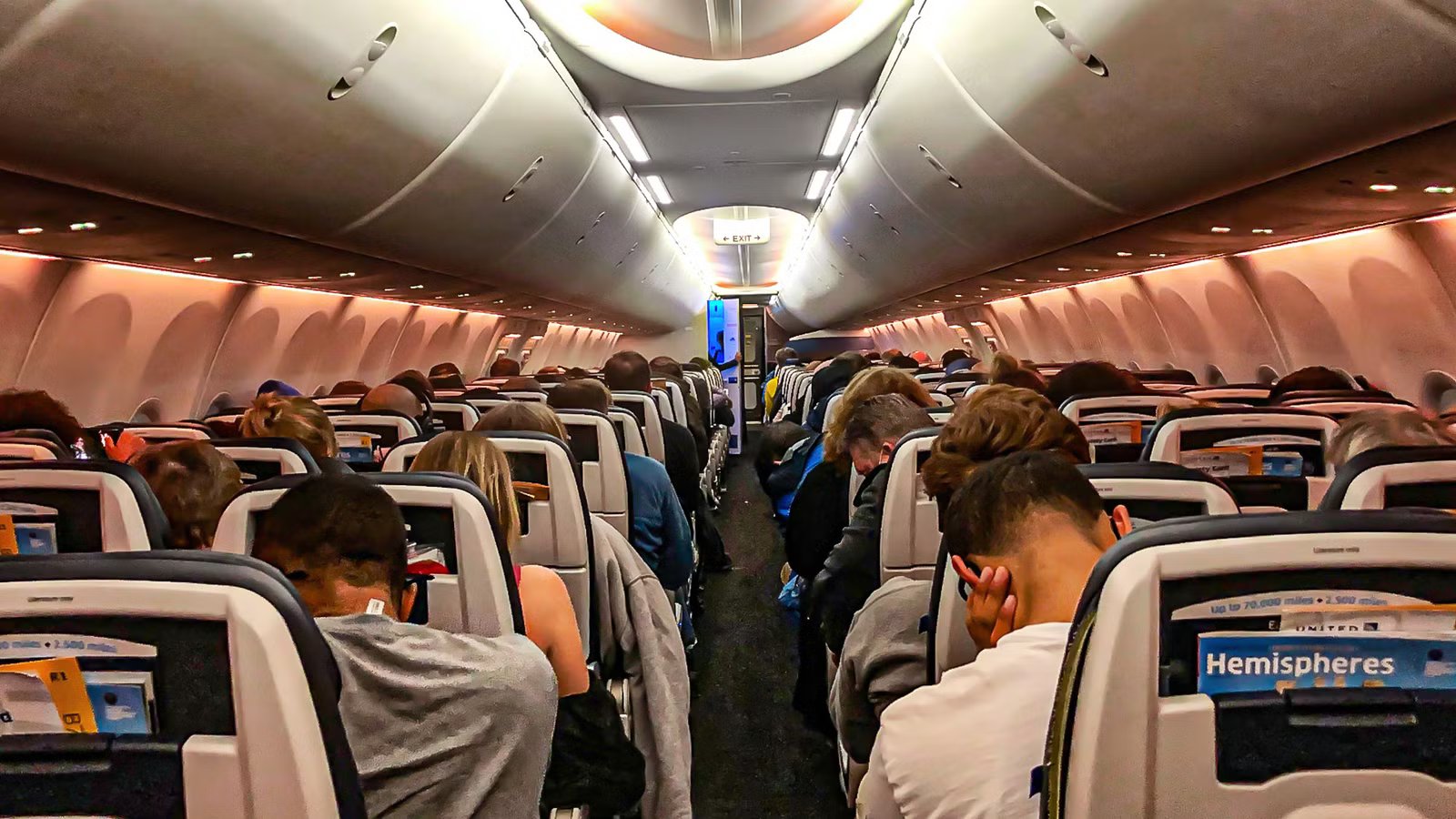
Cruising over the continental United States in perfectly tranquil air, you may notice that even though the cabin is completely still, the illuminated seatbelt sign continues to beam overhead, keeping hundreds of passengers trapped in their seats for hours on end. The seatbelt sign offers a small insight into how each airline weighs liability, trauma, and crew authority against passenger comfort. This prolonged cabin lockdown has become a routine reality for domestic passengers, but it is not replicated in other parts of the world.
Major network operators across North America maintain an ultra-conservative grip on the cabin, while global counterparts like Ryanair,  Lufthansa, and
  Singapore Airlines operate under entirely distinct philosophies, frequently dropping the restriction within mere minutes of departure. So why are US airlines different, and is there something more to this seemingly small difference?
Differences In Legal Abilities

The simple explanation for this continuous cabin restriction lies deep within the American civil tort system, where an active seatbelt sign is an explicit corporate legal shield. By keeping the light illuminated, corporate legal teams move the entire burden of personal injury liability from the airline company to the individual passenger. If an unbuckled traveler is unexpectedly caught in a sudden patch of rough air, an illuminated sign allows corporate attorneys to argue that the passenger was explicitly warned, successfully defending the business from catastrophic financial exposure. This defensive strategy operates cleanly in the courtroom, but it immediately raises the question of how these legal anxieties alter actual pilot behavior in real time.
Federal aviation regulations technically mandate seatbelt sign usage only during taxi, takeoff, and landing. The choice to use it during the cruise portion of a flight is left entirely to the discretion of the captain. In the United States, major carriers like  United Airlines,
  Delta Air Lines, and
  Alaska Airlines face a hyper-litigious climate where clear-air atmospheric anomalies regularly trigger multimillion-dollar personal injury lawsuits. Conversely, European airlines such as Lufthansa and British Airways navigate a far less litigious civil court system, backed by international treaties like the Montreal Convention that impose strict liability caps on passenger claims. For an American captain, leaving the sign on is an act of career preservation, whereas international crews can prioritize passenger comfort without fear of a career-ending civil deposition.
The continuous exposure to legal threat has greatly reshaped how domestic crews interface with their instruments. Rather than treating the safety switch as a temporary response to immediate turbulence, it has evolved into a permanent operational buffer against the unknown. Working with caution does, however, generate a clear procedural friction, leading directly to the next regulatory complication.
More Reporting Means More Restrictions

Flight decks break through this legal ambiguity by relying on an interconnected grid of real-time atmospheric data, yet this very technology often forces long-duration sign activations. Modern pilots are no longer flying blind into convective systems like they once were. Now, technology has advanced enough in flight safety to allow pilots to continually monitor a sophisticated stream of predictive metrics that indicate cabin status long before the aircraft encounters any ripple of unstable air.
To map out the atmosphere, crews actively cross-reference onboard Doppler weather radar arrays with real-time Air Traffic Control ride reports and dedicated iPad applications like Jeppesen and WSI. However, this high-fidelity data sharing occurs within an increasingly volatile troposphere. Studies from the University of Reading document that severe clear-air turbulence in the North Atlantic has surged by 55% since 1979. When one domestic aircraft encounters light chop and submits a pilot weather report, that advisory is often passed down to every trailing airframe in the sector, compelling a chain of captains to illuminate their signs defensively across thousands of miles of perfectly smooth air.
This technological web creates a paradox where more data leads directly to more restrictions, as airlines interpret every digital ping as a legal mandate to lock down the cabin. Naturally, being hyper-vigilant is designed to mitigate incremental injuries, but it is also a reactive, rather corporate mindset that stands in stark contrast to the absolute structural overhauls that occur when an international carrier experiences a genuinely catastrophic atmospheric event.
Real Lessons Provide The Change

When a severe atmospheric event breaches standard safety margins, an airline’s response moves instantly from theoretical liability management to strict operational survival. It redefines the reality inside the cabin, meaning the seatbelt sign is no longer just a passive warning light. At this point, it marks the beginning of an automated shutdown of all moving workflows in the name of keeping passengers safe.
Safety mindsets changed after the fatal flight SQ321 turbulence incident, a catastrophic encounter that compelled Singapore Airlines to completely discard its cruise protocols. The carrier instituted an unyielding set of new standard operating procedures, which have since been loosened, that codify that the absolute second the seatbelt sign illuminates, all in-flight meal services are instantly suspended, cabin carts are locked down, and dual public address announcements must be made simultaneously by both the flying pilots and the cabin crew. Singapore Airlines was able to establish a rigid operational baseline that treats the safety light with the gravity of an emergency checklist.
The goal is always to protect passengers from blunt-force trauma, and Singapore’s revised policy does just that, yet it introduces a massive logistical strain onto the crew tasked with managing the aircraft interior. Keeping everyone permanently strapped down addresses one dimension of safety, but it alters the workplace environment and the baseline injury metrics for workers in the aisles, who are at even greater risk than passengers in seats.
Catch what other flight trackers miss
Emergency squawks, holds, NOTAMs — live signals, no signup.
Open tracker
Catch what other flight trackers miss
Emergency squawks, holds, NOTAMs — live signals, no signup.
Open tracker
Cabin Crew Are Most At Risk

When an airline compresses the time allowed for cabin service or leaves the warning sign active for extended durations, the crew members in the aisles have to accelerate their workflows to distribute beverages and meals. This rush increases the operational window where crew members remain unbuckled and vulnerable while moving heavy equipment, turning the narrow aisles into a high-risk environment during unexpected clear-air atmospheric shifts.
The risk is by no means hypothetical and is well documented by historical aviation safety registries. Between 2009 and 2024, atmospheric turbulence caused 207 serious injuries and one fatality within the aviation network of the United States, with a staggering 166 of those specific injuries sustained directly by working flight attendants. To mitigate this lopsided injury rate, service ceilings have been adjusted to keep crews safely secured during volatile climbs and descents. For example,  Southwest Airlines successfully reduced its internal turbulence-related injury metrics by 20% by implementing a strict policy mandating all active cabin service terminate precisely as the aircraft descends past 18,000 feet (5,486 meters), a significant increase over the traditional industry baseline of 10,000 feet (3,048 meters).
Adjusting service boundaries directly alters the relationship between the flight deck and the cabin crew, changing how internal safety tools are deployed on routine flights. As corporate rules limit the time available to complete physical tasks, the seatbelt switch ceases to be a purely meteorological tool and morphs into a mechanism for managing cabin logistics far more effectively.
What Power Does The Sign Actually Have?

Flight attendants frequently request that the flight deck illuminate the sign simply for crowd control, seeking to keep restless passengers out of the galleys and narrow cross-aisles during busy phases of flight. While this tactical deployment grants the cabin crew temporary operational control over their workspace, it erodes the psychological authority of the sign as a critical safety mechanism, leading passengers to ignore it whenever the sign is turned on.
This erosion manifests as a pronounced compliance deficit on high-density domestic routes across the United States. When passengers spend two hours flying through perfectly tranquil air under a glowing warning light, they naturally become desensitized to its message. Contrast this with the hyper-efficient cabin culture of Ryanair, where pilots consistently extinguish the sign within six minutes of takeoff or past FL100 to immediately activate the onboard retail cart. On a typical European short-haul flight, passenger compliance approaches absolute efficiency because the warning is brief and highly valid, whereas a standard transcontinental domestic flight features a steady stream of travelers actively ignoring the illumination to access lavatories, treating a safety directive as a mere suggestion.
It naturally leaves global aviation authorities facing an increasingly dangerous psychological impasse. If travelers can no longer distinguish between a tactical crowd-control measure and an urgent protective directive, the safety net begins to splinter. The core dilemma remains unresolved: an industry that is so safety-centric now lacks the ability to restore absolute authority to a simple flight deck switch, all because the flying public has been conditioned to ignore it.
Changing Safety Culture

Resolving this compliance crisis means moving past flight deck habits and acknowledging that atmospheric volatility is really affecting the workspace in the air. As atmospheric modelers project an era of increasingly severe clear-air turbulence, airlines can no longer afford to rely on manual, discretionary warning systems that vary wildly by carrier culture. The survival of cabin safety will depend entirely on replacing human bias and legal panic with standardized, automated operational triggers.
The ultimate test of this transition will be the widespread adoption of automated, real-time turbulence data exchanges, such as the International Air Transport Association Turbulence Aware platform, which bypasses pilot discretion by feeding objective accelerometer metrics directly into flight management computers. Regulatory thresholds will also serve as a critical benchmark, as if the Federal Aviation Administration moves forward with proposed mandates to tighten cabin crew restraint requirements during mid-cruise phases, domestic airlines in the US will have to align their policies with the outcome-based frameworks used in Europe and Asia.
Watching how legacy carriers handle these upcoming operational updates will make clear whether passenger comfort and physical safety can coexist in an increasingly volatile sky. It will take some time for these objective, data-driven systems to fully replace the defensive legal posturing of the past, so the simple overhead switch will remain a source of systemic frustration. The ultimate solution will likely not emerge from a captain’s instinctive discretion but from automated flight networks that remove human culture entirely from the safety equation.