dailynewsnblog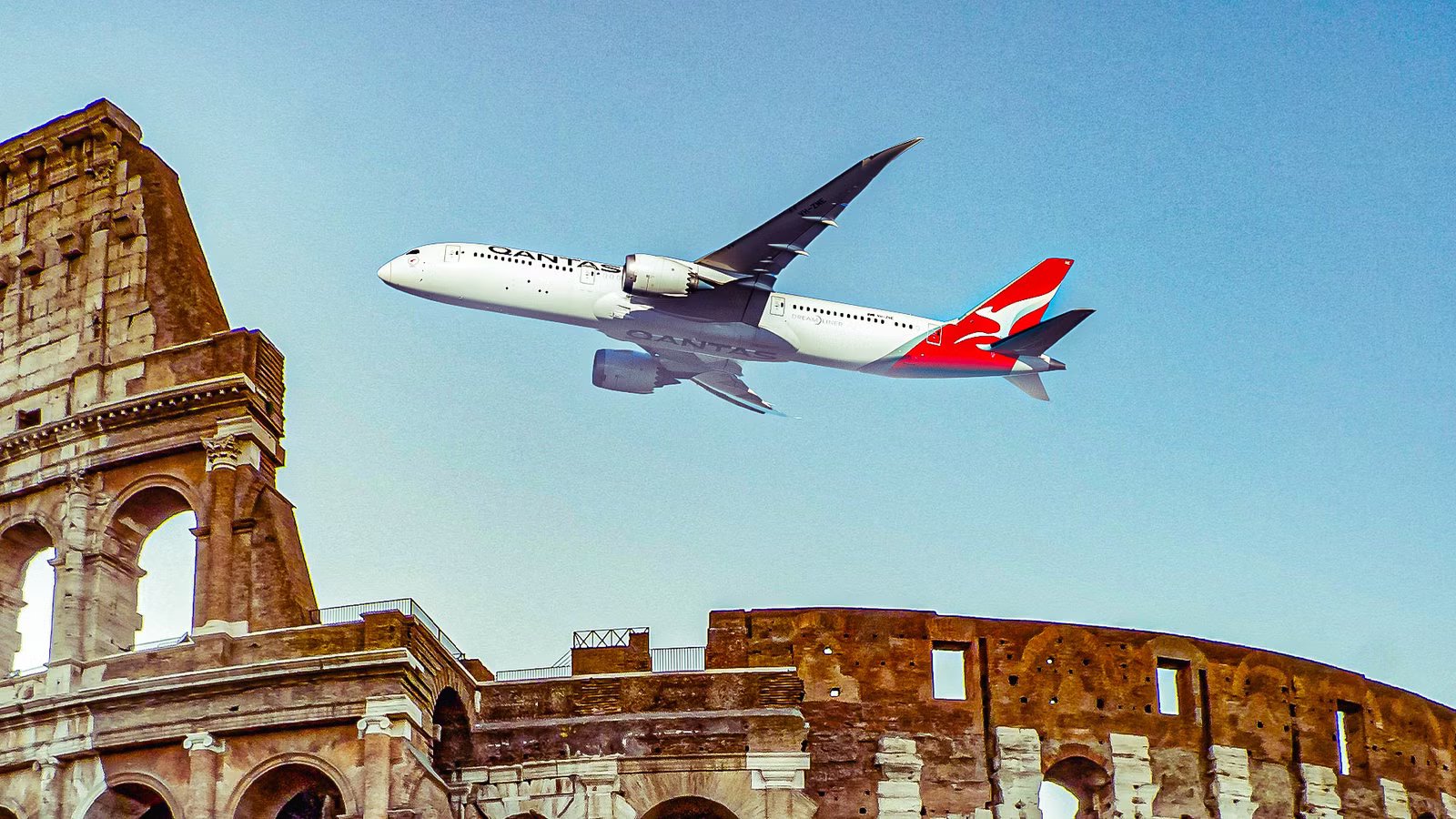
Qantas’ Project Sunrise has been one of the aviation industry’s closely watched initiatives. It is designed to connect Australia’s East Coast with cities such as London and New York nonstop. To support these ambitions, Airbus has developed a dedicated ultra-long-haul version of the Airbus A350-1000, known as the Airbus A350-1000ULR. The carrier and manufacturer have been working on the program for nearly a decade. Just last month, the program reached a major milestone.
The first A350-1000ULR completed its maiden flight from Toulouse-Blagnac Airport (TLS), marking the start of its certification campaign. Qantas initially anticipated launching the program in 2025, but it has since faced multiple delays. The airline is now expecting to take delivery of the first aircraft in 2027, following wider Airbus production constraints linked to supply chain disruptions. But ahead of the program’s launch, it has already begun testing demand and operational assumptions on its existing long-haul network.
From Australia’s East Coast To The World: Qantas’ Project Sunrise Plans

One of the main objectives of Project Sunrise is to establish nonstop services from Sydney to London and New York. These services are expected to be the longest direct commercial flights ever operated. The Sydney–London sector covers around 10,573 miles (17,016 km), while Sydney–New York spans approximately 9,950 miles (16,013 km). For now, these are the only two routes Qantas has announced, though the airline has indicated that additional destinations could follow once the initial services are established.
As we know, long-haul connectivity between Australia and Europe has historically been limited by geography and aircraft range. Qantas has served the European market for decades, but most journeys required one or more stops along the way. The clearest example is the original Kangaroo Route, which took around four days to complete and typically routed through Darwin, Singapore, Kolkata, Karachi, Cairo, Casten Benito, and Rome before reaching London.
Advances in aircraft technology have since made nonstop Australia–Europe flights commercially viable. In 2018, Qantas became the first airline to launch nonstop flights between Australia and Europe. The carrier introduced direct services between Perth International Airport (PER) and  London Heathrow Airport (LHR) using the Boeing 787-9. It currently operates a daily one-way nonstop flight between the two cities during the northern winter season.
Perth–Rome Route Signals Strong Demand For Qantas’ European Strategy

Qantas has since expanded its nonstop European network with additional services. Following the launch of the Perth–London route, the airline introduced a seasonal service between Perth and Rome Fiumicino Airport (FCO) in June 2022. Two years later, it also launched nonstop flights from Perth to  Paris Charles De Gaulle Airport (CDG) ahead of the Olympic Games. Indeed, these routes have given Qantas the opportunity to evaluate demand for ultra-long-haul travel between Australia and Europe while gathering operational experience ahead of Project Sunrise.
Notably, the Perth–Rome route has been one of the airline’s strongest performers. Qantas last served Rome in 2003, although the city has been part of the carrier’s network since 1948, when it was an important stop on the original Kangaroo Route. According to multiple reports, the service has consistently recorded load factors above 90% since its launch. The airline has carried more than 70,000 passengers on the route since 2022. Given this strong demand, Qantas has extended the seasonal operation by eight weeks and added a fourth weekly frequency during the peak European summer travel period.
Travel Period | Frequency |
|---|---|
June 27 – September 26, 2026 | Four weekly (Tuesday, Thursday, Saturday, Sunday) |
September 27 – October 23, 2026 | Three weekly (Tuesday, Thursday, Sunday) |
The additional flights will add almost 10,000 seats, taking the airline’s total capacity between Perth and Europe to around 300,000 seats. Perhaps the most interesting figure is that more than half of the passengers on the Perth–Rome route originate in eastern Australia and connect through Perth. This suggests there is clear demand between eastern Australia and secondary European cities and supports the case for direct services of this nature under Project Sunrise, should the airline choose to expand beyond its initially announced destinations.
Perth Airport Redevelopment Will Support Qantas’ Ultra-Long-Haul Growth

Indeed, for Qantas, Perth currently functions as a strategic hub for its longest routes to Europe. But for years, Qantas and Perth Airport were involved in a dispute over terminal access and fees linked to the airline’s plan to consolidate operations at Terminal 1. Currently, most international airlines operate from Terminals 1 and 2, known as Airport Central, on the eastern side of Perth’s runway. Qantas, however, continues to operate from the older Terminal 3 and 4 precincts on the western side of the airport.
As reported by ABC News, state officials have criticized the airline in the past for “dawdling” over its relocation plans and argued that delays were slowing Perth’s development as a “western gateway” for international travel. In 2024, the dispute was eventually resolved; Qantas and Perth Airport reached a commercial agreement for a major long-term redevelopment. The 12-year deal includes around $3 billion in investment from Perth Airport for new terminal infrastructure at Airport Central and a parallel runway.
The new terminal is expected to open in 2031, and Qantas will progressively shift all of its operations there. In the meantime, Perth Airport is upgrading the existing Terminal 3 and 4 facilities to support growing demand. These works include gate enhancements designed to accommodate the Airbus A350-1000ULR, which will operate Project Sunrise services.
Catch what other flight trackers miss
Emergency squawks, holds, NOTAMs — live signals, no signup.
Open tracker
Catch what other flight trackers miss
Emergency squawks, holds, NOTAMs — live signals, no signup.
Open tracker
How Qantas’ A350-1000ULR Will Be Configured For Project Sunrise

In total, Qantas has ordered 12 Airbus A350-1000ULR aircraft for Project Sunrise. The aircraft has been specially developed to support nonstop flights of up to 22 hours and incorporates several modifications to support the extended missions planned by the Australian carrier. But perhaps the most noticeable change we will see is the cabin configurations.
Instead of carrying around 400 passengers, Qantas will configure the aircraft for just 238 across four cabin classes. The layout includes six first-class suites, 52 business-class suites, 40 premium economy seats, and 140 economy seats, allowing more personal space throughout the cabin. Indeed, passenger comfort has been a key part of Project Sunrise since the program was announced, as passengers are expected to spend almost an entire day in the air.
Qantas worked with the University of Sydney’s Charles Perkins Centre to study sleep, nutrition, hydration, movement, and circadian rhythms. Their research has influenced several elements of the cabin design, including a Wellbeing Zone for stretching and movement and 14 different lighting settings designed to support body clock adjustment. The airline has also included dedicated rest areas for pilots and cabin crew.
Sydney–London Launch Now Targeted For 2027 Under Revised Schedule

As noted previously, the airline was expected to take delivery of its initial ultra-long-haul aircraft in 2025, but the timeline has since slipped on multiple occasions. It was first pushed to 2026 and has now moved to April 2027. The European planemaker has attributed the delay to broad, systemic supply chain constraints across its commercial aircraft production lines.
Following the COVID-19 pandemic, the aviation industry has continued to face shortages of specialist raw materials, micro-components, and skilled labor, all of which have slowed assembly rates across its commercial programs. During the first quarter of 2026, Airbus delivered 114 aircraft, down from 136 during the same period a year earlier. The A350-1000ULR has been affected in the same way as other aircraft, including the A320 family.
Despite the delays, both Airbus and Qantas remain aligned on the updated timeline. The A350-1000ULR is currently undergoing flight testing and certification. The Australian carrier is currently planning to launch its first Project Sunrise service from Sydney to London in October 2027. Tickets are expected to go on sale in February next year.
Qantas Group CEO Vanessa Hudson said, “Since we first flew the Kangaroo Route in 1947, where we stopped seven times on the way to London, every generation of aircraft has taken a stop out of the journey. Today, we’re taking out the last one. We made a commitment in 2017 that Qantas would conquer the final frontier of long-haul aviation and connect Australia’s east coast directly to London, something that has never before been possible. From October 2027, that promise becomes reality.“
Project Sunrise Set To Redefine Qantas’ Long-Haul Network

Indeed, once Qantas commences operations on the Sydney–London route, it will mark a historic step, connecting Australia’s East Coast to London nonstop for the first time. The original Kangaroo Route once took four to five days to complete with multiple stops. Even today, it still operates through connecting sectors such as Sydney–Singapore–London.
Every year, millions of passengers travel between Australia and the United Kingdom for family, leisure, and business purposes. From 2027, that journey is expected to become significantly faster and more seamless. For now, Qantas has only announced Sydney–London and Sydney–New York under the program, but the concept has the potential to expand to other destinations over time.
The airline is currently leveraging its existing long-haul network to gather operational insight ahead of the Project Sunrise launch. The Perth–Rome route in particular has highlighted demand for secondary European cities from eastern Australia. It would not be surprising if additional secondary European destinations are added in the future from the East Coast.