dailynewsnblog
We’re starting the newsletter with an update on the forced labour bill.
The Liberal government’s forced labour bill could clear the House in the upcoming fall sitting as opposition parties decry its slow progress through Parliament.
A Liberal government source said there’s a strong chance the legislation could pass in the Commons before the end of the year, though noted that public consultations are still ongoing. The source isn’t being identified because they aren’t authorized to publicly speak on the matter.
Those consultations are expected to continue over the summer.
Bill C-35 was introduced in mid-June, days before the House rose for the summer recess.
This comes as the United States Trade Representative announced that they will be imposing new tariffs on dozens of trading partners, including Canada, on alleged imports of forced labour goods.
Canada is one of the six places the U.S. listed to have “failed to effectively enforce prohibition” on imported goods produced with forced labour.
Marco Vigliotti and Sydney Ko have this one.

An environmental economist says the oilsands sector is on track for a “fairly significant” increase in greenhouse gas emissions, even with the Pathways carbon storage project moving forward.
Dave Sawyer, who is with the Canadian Climate Institute think tank, says Pathways would offset just a portion of the emissions a new West Coast pipeline would enable.
The institute has estimated an average of 20 megatonnes a year in new emissions from the oilsands sector with new planned pipeline capacity.
The Pathways Project — being pursued by the five biggest oilsands companies — envisions storing six megatonnes a year underground starting in 2035, with the goal of an additional 10-megatonne reduction by 2045.
The new million-barrel-a-day pipeline Alberta is pursuing to southern B.C. is to be developed, built and operated by federal Crown corporation Trans Mountain Corp., which is also expanding its existing line to the Vancouver area.
The Canadian Press has more.

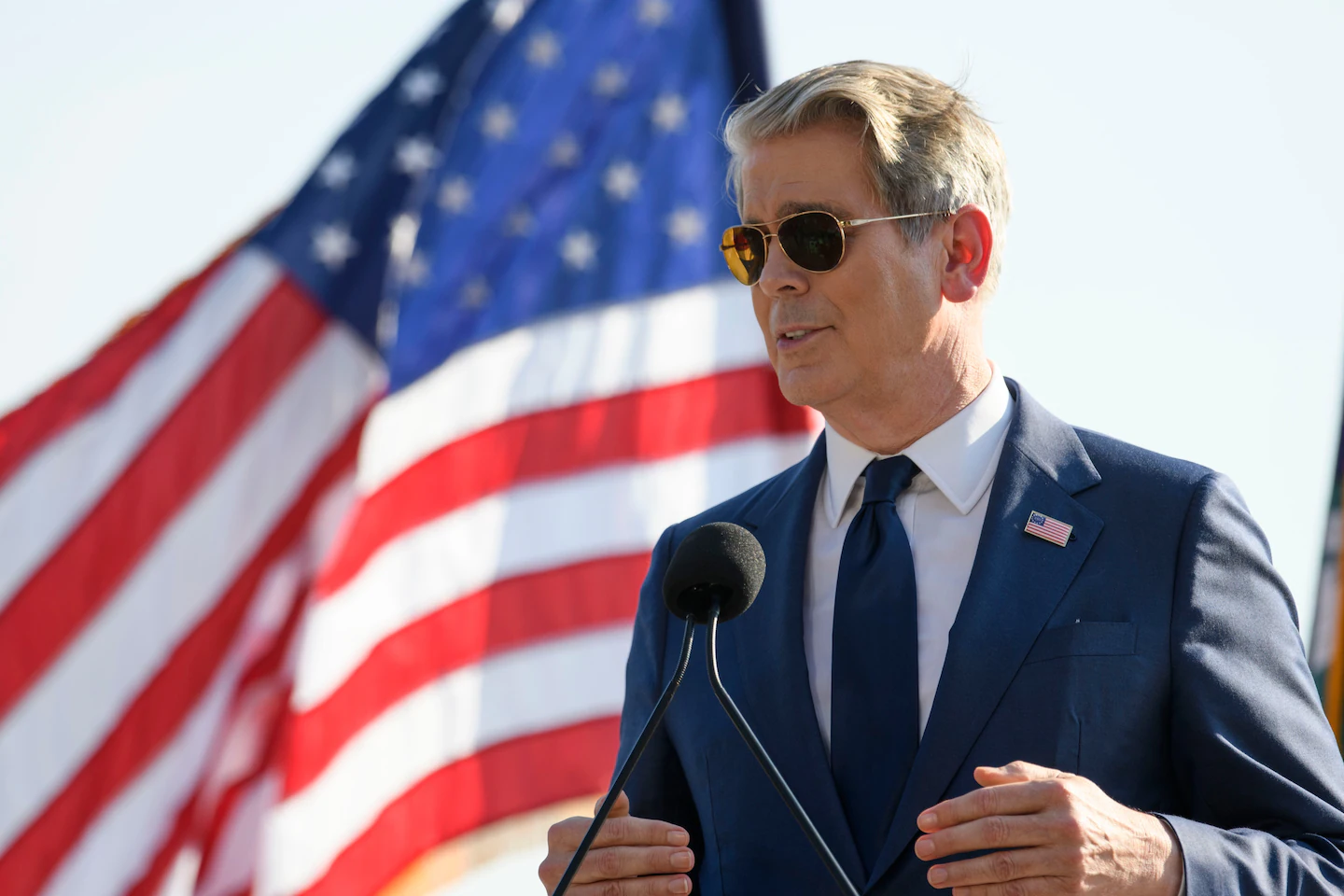
Also, the Carney government is replacing former broadcast journalist Tom Clark as consul general to New York City with an oil executive, and naming a former cabinet minister as Canada’s envoy in Los Angeles.
The Trudeau government appointed Clark, a former CTV and Global journalist, to the post in 2023. The consul general promotes Canada’s economic and cultural interests in the Big Apple and engages in regional outreach in states like Pennsylvania and New York as well as Bermuda.
The Conservatives criticized Clark’s appointment and leader Pierre Poilievre called him a “Liberal media hack” but Clark’s tenure got the most attention over the purchase of a new luxury condominium for the official residence.
The Tories had Clark called in to a House of Commons committee to answer questions about Ottawa’s decision to buy the $9-million property in Manhattan. Clark said he had nothing to do with the purchase of the new apartment or with the sale of the old residence.
Global Affairs Canada said at the time it needed to replace an aging residence with something more appropriate for hosting guests.
CP’s got this one too.
In Other Headlines
Internationally
Elsewhere, the main reparations committee for Caribbean nations has called on the UK to return the British Virgin Islands and for King Charles to commit to decolonising Britain’s remaining overseas territories, warning of a “resurgence of colonisation” around the world.
In a visit to the UK this week, the Caricom Reparations Commission – the body seeking reparative justice for enslavement, colonialism and their legacies on behalf of the alliance of Caribbean states – decried the fact that the Caribbean remained “the most colonised part of the world”.
It recently launched a new manifesto outlining the “moral, ethical and legal case for reparations”, and at a briefing on Tuesday in London, David Comissiong, Barbados’ ambassador to Caricom, said “decolonisation has been inserted into this new manifesto … as a key demand”.
The British overseas territories of Anguilla, Bermuda, the British Virgin Islands, the Cayman Islands, Montserrat and the Turks and Caicos have internal self-governance but remain under the control of UK-appointed governors with authority over defence, international affairs and some security and legal matters.
The Guardian has more.
Meanwhile, President Donald Trump has reversed his threat of a 20% fee on all Strait of Hormuz cargo shipping, as the US battles to break Iran’s hold on the waterway.
Trump said the toll would be replaced by “massive” trade and investment deals with Gulf states, just hours before the US resumed its blockade of Iranian ports.
It follows renewed strikes between the US and Iran, which triggered a sharp rise in oil prices as tanker traffic through the Strait has virtually stalled.
US Central Command (Centcom) said late on Tuesday its “forces began launching an additional round of strikes against Iran to continue degrading Iranian capabilities used to attack commercial shipping” in the key waterway.
Centcom earlier said it had carried out a third night of attacks with the same aim, and on Tuesday Iran’s state media reported blasts in multiple cities, including Bushehr – home to a nuclear power plant.
Read more from the BBC.
In Other International Headlines
The Kicker
The whistle goes. Spain is now in the World Cup final.
This is the second time Spain has reached the final, winning it in 2010.
It also means we’re down to the final few matches before another four-year wait begins. It’s been a ride.