dailynewsnblog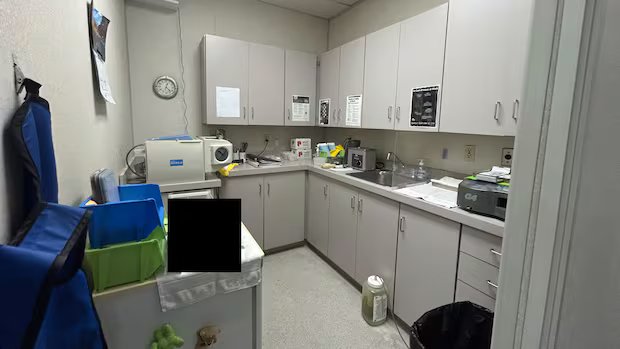

Listen to this article
Estimated 4 minutes
The audio version of this article is generated by AI-based technology. Mispronunciations can occur. We are working with our partners to continually review and improve the results.
Following the closure of Dr. George Chan Dentistry in Brantford, Ont., after an investigation found lapses in sterilization of reusable equipment, CBC News obtained photos from Grand Erie Public Health (GEPH) of what was discovered during the investigation.
The clinic, located at 353 St. Paul Ave, was shut down on Nov. 3, and over 800 former patients who had treatment between Nov. 3, 2021, to Nov. 3, 2025, have been urged by GEPH to get hepatitis B, hepatitis C and HIV testing.
Lyn Portelli, who worked as a receptionist during that period, told CBC News she is the one who filed a complaint with GEPH on Oct. 29, 2025, after she said she investigated one of the patient rooms on Oct. 28. She said it led to GEPH’s investigation.
It was carried out by Infection Prevention and Control (IPAC) and found 15 lapses in the disinfection and sterilization of reusable instruments.

Chan no longer entitled to practise: RCDSO
Chan is listed on the RCDSO website as no longer entitled to practise, and his clinic’s certificate of authorization status has been revoked. The RCDSO told CBC News this is due to his resignation.
The college’s investigation into what happened at the clinic is ongoing, the RCDSO told CBC News in an email.
The RCDSO website says if Chan seeks to reapply for registration as a dentist in Ontario, he must submit monitoring of his infection prevention and control practices for 24 months, “starting on the date that he resumes practising dentistry in Ontario, in addition to any other requirements or terms, conditions, and limitations imposed by the College upon his registration.” This was also in effect since July 2.
When CBC News asked if it’s normal for dentists to submit monitoring of infection prevention and control practices, the RCDSO said it has authority to impose terms, conditions and limitations in certain circumstances.
“Terms, conditions and limitations that the college may impose are case-dependent. Terms, conditions and limitations which include a monitoring provision is a routine condition that we use to ensure compliance,” the RCDSO told CBC News in an email.
According to one dentist, this isn’t a “normal condition.”

Dr. Aviv Ouanounou, an associate professor in the University of Toronto’s faculty of dentistry, said this doesn’t routinely apply to dentists who reapply for registration in the province.
“Most dentists who reapply for registration do not have a publicly posted requirement for 24 months of college monitoring of their infection prevention and control practices. I think that in this case, the requirement is a specific term, condition and limitation attached to the dentist’s certificate of registration,” Ouanounou told CBC News in an email.
The current status on the RCDSO website says Chan may have retired, left the province/country, returned to school, changed professions or took a leave for personal reasons.
Ouanounou said a dentist’s resignation or lapse of registration doesn’t prevent the RCDSO from proceeding with disciplinary action if it’s considered in the public interest. In appropriate cases, Ouanounou said, the RCDSO may proceed with discipline despite the dentist no longer holding an active certificate.

CBC News obtained an email sent from Chan to GEPH on Dec. 3, 2025, in which Chan says he won’t reopen his office or any other location. He says in the email that he’s retiring and won’t be an associate or serve in any capacity at any office.
The RCDSO said in an email that dental authorities in provinces across Canada require certificates of standing from each other where the applicant previously was registered.
This means if Chan does seek to practise dentistry, he’d most likely be required to provide a Certificate of Standing.
“The college issues Certificates of Standings to regulatory bodies and Ontario hospitals,” the RCDSO said.
Where to get testing
Former patients during the four-year period noted by the GEPH are encouraged to visit their primary-care provider or a walk-in clinic to discuss screening for possible blood-borne infections. A testing requisition form from GEPH is required.
For anyone who doesn’t have a primary-care provider, GEPH says, patients can access care at the Primary Care Access Clinic at 226-388-4725 or by booking an appointment with the Virtual Urgent Care Clinic.