dailynewsnblog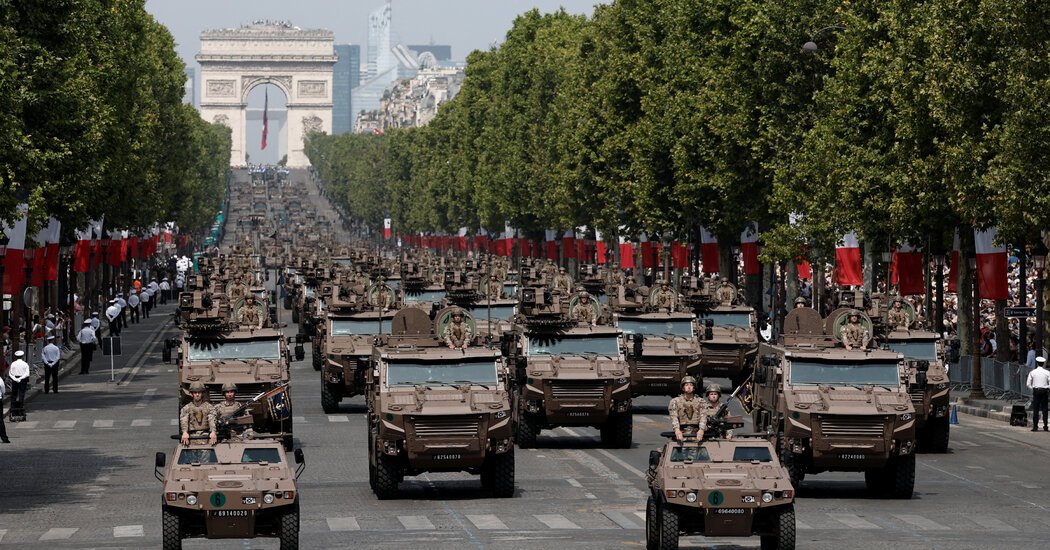
Nine years ago, President Emmanuel Macron of France invited President Trump to a military parade on Bastille Day to cozy up to the man who guaranteed Europe’s security. On Tuesday, Mr. Macron gathered two dozen leaders at this year’s parade to symbolize Europe’s resolve to cut itself loose from him.
Not simply a display of French military might, the parade also featured nearly 500 troops from 35 other countries that are members of the coalition of the willing — a multinational force, led by France and Britain, that is meant to secure Ukraine after any potential cease-fire with Russia.
If Mr. Macron’s appeal to Mr. Trump in 2017 was only partly successful, his bid to break from the United States is similarly incomplete.
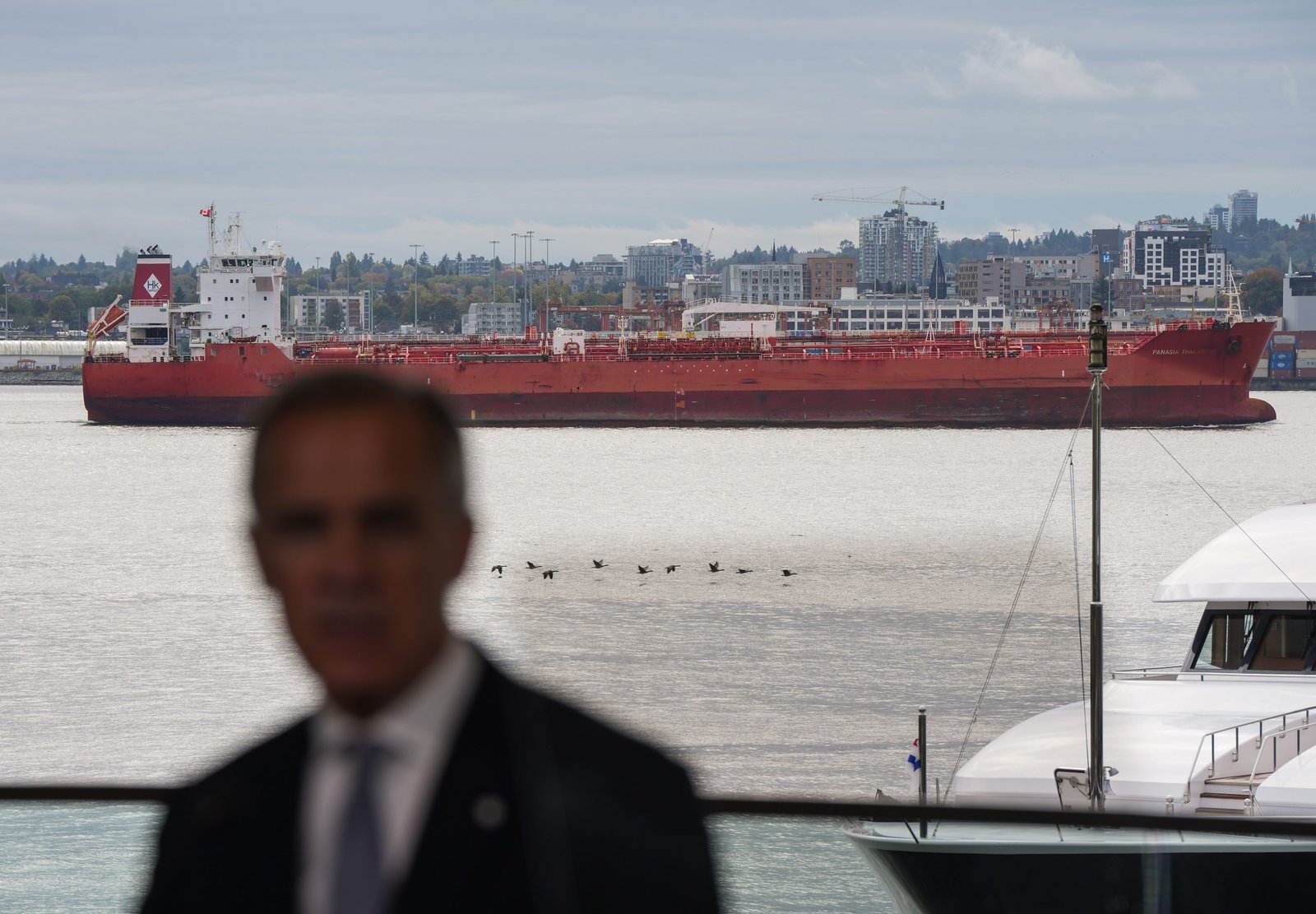
Europe’s robust show of support for Ukraine, showcased in the parade, has been offset by its powerlessness in face of renewed hostilities between the United States and Iran. Its monthslong promise to send a European maritime security force to the Strait of Hormuz, to reopen the strait and guarantee the free passage of commercial traffic, never began and now seems more a hostage to events than ever.
For Europe, the Strait of Hormuz mission has been “a bit of a litmus test” of its ability to defend its interests, said Jeremy Shapiro, a director at the European Council on Foreign Relations, a research group with offices in London and Berlin. “Although there has been some talk about that,” he said, “it has not gotten far.”
Those doubts were pushed aside on Tuesday by a Bastille Day parade on the Champs-Élysées, the grandest avenue in Paris, that was meant to demonstrate Europe’s evolving independence.
Mr. Macron was flanked by leaders including President Volodymyr Zelensky of Ukraine, Chancellor Friedrich Merz of Germany and Prime Minister Keir Starmer of Britain. They watched as warplanes from European countries including Britain, Denmark and Germany streaked across the azure skies above Paris alongside French fighter jets, two of which were piloted by Ukrainian aviators.
The day before, the leaders had convened in Paris to cement planning for the coalition of the willing. A resolute-looking Mr. Macron called the summit evidence of Europe’s “strategic reawakening.”
Yet it was another conflict, 3,000 miles from Paris in the Middle East, that revealed the dents in Europe’s armor, according to analysts.
On Monday, with a cease-fire between the United States and Iran in tatters, Mr. Trump announced that the United States would impose a 20 percent fee on cargo shipped through the Strait of Hormuz, to pay for its protection of the waterway.
That directly contradicts the purpose of the European mission in the strait — to preserve freedom of navigation — and puts European leaders back at odds with Mr. Trump, after a period in which they believed he had moved toward them on Ukraine. It is not clear what they can do about it.
“He can plausibly threaten that because Europeans need the strait more than Americans, and so he can effectively run a protection racket, as he has tried to in European security,” Mr. Shapiro said. “It doesn’t speak well for their ability to follow through on the European security aspects of greater autonomy.”
To be sure, France and Britain have made extensive plans to deploy a flotilla of frigates and demining ships to help guide cargo ships through the strait. More than 20 countries have enlisted, though some, like Germany, will require parliamentary approval before they can commit military assets.
Still, Europe’s leaders said from the start that they would deploy ships only if the United States and Iran agreed to a durable cease-fire. That seemed far-fetched on Tuesday, after days of strikes and Mr. Trump’s reinstatement of a naval blockade.
While the American president has been open to Europe’s mission, he has never lent it much credence, complaining instead about the refusal of America’s allies to join the American-Israeli military campaign against Israel. Mr. Trump said the United States could secure the strait by itself in a deal with Iran.
“I don’t think it’s a bad idea to have a ship or two up here from a few countries,” he said to Mr. Macron at a Group of 7 summit last in month in Évian-les-Bains, France. “You’d be a great country to do it.”
Europe has made more progress in compensating for the reduction of American military aid to Ukraine. Though Mr. Trump agreed last week to issue licenses to Ukraine to manufacture Patriot antimissile systems, he has repeatedly cast doubt on his willingness to support Ukraine’s long-term security.
Attempting to fill that void, eight European leaders, including Mr. Macron, announced an antiballistic missile coalition on Monday that is designed to enable Ukraine to develop a homegrown air-defense industry to repel Russian attacks. France and eight other European countries have pledged to supply Ukraine with parts and technological expertise.
On Monday, Mr. Macron left it to Mr. Starmer to address the deteriorating situation in the Strait of Hormuz. He reaffirmed Europe’s readiness to deploy a force. But as Europe confronts a volatile Middle East, an erratic United States and a predatory Russia, its relevance is undermined by its own shifting cast of leaders.
Mr. Starmer, who has been centrally involved Europe’s efforts to muster the coalition of the willing and the maritime security force, is expected to vacate 10 Downing Street in less than a week. His presumptive successor, Andy Burnham, is not nearly as well known on the global stage.
Mr. Macron, who has spearheaded Europe’s drive for strategic autonomy, is also time-limited. This was his final Bastille Day parade as president; next May, he will step down after 10 years. It is far from clear whether France’s next president will be as fervent a proponent of Europe’s rearmament as he has been.
Mr. Trump, on the other hand, is less than halfway through his second term, which suggests that he will continue to set the agenda on war and peace.
When Mr. Macron invited Mr. Trump to his first parade in 2017, his guest was so dazzled that he got the idea to stage his own parade in Washington, something he did eight years later.
“It was military might,” the American president said later, “and I think a tremendous thing for France and for the spirit of France.”
“We’re going to have to try and top it,” he added.
Ségolène Le Stradic contributed reporting.