dailynewsnblog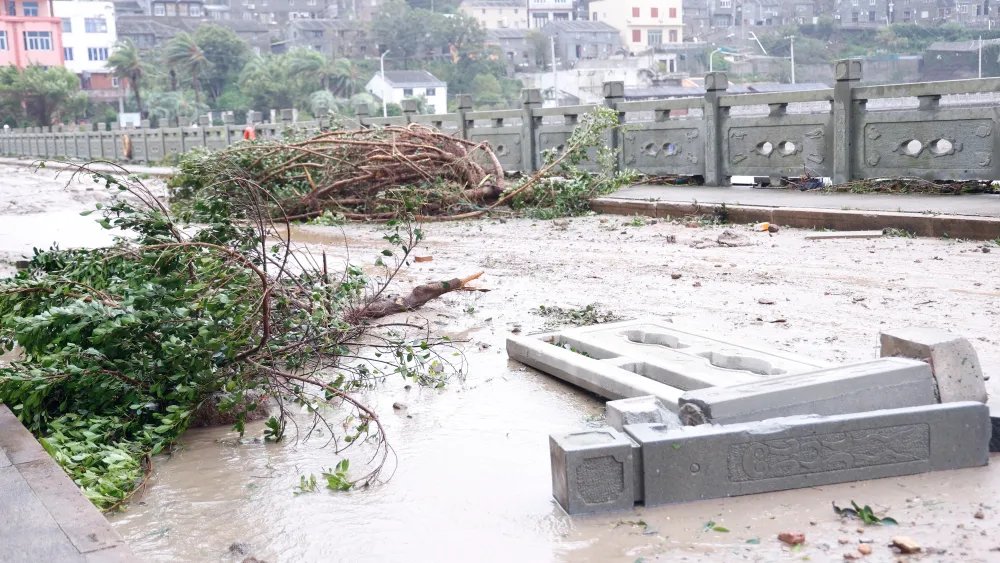
Several container terminals at major seaports across China shuttered temporarily ahead of Typhoon Bavi’s landfall on the country’s east coast, before reopening operations on Monday.
The Port of Ningbo began suspending container pickup and gate-in operations from Friday at noon local time, while also halting activities at its container yards and warehouse throughout Friday and Saturday.
On Saturday, the Port of Shanghai followed suit by pausing container loading and unloading operations at two of its major container hubs, Yangshan Deepwater Port and Waigaoqiao Port. Delivery and pickup of containers was halted as well. Warehouses across the complex remained fully operational.
As of Monday morning, all terminals at the Port of Shanghai resumed all container handling services, according to an advisory from the port. Loaded container handling operations restarted at midnight, while empty container handling resumed at 8 a.m. local time.
A separate advisory from Kuehne + Nagel indicated that container yard, warehouse and trucking operations at Ningbo and Shanghai are reported as operational.
Referring to Shanghai, Seko Logistics said in an advisory to customers Monday that terminal productivity may initially remain below normal.
“Customers should anticipate appointment shortages, truck queues, yard congestion and delayed container availability during the recovery period,” Seko said.
For Ningbo, Seko said reopening times may vary by terminal, and individual facilities may restore container gates, yard handling, pilotage and vessel operations at different stages.
“Port gates reopening does not mean that vessel schedules have immediately normalized. Pilotage, berth sequencing and vessel movements may require additional recovery time, while ships that slowed, diverted or waited outside the affected area are repositioned,” Seko said in its notice. “Previously announced Shanghai and Ningbo port omissions and contingency routings may continue to affect individual shipments after terminal reopening. Cargo already discharged at alternative ports or assigned to replacement sailings will remain subject to carrier recovery plans.”
The storm first made landfall late Saturday night with maximum sustained winds of 90 mph, knocking out power and phone service in the Zhejiang province.
In Zhejiang’s provincial capital, Hangzhou, two major train stations suspended all services, and 327 flights were canceled at Xiaoshan International Airport.
In neighboring Shanghai, a total of 1,620 train trips and 684 flights were canceled, according to a report from state-owned digital publication The Paper.
As of early Tuesday morning local time, the now-tropical storm hovered over China’s eastern Shandong province and is heading northeast toward North Korea.
Qingdao Port, which is located in Shandong, faced suspended operations on Sunday, with additional work stoppages planned in the port’s bonded warehouses as of Monday.
Although the typhoon weakened from its pre-landfall wind levels, the storm is still expected to unleash prolonged and widespread rain across eastern and northern China and North Korea in the coming days, coastal areas in Taiwan and the Philippines.
Localized flooding risks are shifting north toward provinces like Shandong and North Korea-neighboring Liaoning and Jilin, potentially affecting trucking, rail services, warehouses and airport operations.
“The main logistics risk has shifted from widespread preventive shutdowns in Taiwan and East China to terminal recovery, vessel schedule disruption, cargo backlog and inland weather impacts,” said the Seko advisory.
In its latest midsummer outlook, the National Climate Centre forecast that as many as six tropical cyclones would hit China this summer, a higher number than average. According to the national agency, these storms “are expected to be strong overall” and affect mainly coastal areas of southern and eastern China.
As of Saturday night, more than 2.2 million people were evacuated from Zhejiang due to Bavi, according to state media. Nearly 300,000 of those were from Shanghai, where 905 flood control and disaster relief shelters had been activated.
Beijing ordered the evacuation of more than 100,000 residents by Sunday morning and ramped up water releases from reservoirs to mitigate severe flood risks.
According to Chinese state-run media outlet Xinhua, Typhoon Bavi will transition into an extratropical cyclone after Wednesday.