dailynewsnblog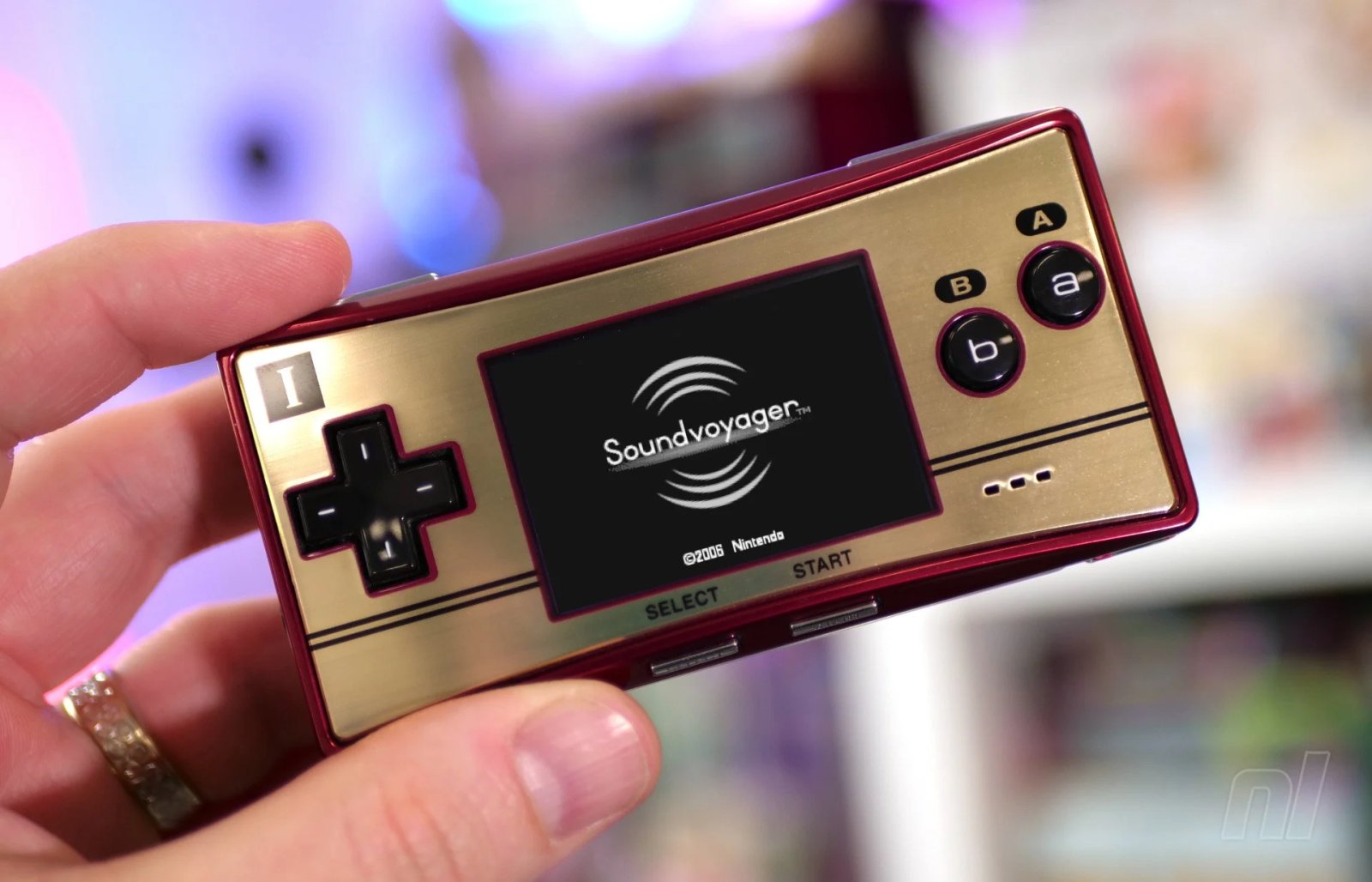

20 years ago, Nintendo published some of its most boldly experimental games on the Game Boy Advance – and only in Japan. Released across two waves in July 2006 and developed largely by Skip Ltd., the studio behind Chibi-Robo!, the seven-game bit Generations collection stands out as some of the most abstract game design Nintendo has ever put its name to.
If the Game Boy Advance had its own eShop back in the day, bit Generations feels exactly like the kind of titles that would have thrived there: small-scale, playable curiosities built around a single strong idea. These releases arrived at a time when the notion of a downloadable game had yet to become commonplace on Nintendo hardware.
All seven games were released on physical cartridges, and their packaging alone announced them as something different. Each of the box arts shared a common visual aesthetic designed around typography on a white field and a single abstract emblem representing the game inside, and the cartridges were jet black, unlike regular ones.
That common identity carried into the games themselves, each designed around simple controls, short bursts of play and striking audiovisual presentation that leans all the way into futuristic early-2000s minimalism, an almost Apple-like sparseness that Nintendo itself would soon embrace in its design and UI more broadly during the Wii and DS years.
The series is delightfully genre-eclectic, ranging from racing and falling-block puzzling to traffic management, orbital physics and even a game designed to be played almost entirely through audio using headphones. Despite never being released outside Japan, the menus in each game is entirely in English and already feel localised for an international audience.
We can only speculate as to why Nintendo chose to keep bit Generations exclusive to Japan. These were, after all, small-scale and highly experimental games, with abstract visuals and unconventional mechanics that were hardly the easiest commercial sell alongside the more fully featured first- and third-party releases of the era.
Perhaps, Nintendo simply decided that localising and distributing seven such niche cartridges in the West was unlikely to justify the cost, particularly as the DS was already well-established by 2006. Ironically, those same qualities have only added to their mystique. Today, original cartridges and boxed copies are coveted collectibles, often commanding eye-watering prices on the secondary market.
Four of the games — Dotstream, Dialhex, Orbital, and Digidrive — were later reworked as part of the Art Style series on WiiWare and DSiWare, but Boundish, Coloris, and the wonderfully strange Soundvoyager were never revisited. I recently sat down with the complete collection to find out whether these seven experimental titles still hold up two decades later.
Mileage will vary depending on each player’s tastes, but taken as a whole, bit Generations remains a fascinating collection to revisit. These seven games capture Nintendo playfully unconcerned with convention, exploring ideas that still feel full of unrealised potential today, perhaps nowhere more so than Soundvoyager and its audio-based gameplay.
Nintendo GBA bit Generations Series
Boundish
Boundish is a collection of minigames built around the basic idea of Pong, with each pushing unusual court layouts and a different twist on ball physics.
It has the immediate appeal of a Game & Watch title in that its rules can be understood within seconds, and it never demands too much dexterity or concentration, making it quite tempting to chase a better score.
Coloris
Coloris, a striking match-three puzzler where you alter the colour of square tiles along a predefined spectrum, is the hardest one to put down. Each stage establishes a limited palette, like shades of yellow through blue, and the cursor alternates between opposite ends of that range. Pressing ‘A’ nudges the selected tile one step toward the cursor’s current colour.
Matching three or more tiles of exactly the same colour horizontally or vertically clears them from the board. Other pieces fall into place, and further matches can cascade almost effortlessly, making it feel like every input clears something. Stellar sound design fuels the dopamine kicks further, making it all too easy to lose yourself in a flow-state.
Dialhex
Dialhex is a falling-block puzzler in which you control a six-sided dial that rotates groups of adjacent triangles clockwise or counterclockwise, with the goal being to form them into hexagons and clear them from the board.
It takes a little longer to click than Tetris, but each run teaches you how to recognise useful formations faster and it soon becomes quite addictive.