dailynewsnblog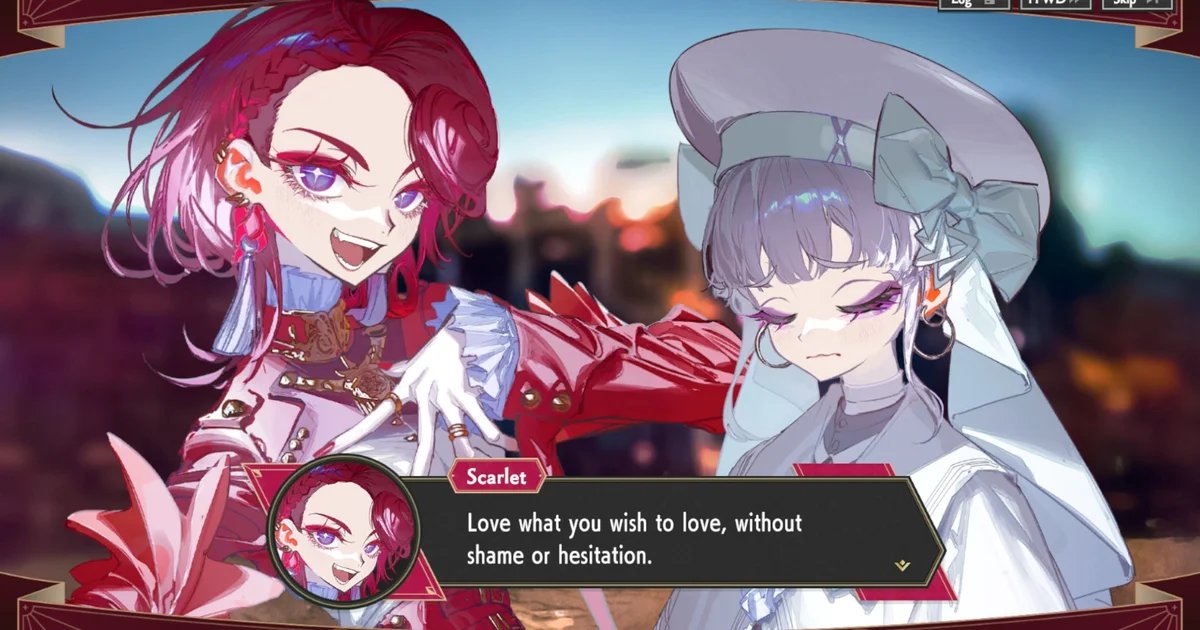
LESBIANS
BAGPIPES
STREAMING
LET’S GO!
I’m so annoyed at myself for missing The Great Villainess Colon Strategy of Lily last year. I’ve never laughed so much at a strategy game. It’s not that its most visible jokes are particularly hilarious, but it’s joyful and absurd, and so unabashedly itself that I can’t help but love it.
Much of that comes from its two protagonists: Lady Scarlet, a wonderfully egomaniacal aristocrat accused of murdering the Emperor, and Lily, the random streamer who happened to be nearby when she shot her way out. Who then convinces Scarlet not to kill her by explaining she was live on air. And here you must understand: this does not work because Scarlet wouldn’t kill someone on camera. It works because sparing her means getting more attention.
Naturally, the pair accidentally start a civil war, which Scarlet (after first telling the resistance “What? No, go resist or whatever”) continues because it’s fun, and Lily to stay alive. But really because they are both super into each other. Better still, they rapidly develop a fighty, teasing, but equal partnership instead of the usual tired “cold dumbass domme” and “anxious snivelling sub” dynamic.

It looks, and probably sounds, like a JRPG. Characters improve stats and gain skills with experience, some unlocking relationship-progressing cutscenes by fighting together. But it’s all automatic, and closely analysing it optional. The only real narrative decision is whether to kill or capture enemy generals, the difference in endings requiring full commitment to one or the other throughout. The difference in play is huge, though.
The Great Villainess has one large campaign map that opens up with each chapter, covered in towns that armies move between along fixed paths. Each character leads an army, but the enemy get no-name armies too, producing more at every stronghold each turn. You produce nothing, so are always outnumbered, even after captured characters join your side. Although killing them boosts Scarlet’s stats, the murder route is effectively a challenge mode. Perhaps this is secretly a lesson to listen to your subs and get over yourself or be destroyed? Who can say.
Your goal is to occupy the empire’s strongholds, and you must exploit the map to counter their numbers. Each town can only fit so many armies, creating potential chokepoints and areas difficult to manoeuvre in or defend. Each can also be fortified to a varying level; sitting there fills one star each turn with your colour, or drains the enemy’s, and ownership flips at zero. Nobody can move through enemy turf, so fortifying can halt invasions for as many turns.

This is important not just to buy time. Enemy recruits will fill all available space, so the less you allow them, the better. To this end, you have Lily’s airship, which broadcasts Scarlet’s message of… Scarlet, immobilising nearby enemies as they stare, transfixed. I’m not going to pretend it wouldn’t work on me. It does other tricks too, if you capture certain characters, but runs out of energy after three uses, and becomes useless for a turn. You can set it to recharge one energy per turn instead, which is less efficient, but sometimes having options at the right time is more important than a number toucher’s idea of efficiency. Plus, if a territory loss leaves it out of bounds, it’s unavailable until you regain that ground, so be careful where you park.
Finally, you need the ship, and Lily herself, for captures. Each army has several unique abilities in battle, and one of hers captures leaders under the right conditions. Most abilities cost “Morale Points”, which build up mostly via basic attacks and taking hits. You give each turn’s orders at once, but the order everyone acts in depends on their mobility stat, so you need to think ahead. MP are pooled, so battles are about balancing damage output with defence, while also generating and spending MP to fire off the right moves. Because some later abilities only activate in the third round, combat also becomes increasingly about anticipating and setting up a big finish as the war goes on.
Each battle, you see, automatically ends after three turns, so failure to wipe everyone out in time forces a retreat. Sometimes you want to whittle rather than conquer, though; attack power is proportionate to HP (“Horde Points”, appropriately enough), and though armies connected to an HQ will patch up each turn, this is limited, and can be cut off.

The Great Villainess is a really strong example of limitations making a game stronger. Every move becomes considered and deliberate, and opens up options that seldom work when every confrontation is to the death. It also removes the chore of long fights, and speeds up decision-making. Some limitations are initially annoying, and feel “unrealistic” (I know, I know. I’m not immune to it, sorry), like the absence of simultaneous attacks from multiple locations. But that makes the army capacity of towns matter, and requires you to plan ahead on the map as well as the battlefield. Your forces don’t need to be managed or customised, but you must think about where everyone will be in one or two turns. Limited healing and blimp downtime cause natural fluctuations in the front line, and turns of consolidation and regrouping, and these too should be planned in advance. Taking ground isn’t always the right move, if it exposes someone to an elite enemy on the turn after next.
Its limits also keep it from being too complicated or demanding. Analysing the map is important but doesn’t require more than a broad plan, and with no production, your only real concern is where to move everyone. Once you’ve chosen your rough plan, there’s not too much decision-making or busywork. A complex battleplan is never necessary, and with several ways to hold back the enemy, losses are recoverable. Defeated characters return to you after a few turns, except for Scarlet and Lily, who can die… but that just takes them to Dead End Theater, a room full of your saved games where they complain about who killed them, discuss strategy, and continue flirting. Crucially, they don’t address the fourth wall, only each other. They’re aware of, and not overly concerned about, their ability to rewrite time.
The whole game is buoyed by that “just roll with it, it’s fine” attitude to its world and story: throwing you in and only explaining things briefly as they become relevant, with lightly dappled foreshadowing and a joke with a charmingly silly degree of irony. The plot is straightforward but the story is colourful, with smart details like a late-ish reveal that one major event was sheer opportunism, rather than “haha you fool, my genius perfect plan caused everything from the start like clockwork”.

The Great Villainess is a genuinely strong and clever piece of strategy design, with a challenging but forgiving campaign (whose events, excellently, are contiguous even between chapters, so how disastrous its scripted surprises are depends on where everyone was when you caused them). But more importantly, it’s exactly comfortable enough with its own silliness to indulge itself, and trust you to accept it instead of interrogating everything. And that makes it loveable. Scarlet is a drama queen but is having too much fun, and is to willing to listen to Lily, to be the stock ‘arrogant evil lady’ again. She delights in pricking pompous and serious enemies, and the fun she’s having is infectious, spreading to Lily and then your converts, who begin to mess around and wind each other up in their optional interludes. She’s a charismatic delight, Lily is confident and clever, and both accept each other enough to enjoy their bicker-flirting where other games would make them lout vs prude and utterly, tediously obdurate. Even one enemy gets free MP when Scarlet is on the field, because she’s such a fangirl. You might be too, after using the ability that makes her cackle maniacally.
The airship, after all, isn’t just broadcasting propaganda, but live feeds of your battles, growing your follower count over time, and prompting frequent comments: random civilians opining and joking and gleefully egging you on in the chaos of their own country falling apart, somehow making internet irony poisoning work alongside 19th century aristocracy and artillerymen with cute little earmuffs. There are hundreds of comments, but they never distract or get in the way, and some perfectly capture that raw hilarity of the plain spoken rando, in a way that repeating out of context would ruin.
I don’t really do annual awards, for several reasons, but I know that if I sat and wrote a list, The Great Villainess would have been a contender in any year. The framework of its carefully limited battles and movement are excellently judged to offer challenge and options to meet it on both levels, and would make for a solid game in any case. But combined with its consistently entertaining presentation and sheer personality, and an intangible feeling that it’s having a great time and you’re invited, I’m struggling to think of anything I’d recommend with a bigger grin.