dailynewsnblog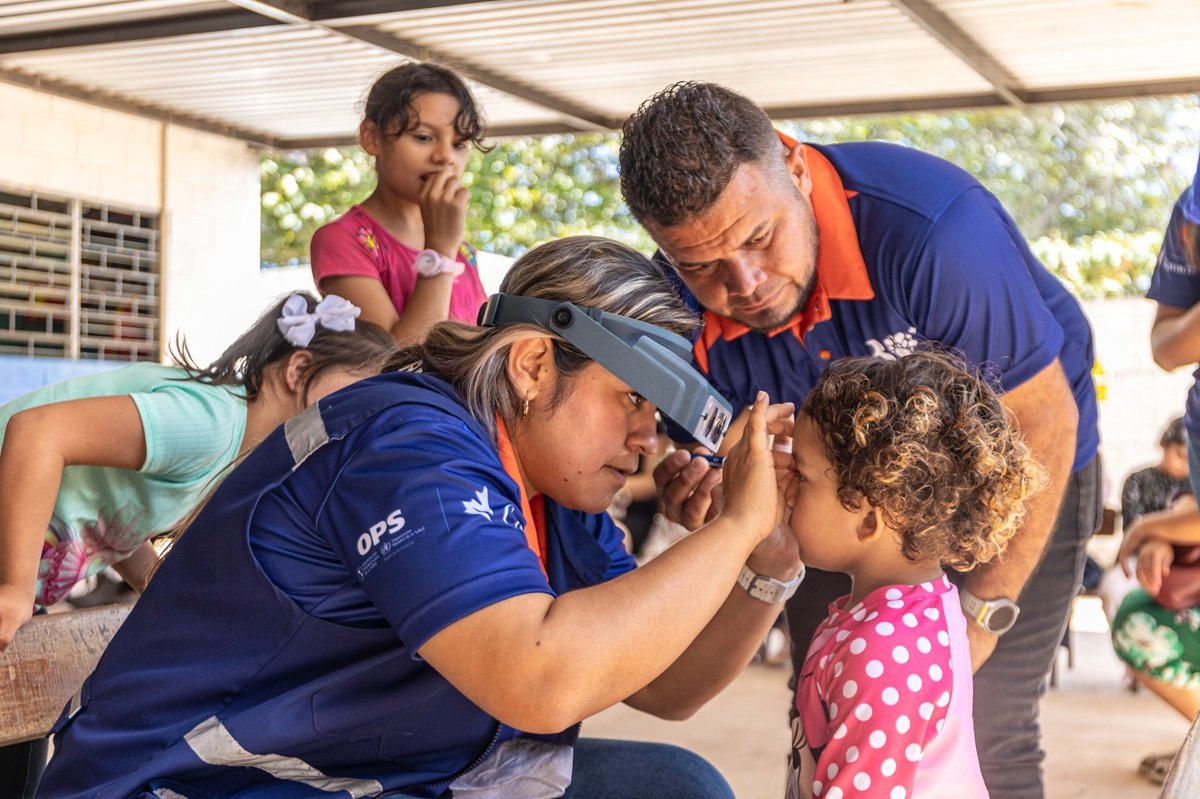
The World Health Organization (WHO) has validated El Salvador as having eliminated trachoma as a public health problem. Trachoma is the world’s leading infectious cause of blindness.
“I congratulate El Salvador on this remarkable achievement. It is a testament to the power of political commitment, strategic investment, and community engagement,” said Dr Tedros Adhanom Ghebreyesus, WHO Director-General, “El Salvador’s success is a vital step towards our global target of eliminating trachoma worldwide by 2030 and a clear signal that a healthier, more equitable future is within reach.”
The validation follows a rigorous, multi-year process to determine whether trachoma was present as a public health problem in the country and to document the health system capacity to detect, investigate, and respond to any potential future cases.
Between 2023 and 2026, El Salvador conducted targeted assessments in communities prioritized based on environmental and social risk factors. These assessments found no evidence of active transmission of trachoma. No signs of the disease were detected in children, and no advanced cases capable of causing blindness were found in adults.
These findings confirmed that trachoma does not constitute a public health problem in the country.
“This validation reflects El Salvador’s commitment to reaching populations in the most vulnerable conditions and generating solid evidence to demonstrate that trachoma is not endemic in the country,” said Dr Jarbas Barbosa, Director of the Pan American Health Organization (PAHO). “It is the result of sustained efforts to reach communities, identify potential cases, and ensure no one was left behind.”
El Salvador’s progress was supported by a multisectoral approach, including strengthened primary health care services, improvements in water, sanitation, and hygiene (WASH), eye health services, including visual acuity screening in adults, and collaboration among government sectors, communities, and international partners.
The country has also established systems to sustain this achievement, including trained health personnel, integrated surveillance mechanisms, and the capacity to detect and manage trichiasis cases (an advanced stage of trachoma in which the eyelashes turn inward and can lead to blindness) within the national health system.
“El Salvador has reached a major health milestone by achieving certification as a country free of trachoma, the result of sustained national efforts, with the support of the Pan American Health Organization and the Embassy of Canada,” said El Salvador’s Minister of Health, Francisco Alabi. “We are proud to have reached this achievement in just three years, positioning the country in the region and improving the visual health of our population.”
PAHO supported the country’s efforts through the Initiative for the Elimination of Trachoma in the Americas, in collaboration with the Government of Canada. The elimination process also created opportunities to deliver integrated health services to the communities reached during the assessments.
Trachoma, caused by the bacterium Chlamydia trachomatis, is spread through contact with eye and nasal discharge from infected individuals. Repeated infections can lead to scarring of the inner eyelid, causing the eyelashes to turn inward (trichiasis), which can ultimately result in blindness.
The disease is strongly associated with poverty and inequities in access to basic services, including WASH and health care, and it remains endemic in some of the world’s most vulnerable communities.
In the Americas, trachoma remains a public health problem in rural and remote areas of Brazil, Colombia, Guatemala, and Peru. Regional efforts to investigate and better define the epidemiological status of trachoma have also been expanded in countries where the disease has been suspected, including the Plurinational State of Bolivia, Ecuador, Guyana, Panama, Paraguay, and the Bolivarian Republic of Venezuela. El Salvador was among these countries until the completion of assessments that provided the evidence required for WHO validation.
WHO recommends that countries that have achieved elimination maintain surveillance systems and ensure continued access to quality eye care services to prevent the re-emergence of the disease.
Trachoma is one of more than 30 communicable diseases and related conditions targeted under PAHO’s Disease Elimination Initiative, which aims to eliminate them in the Americas by 2030.
Neglected tropical diseases such as trachoma are associated with devastating health, social and economic consequences. Their burden is mainly experienced in impoverished communities in tropical regions.
Public health targets for the control, elimination and eradication of these conditions were defined in the road map for neglected tropical diseases 2021–2030.
In 1996, WHO launched the WHO Alliance for the Global Elimination of Trachoma by 2020 (GET2020), creating a network of governments, nongovernmental organizations and academic institutions dedicated to the fight against trachoma. WHO continues to support endemic countries to accelerate progress towards the global target of eliminating trachoma as a public health problem worldwide by 2030.
Elimination of trachoma as a public health problem is defined as: (i) a prevalence of trachomatous trichiasis (TT) “unknown to the health system” of < 0.2% in ≥15-year-olds; and (ii) a prevalence of trachomatous inflammation – follicular (TF) in children aged 1–9 years of < 5%, in each formerly endemic district; plus (iii) the existence of a system to identify and manage incident cases of TT.
Other countries validated by WHO as having eliminated trachoma as a public health problem are: Algeria, Australia, Benin, Burundi, Cambodia, China, Egypt, Fiji, Gambia, Ghana, India, Iraq, Islamic Republic of Iran, Lao People’s Democratic Republic, Libya, Malawi, Mali, Mauritania, Mexico, Morocco, Myanmar, Nepal, Oman, Pakistan, Papua New Guinea, Saudi Arabia, Senegal, Togo, Tunisia, Vanuatu and Viet Nam.
El Salvador is the first country in Central America and the second in the Americas to achieve this milestone. With this validation, El Salvador joins a group of 64 countries worldwide that have been recognized by WHO for eliminating at least one neglected tropical disease. Seven of these countries are in the Americas.