dailynewsnblog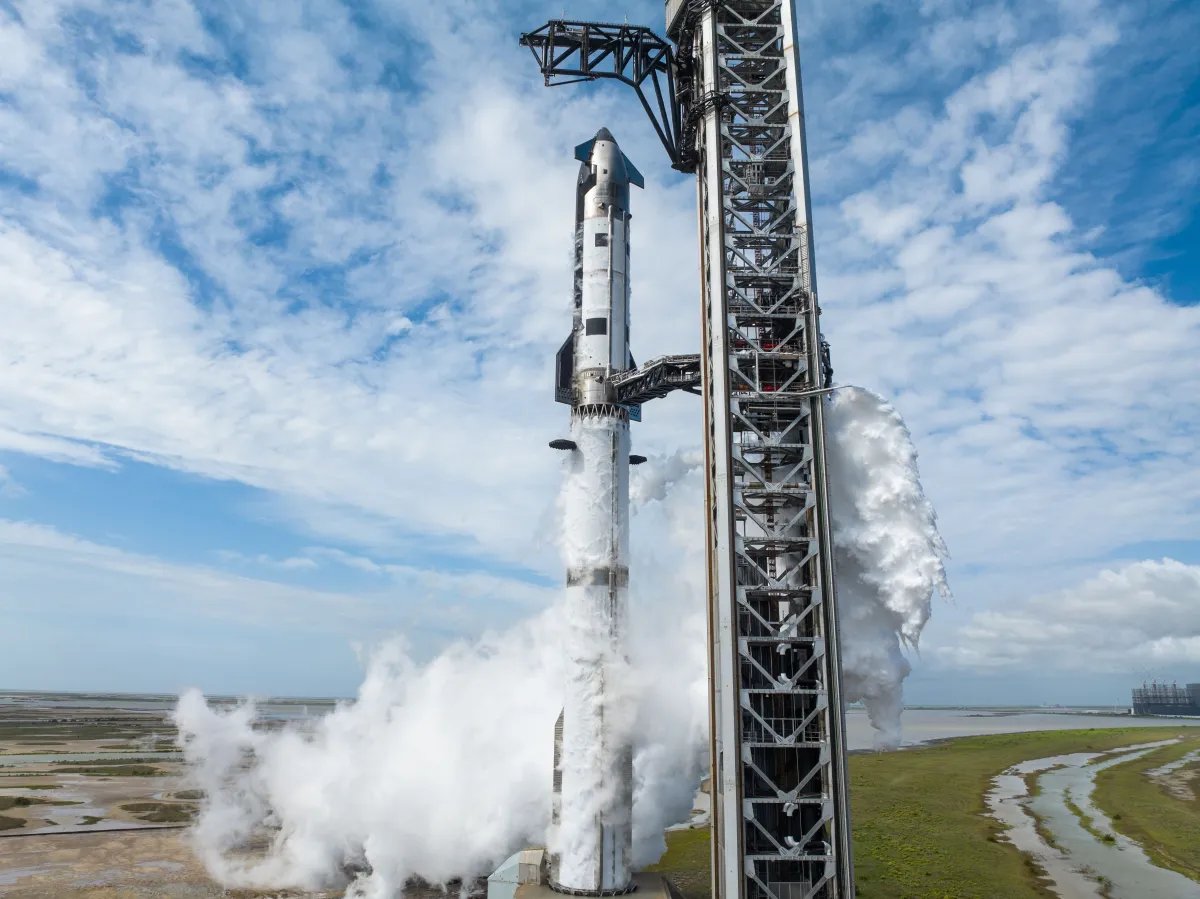
The Federal Aviation Administration (FAA) has cleared SpaceX to fly Starship prototypes again, after the company identified the probable cause of the failure of the rocket system’s booster stage during a flight in May.
SpaceX said over the weekend that the next flight of Starship could happen as soon as this Thursday, July 16. It would be the second-ever launch of the third version, or V3, of Starship. SpaceX also said that this Starship will carry the first third-generation Starlink satellites to space. Previously, Starship had only carried dummy versions of the larger, more powerful internet satellites.
This is SpaceX’s second test flight of its Starship system, and it’s first as a public company, testing the market’s appetite for the company’s “fly, fail, fix” approach to rocket development that often ends in fireballs — or, as CEO Elon Musk calls the explosions: “rapid unscheduled disassembly.” SpaceX completed its IPO and publicly listed on the Nasdaq Stock Exchange on June 12, making it one of the ten most valuable companies in the world and raising nearly $86 billion, a record.
SpaceX’s first test launch of the V3 Starship on May 22 was largely successful. The company’s Super Heavy booster lifted the 407-foot rocket into space before the upper stage section separated and deployed 20 satellite simulators along with two modified Starlinks that recorded footage of the Starship exterior.
The new third-generation booster was supposed to return to Earth and perform a simulated landing in the Gulf of Mexico. But its engines didn’t properly re-ignite, and it instead plummeted into the water below.
The problem happened at that moment of booster separation, according to SpaceX and the FAA. SpaceX said in a post published over the weekend that “slight differences in engine startup on the ship” caused the Booster to turn 90 degrees in the wrong direction. SpaceX said it has modified this engine startup sequence to allow the booster to “more reliably flip in the desired direction” and that the booster has been modified to “improve re-light reliability.”
The FAA said in a statement Monday that the most probable root causes of the Super Heavy booster failure were “heat effects on propulsion system components during the [rocket’s] ascent and erroneous engine alarm system settings.” SpaceX said in its post that it has made changes to Starship’s engine alarm and abort systems that should reduce the chance of a similar failure in the future.
While the first upper stage of Starship V3 was able to successfully deploy its test payload in May and simulate a landing in the Gulf — a milestone SpaceX had struggled to reach before — it also did so while losing one of the three Raptor engines that are meant to be used in the vacuum of space. SpaceX said over the weekend that it has made “[s]everal hardware and operational modifications” to prevent this from happening again.
This next Starship test flight will see the company launch the first of its V3 Starlink satellites to space, which are supposed to increase the satellite network’s capacity and user speeds. SpaceX is planning to deploy 20 of these new satellites during the launch. They are designed to connect with the larger Starlink constellation “via high-capacity lasers” and then burn up in the atmosphere roughly 20 minutes after they are deployed, according to SpaceX. Six of them will be equipped with cameras to photograph the exterior of Starship.
The V3 versions of both Starship and Starlink are crucial to SpaceX’s future. Starlink was the only profitable part of SpaceX’s business in the run-up to its IPO, and SpaceX needs Starship to become a fully reusable rocket system to even attempt its galaxy-brained plans for space-based data centers and interplanetary travel.
When you purchase through links in our articles, we may earn a small commission. This doesn’t affect our editorial independence.