dailynewsnblog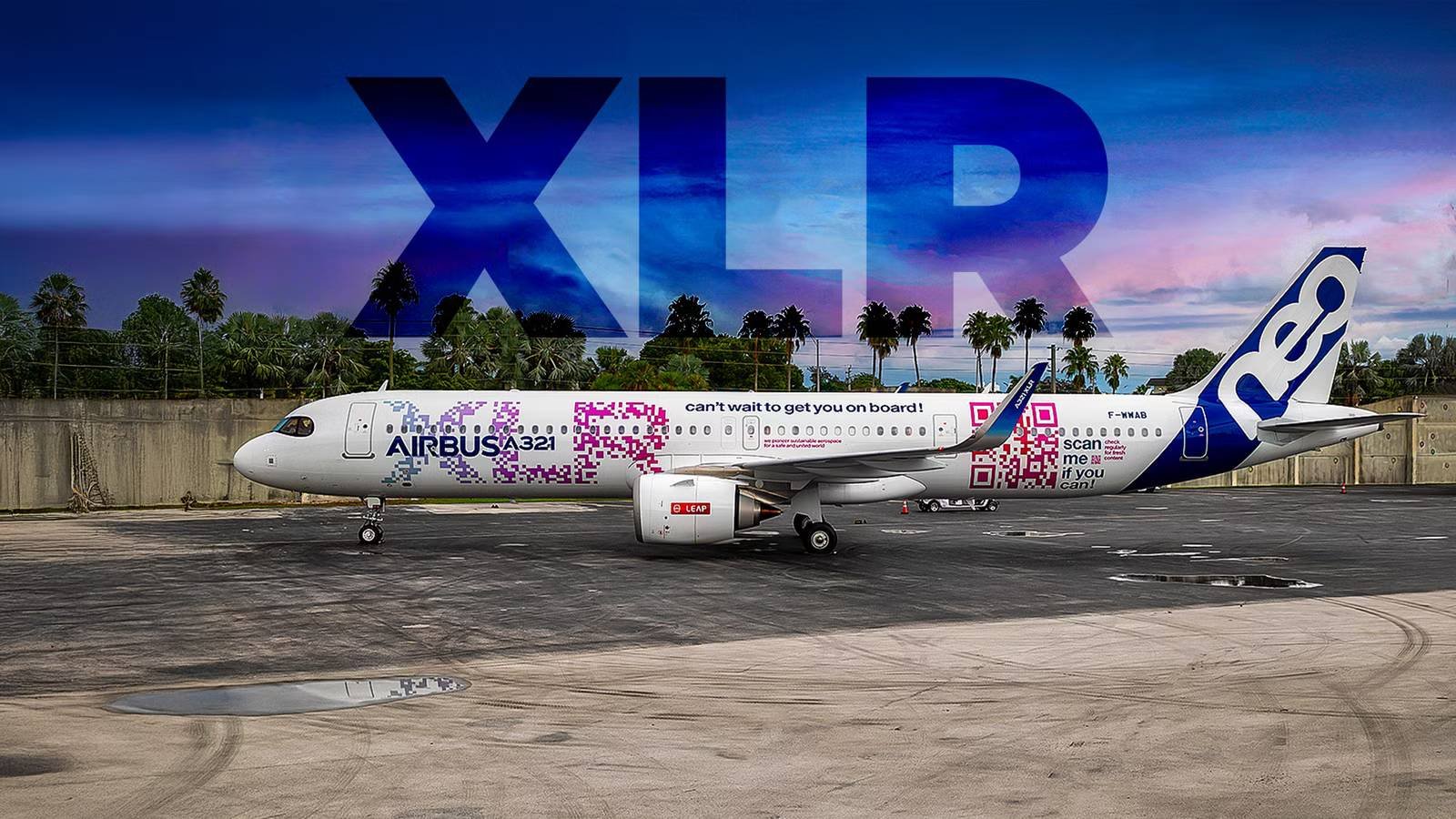
The Airbus A321XLR is built across four countries before it flies. Its wings are manufactured in North Wales, its forward fuselage in western France, its rear fuselage and Rear Center Tank in northern Germany, and its tail in central Spain. The components travel between facilities by road, barge, and a fleet of purpose-built Beluga cargo aircraft before arriving in Hamburg for final assembly.
That manufacturing structure is not an optimization exercise. It is the result of political agreements made when Airbus was founded as a European consortium in the late 1960s, under which each participating country received a guaranteed share of the work in exchange for funding its share of the development. The A321XLR, the most advanced narrowbody Airbus has ever built, is produced through the same national work-share framework that built the first A300 more than 50 years ago.
Why Britain Builds Every Airbus Wing

Airbus builds the wings for every commercial aircraft it produces, with the exception of the Airbus A220, at a single facility in Broughton, North Wales. The A321XLR’s wings are manufactured at the same site on the same production lines that build wings for the A320neo, A321neo, A330neo, and A350. Broughton employs approximately 6,000 people and has been producing aircraft wings continuously since the Second World War, when the site built Vickers Wellingtons, Avro Lancasters, and De Havilland Mosquitos.
The reason Britain holds wing production for Airbus goes back to the company’s formation. When the Airbus consortium was established in the late 1960s, wing design and manufacturing were assigned to the UK because of the advanced wing aerodynamics that Hawker Siddeley had developed for the De Havilland Trident. The Trident’s wing was considered among the most sophisticated of its generation, and the British design teams that produced it, originally based at De Havilland’s Hatfield facility, became the foundation of Airbus’s wing engineering capability. After Hawker Siddeley merged into British Aerospace in 1977, the wing design function moved to Filton near Bristol, where it remains today. Broughton handles the physical manufacturing and assembly.
The site’s capacity expanded significantly in 2003 when Airbus opened the West Factory, a 900,000-square-foot (83,600 sq m) facility built specifically to assemble wings for the A380. The last A380 wing left Broughton in February 2020, and the factory sat empty until Airbus announced in 2022 that it would be repurposed for A321 wing production as the company ramped toward a target of 75 A320-family aircraft per month. The conversion brought approximately 500 new jobs to the site. Completed wings are transported from Broughton to final assembly lines in Hamburg, Toulouse, and other locations by Airbus’s fleet of Beluga and BelugaXL outsized cargo aircraft.
Where Every A321XLR Component Is Made

The A321XLR’s components are manufactured across four countries before coming together for final assembly. The wings are built in Broughton, UK. The nose fuselage, forward fuselage, and center wing box are assembled in Saint-Nazaire, France, on the Atlantic coast. The flaps are produced in Bremen, Germany. The vertical tail fin is built in Stade, Germany. The horizontal tailplane and tail cone come from Getafe, Spain. Engine pylons are manufactured at Airbus’s facility in St. Eloi, Toulouse.
From the center fuselage rearward, the work is concentrated in Hamburg. The center fuselage sections, rear fuselage, and the structurally integrated Rear Center Tank are all assembled at Airbus’s Hamburg-Finkenwerder facility. The RCT is the component that makes the A321XLR unique within the A320 family, and its integration into the rear fuselage structure is Hamburg-specific work that does not apply to any other A320-family variant.
The supply chain extends beyond the four Airbus nations as well. Spirit AeroSystems in Malaysia manufactures the inboard flaps. FACC in Austria produces the outboard flaps. Safran, Collins, and Triumph supply the landing gear components. Collins and Parker Aerospace provide the fuel and inerting systems. The engines themselves come from either Pratt & Whitney in Connecticut or CFM International, a joint venture between GE Aerospace and Safran. By the time a completed A321XLR rolls out of Hamburg, components from more than a dozen countries have converged on a single final assembly line.
What Hamburg Does That No Other Airbus Facility Can

Hamburg-Finkenwerder handles the work that makes the A321XLR different from every other A320-family aircraft. The Rear Center Tank is not a separate unit bolted into an existing fuselage. It is built into the structure of rear fuselage sections 15 and 17, which means the tank walls are load-bearing components of the airframe itself. Those sections are assembled in Hamburg and joined with section 18/19, which arrives from a supplier, to form the complete rear fuselage.
Airbus dedicated three hangars to A321XLR production at Hamburg. Hangar 260 operates as the pilot line where initial production processes were developed. Hangar 259 handles equipment installation. Hangar 246, a former A380 facility inaugurated for A321XLR use in July 2024, runs the structural assembly line across a 24,000-square-meter (258,000 sq ft) production area with approximately 300 workers. The hangar was fitted with laser and sensor-controlled measurement systems, lifting platforms to replace steep stairway access, and vertical floor grid assembly stations designed to eliminate kneeling positions for workers on the fuselage sections.
The structural assembly in Hangar 246 was the final piece of Hamburg’s A321XLR industrial setup. With all three hangars operational, the facility covers the full production sequence from rear fuselage structural assembly through equipment installation to final assembly, making Hamburg the single site where the A321XLR transitions from components into a complete aircraft.
How A Completed Wing Gets From Wales To Germany

Completed A321XLR wings leave Broughton by road, traveling a short distance to the nearby Hawarden Airport where they are loaded onto an Airbus Beluga or BelugaXL for the flight to Hamburg-Finkenwerder. The Beluga fleet was purpose-built for this job. The original A300-600ST Beluga, based on a modified A300 fuselage with an enlarged upper cargo deck, entered service in 1995 to replace the Super Guppy, which Airbus had been using to move components between its dispersed manufacturing sites.
The BelugaXL, which entered service in 2020, is based on the A330 and carries 30% more volume than its predecessor. Airbus operates six BelugaXLs, and the fleet makes multiple daily rotations between Broughton, Saint-Nazaire, Getafe, Stade, and the final assembly sites in Hamburg and Toulouse. A single wing set for an A321XLR fits inside the BelugaXL’s cargo hold, which measures approximately 207 feet (63 m) in length and 26 feet (8 m) in width at its widest point.
Boeing operates a comparable system with its Dreamlifter fleet, four modified 747-400s that transport 787 Dreamliner fuselage sections and wing components from suppliers in Japan, Italy, and South Carolina to its assembly facilities in Everett and North Charleston. The difference is scale. Boeing uses four Dreamlifters primarily for a single aircraft program. Airbus operates six BelugaXLs to support its entire commercial aircraft portfolio across four countries, making multiple daily rotations between manufacturing sites that serve the A320, A330, and A350 families simultaneously. Both manufacturers have invested in dedicated cargo aircraft to move components between dispersed facilities, but Airbus’s system spans a wider geographic area and supports a larger number of production programs.
Why The A321XLR Is Only Assembled In Hamburg

The A320 family is assembled at four final assembly lines worldwide: Toulouse, Hamburg, Mobile, Alabama, and Tianjin, China. The A321XLR is currently assembled at only one of them. Hamburg is the sole final assembly site for the type, meaning that every A321XLR delivered to every airline in the world comes off the same production line. Toulouse, Mobile, and Tianjin do not have the tooling, structural assembly infrastructure, or Rear Center Tank integration capability that Hamburg built across Hangars 246, 259, and 260.
That concentration creates a bottleneck as demand for the A321XLR grows. Airbus holds over 550 orders for the type from more than 20 customers. The company is ramping A320-family production toward a target of 75 aircraft per month across all four assembly lines, but the A321XLR’s share of that output is constrained by Hamburg’s capacity alone. Adding A321XLR capability to Toulouse or Mobile would require replicating the RCT structural integration process at a second site, which represents a significant capital investment and industrial qualification effort.
Airbus has not announced plans to add a second A321XLR assembly line. For now, the aircraft that is built across four countries for its components is assembled in only one city. Whether Hamburg’s single-line capacity is sufficient to meet the order backlog on the timelines customers expect is a production question that will become more pressing as the type enters full-rate service over the next two years.