dailynewsnblog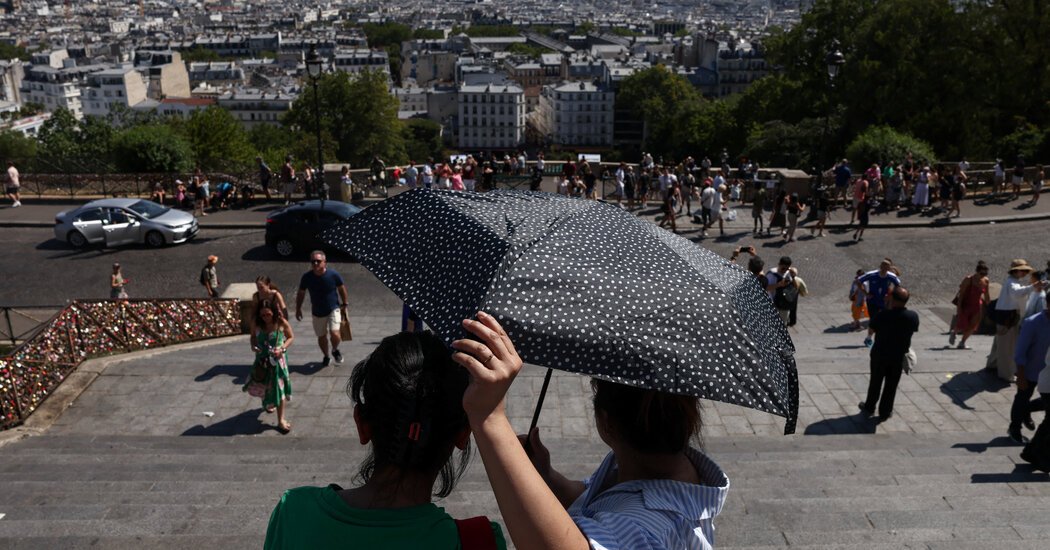
The heat broiling Europe in recent weeks is thought to have led to thousands of excess deaths, officials say, and is posing an extreme risk of wildfires, which have already burned through parts of Spain, Portugal and France.
In Britain, the national weather agency said on Monday that more than 2,700 people in England and Wales were thought to have died from heat-related causes in recent heat waves. Climate change was estimated to be responsible for 42 percent of those deaths, it added.
“Climate-change-fueled heat that is claiming lives, disrupting schools and hospitals and shutting down transport and infrastructure,” Clair Barnes, an expert in extreme weather and climate change at Imperial College London, said in a statement.
Here’s what to know about the extreme weather in Europe, which over three decades has been the world’s fastest-warming continent.
How dangerous has the heat been?
The full death tolls linked to heat may take months to calculate because investigations must be conducted for each death, but death statistics compared with historical averages point to a significant rise.
Britain: In late May, about 550 people were estimated to have died from heat-related causes, the country’s weather agency, the Met Office, said on Monday. In June, that spiked to about 2,200 in England and Wales.
The daytime maximum temperatures across England and Wales are now roughly 3 to 4 degrees Celsius hotter than they would have been without human-induced climate change, the Met Office said: “Both events were record-breaking due to the impacts of climate change.”
France: French health authorities estimated about 1,000 excess deaths over a few days in late June, as temperatures rose to their highest recorded levels. In just one region, on just one day in late June, 220 people came to the emergency room for heat-related reasons, French health authorities said in a report on Friday.
Germany: The June heat wave led to about 5,100 heat-related deaths, health authorities estimated on Thursday, noting that “temperatures of this intensity have not previously occurred in Germany.” Weather agencies had predicted temperatures of up to 41 Celsius (106 Fahrenheit) in parts of Germany in June.
Dry conditions are contributing to the spread of wildfires.
About 2.5 million acres burned in Europe last year, which was the worst year on record. That figure was nearly double the annual average from 2006 to 2024. This year, the figures for fires and burned areas in 2026 are already above average, with blazes in France, Portugal and Spain this month.
France: A wildfire broke out on Sunday in the Fontainebleau forest southeast of Paris. Farmers helped firefighters with water supply, local authorities said on social media on Monday. Hundreds of firefighters are battling the blaze, which burned almost 2,000 acres overnight, the national fire service said on social media on Monday.
“The intense heat and dry soil have created an exceptional risk of forest fires,” Météo-France, the national weather service, said on Friday. Last week, a separate wildfire scorched at least 11,000 acres and forced more than 10,000 people to evacuate.
Wales: Several wildfires and grass fires burned on Monday in North Wales, fire and rescue services said on social media, and residents were evacuated. On Monday, firefighters were working to quell a fire that had started on Sunday at Conwy Mountain, on the coast.
Spain: A wildfire on Saturday killed at least 12 people in the southern part of the country, officials said, most of whom were foreigners. More than 20 others were missing and more than 1,400 others had to flee their homes.
The fire sped across parched vegetation, at times at a rate of 328 feet per minute, said Félix Bolaños, Spain’s deputy prime minister.
Europe is heating up fast.
While the degree to which a single heat event is influenced by climate change requires specific attribution studies, scientists are certain that heat waves around the world are generally becoming hotter, more frequent and longer-lasting, and Europe has been warming faster than any other continent.
In 2025, almost the entire continent was hotter than normal. Researchers estimate that in recent years, Europe has seen tens of thousands of heat-related deaths annually.
How to cool off.
Staying cool and hydrating often are the two most important things to do to avoid feeling sick and being in discomfort in extreme heat. Here are some other ways to keep cool:
Block out the windows in your home — especially those that get afternoon sun — with a blanket or a darker sheet during the day to keep the heat out. At night, keep windows open and run fans to circulate the air.
Spritz your skin with a mist of cool or room-temperature water or wipe your forehead with a cool cloth. Cold showers can also help you cool down.
If you need to be outdoors, put ice cubes in your water bottle and drink cool liquids. If you plan to exercise, douse your head in cold water. Swimming is also a great way to exercise and keep cool.