dailynewsnblog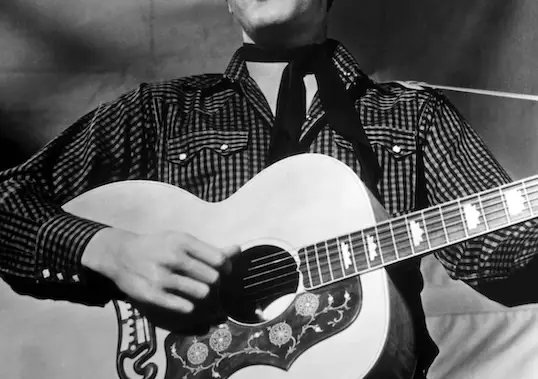
Conspiracy theories are seductive things in a complex world. They offer explanations for strange and terrible realities in a seemingly random and uncaring universe.

Someone or something malevolent must be to blame. Facts are suppressed, truth is obfuscated and unknown powerful forces are working to destabilize, conquer, destroy and manipulate, while profiting from our suffering and confusion.
The internet hasn’t helped. Remember when we thought that the greatest impediment to humankind’s intellectual and spiritual evolution was the lack of information? Nope. It wasn’t that. The internet has only allowed fringe ideas to proliferate and strengthen as like-minded conspiracists find each other online. Hence, chemtrails, flat-Earthers, moon landing skeptics, aliens at Area 51, the inside job that was 9/11, and so on.
We have a natural desire to make sense of senseless things. We feel powerless when something bad happens, so finding a “reason” becomes paramount. We want to regain control and feel safe again. By connecting all the dots — dots that powerful people don’t want us to know about — we reveal a truth that no one else sees, making us feel unique and superior. And if we find others who believe the same things, we’re no longer alone with our fears and suspicions. It’s a step towards restoring order and clarity.
The music world has long been awash in such thinking. With that in mind, here are some music-based conspiracy theories that have believers worldwide. Wake up, sheeple. Can’t you see what’s really going on?
Banksy has been identified as a member of Massive Attack
Banksy, the world’s most famous guerrilla artist, descends on a city, leaves behind a work of art in a very public place and then vanishes like a ghost. Some of his works have sold for millions of dollars. Who is this guy?
One of the leading theories is that he’s Robert “3D” Del Naja, a member of the British electronica band Massive Attack. There’s some smoke here, too. Del Naja was big into the graffiti and street art scene of Bristol in the early ’80s, as was Banksy. Investigators have noted that Banksy works often appear in locations roughly coinciding with Del Naja’s travels and Massive Attack gigs, including London, Toronto, New York, Los Angeles, Jamaica, and, oddly, Ukraine. Del Naja has admitted to knowing Banksy and is coy when it comes to answering questions about him.
It’s all pretty compelling but not concrete. The most recent theory is that Banksy is Robert Gunningham, a friend of Del Naja and his street art idol. It’s known that the two of them have collaborated at least once. File this one under “unsolved.”
Jim Morrison of The Doors and Rush Limbaugh were the same person
No, really. Jim did not die at age 27 of a heart attack in his bathtub in Paris in 1971, but instead faked his own death to escape the rock star lifestyle and his many addictions. There was no autopsy (true) and it was a closed-casket funeral (also true). Yes, there may be a grave at Père Lachaise Cemetery, but it’s a ruse. Believers say that Jim made his way back to the United States and laid low for a little more than a decade before re-emerging in 1984 in California as talk show host Rush Limbaugh, rising to become one of the best-known radio personalities of all time.

Get breaking National news
Get breaking Canada news delivered to your inbox as it happens so you won’t miss a trending story.
What’s the evidence? Eagle-eyed people have spotted a mole that’s (almost) in the same place on the visages of Morrison and Limbaugh. They also say there is an undeniably similar facial structure. That’s it.
Flimsy stuff. True, Mr. Mojo Risin’ believers know that Jim is actually a maintenance worker in Syracuse, N.Y., who goes by the name of Frank. There’s even a documentary about him.
Elvis lives and works as a pastor
True believers know that despite multiple witnesses, a police presence, an autopsy, a coroner’s investigation and an open-casket funeral, Elvis Presley faked his own death. In fact, on Aug. 17, 1977, the day after he “died,” he was spotted at Memphis International Airport boarding a flight to Argentina. (Please disregard the fact that there were and are no direct flights from Memphis to anywhere in Argentina.)
Opportunistic Elvis impersonators popped up through the late ’70s and ’80s, all claiming to be The King. Several Geraldo Rivera TV specials tried to get to the bottom of the story. And then, of course, there was the infamous 1987 sighting of Elvis getting a Whopper at a Burger King in Kalamazoo, Mich.
All these stories are false, of course, because the real Elvis is Bob Joyce, a preacher with only a passing resemblance to the late singer and who would be much younger than the real Elvis. But the internet says that DNA tests proved Pastor Joyce was, in fact, Elvis, and that this whole thing has been a giant government cover-up. What’s being covered up? Wouldn’t you like to know.
An ancient death code is hidden in ‘Stairway to Heaven’
Back in the Satanic Panic of the 1980s, a whole web of conspiracies unto itself, Led Zeppelin was singled out for dropping secret evil messages in their songs. They were clever, though. The messages were recorded backward, a technique that became known as “backmasking.” Spin your turntable backward and Robert Plant says things like, “Here’s to my sweet Satan” and “I live for Satan.” The theory goes that the human brain was able to detect these subliminal exhortations and thus lured to the dark side.
But there’s another angle, an alleged medieval death code lurking in the song that immediately follows Jimmy Page’s big guitar solo in Stairway to Heaven. It consists of four notes played in a way that has an 800-year-old history. It’s remarkably similar to the Dies Irae (“Day of Wrath“), a Gregorian chant that dates to the 13th century. It was used in requiem masses for centuries and symbolized Judgement Day. Since its composition around 1270, it has signalled, via music, that “death is here” and has been used by everyone from Mozart to Franz Liszt to Rachmaninoff. It’s been co-opted for film scores (you can hear it in both It’s a Wonderful Life and Frozen 2!), and all manner of rock songs.
So what’s the point of using it in Stairway to Heaven? Unclear, but remember that at the time of the song’s writing and recording, Page was deep into the occult and even bought the house of Aleister Crowley, the self-proclaimed “wickedest man in the world.” Page’s purpose of including Dies Irae in Stairway was … well, we don’t know. We just haven’t gathered all the evidence yet. But it must be awful, right?
The removal of the headphone jack was a grand international tech conspiracy
I gotta admit that this one sounds pretty plausible. In 2016, Apple made a big deal of eliminating the headphone jack from the iPhone, saying that this was a major step forward for technology and user convenience. They called this move “courage.” Other manufacturers soon followed, forcing us all to migrate to wireless headphones and earbuds. This, we were told, would make our phones thinner, more water-resistant and deliver better audio. In short, no headphone jack meant that our lives were going to get easier. What?
Headphone jack technology dates to 1877, when the first telephone switchboards were built. These jacks, no matter what their size, worked perfectly for 139 years. Connecting headphones this way required no additional power and no fiddly pairing procedures. All you had to do was plug it in. No licence, completely open standard, free for anyone to use.
Now, though, the default connection is Bluetooth, a wireless standard first revealed in 1999. This tech has limited bandwidth, so all audio must be compressed before being transmitted. This results in worse audio and makes Bluetooth useless for listening to high-resolution music. The old 3.5 mm headphone connection had no such limitations or requirements. Bluetooth as an upgrade? Hardly.
So what was the real reason for removing the headphone jack?
Three months after the “courage” announcement, Apple introduced AirPods, the company’s wireless Bluetooth earbuds, which cost at least $100 more than the old wired Apple buds. AirPods were wildly successful and are now a US$15 billion-a-year business. Plus, Apple has a licensing deal that requires all manufacturers who make Lightning or USB-C connectible headphones to pay for every single unit sold. And since AirPods work best with iPhones, any move away from an iPhone would also mean moving away from your expensive AirPods.
Samsung, which originally mocked Apple for dumping the headphone jack, soon figured it out and in 2019 removed it from all its new phones. There was no press release or announcement. It just … disappeared. Within two years, every single major Android phone maker followed. This caused the wireless headphone and earbud market to explode, reaping billions more in revenue.
Wake up, sheeple. Go back to wired headphones, even if it means a little dongle. Fight Big Tech! Hear better sound!
If you want to go further down the conspiracies-in-music rabbit hole, check out the special series with my podcast, Uncharted: Crime and Mayhem in the Music Industry. I’ve got some doozies for you.