dailynewsnblog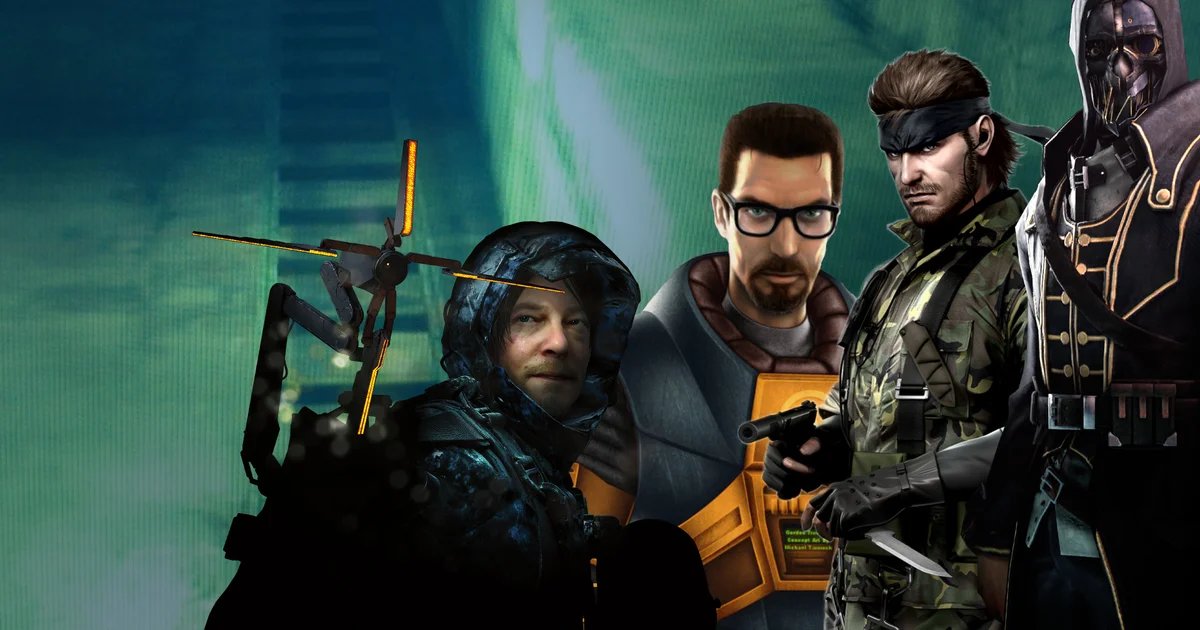
Before Xbox closed Arkane Austin, the studio had 20 design philosophies plastered on its walls. One read, succinctly, “Fuck ladders.”
This came about when Harvey Smith, ex-studio head, and his creative partner, the studio’s founder Raphael Colantonio, were sitting talking – long before Dishonored became a hit. Arkane was unfunded; the team were trying to get Thief or Blade Runner off the ground. “I said, ‘Dude,” Smith remembers. “We have all these sayings and half the people we hire haven’t heard them.'”
Smith mocked them up with a motivational poster generator and slapped them around the office.
Blade Runner and Thief didn’t work out. But the next game the team created was Dishonored, the cult-favourite first-person assassination game which swapped out ladders for functionally identical hanging chains. “Raf was convinced the chains were a lot less work,” Smith laughs. They weren’t a lot less work.
Watch on YouTube
Over many decades game designers have settled into accepted standards; a shorthand for good design. In older games “the head wasn’t even slaved to the mouse,” Smith says by way of example for how things have evolved. Now, control methods are homogeneous, level design has accepted norms, and there are entire whitepapers on how to implement functional ladders into video games. But back then, developers could never have conceived of a ladder in a modern third-person action game, which can even account for players climbing the wrong side, shuffling the character around as they close in on the summit. Devs had to ask themselves dozens of design questions to get here.
Does the player see their hands and feet on the ladder? The animations need to look good, then.
Can the player pull out their weapon? Do we need new animations for that, too?
Can they slide down the ladder? What about jump off it?
What happens if they’re hit by a bullet or explosion? Or if they climb the wrong side?
Can the AI do everything the player can?
Suddenly it’s much easier to understand Arkane’s distaste for ladders. Go play Tom Clancy’s Rainbow Six on the original PlayStation. The ladders are more deadly than the terrorists. You climb down one, look back, and the hostage will jump down like a lemming, pushing their shin bones through their empty brain, killing themselves instantly. Very funny. Very annoying.
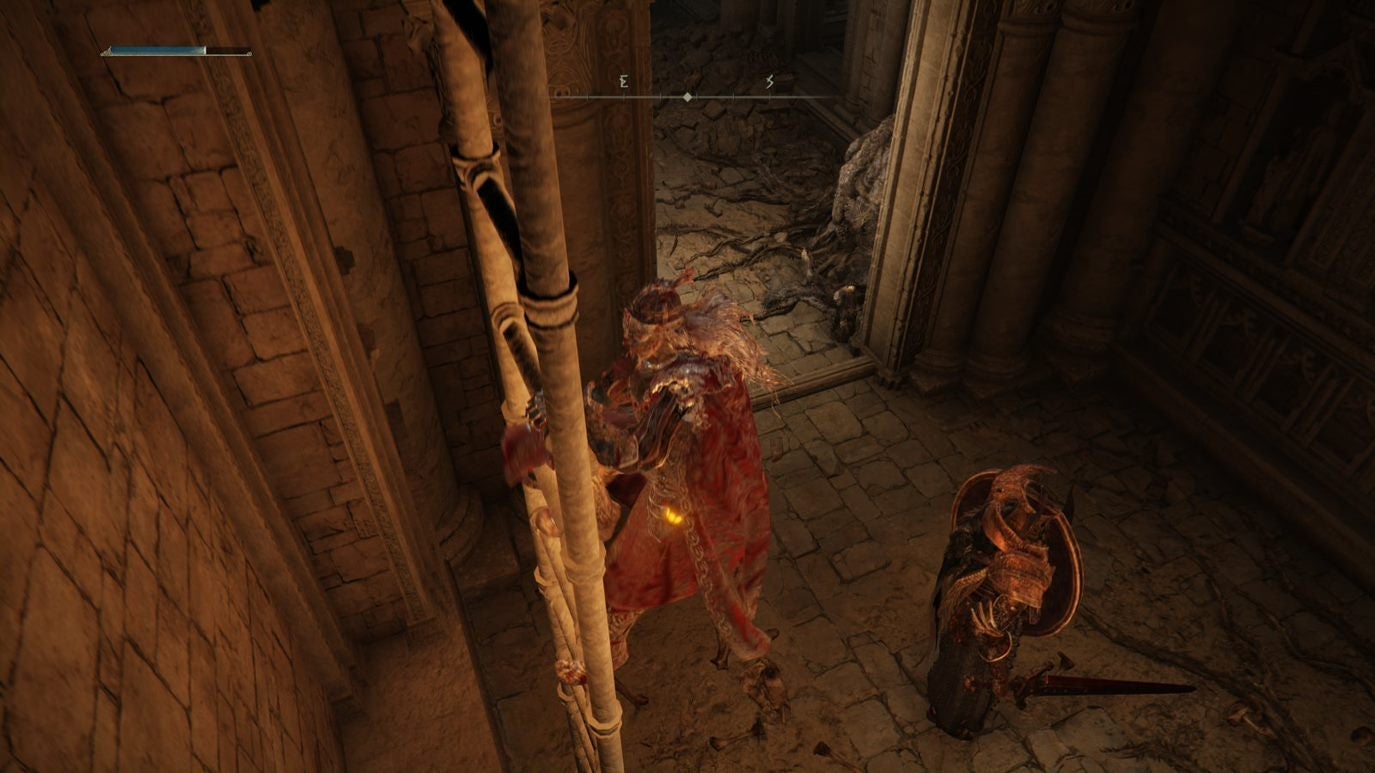
Remember how Source Engine games did it? You wouldn’t even stick to the ladders. You’d just magnetise your face to the surface, then tilt your head all the way back and walk up powered by an invisible crotch appendage. Angle yourself a little to the side and you’d slip off and break both your invisible legs. Sound designers wouldn’t even know how to capture that crunch anymore – it’s lost knowledge. We don’t know how good we have it nowadays with our lovely sticky ladders.
Liz England, former lead designer at Ubisoft and Insomniac, has good experience with them. “There’s always cases where, when you put players in a different move state, there’s bugs where they get stuck in that move state,” she explains. “So, you might end up getting just kicked off the ladder, but you also can’t pull out a gun anymore. Ladders are horrible.”
England wrote a blog called The Door Problem after she’d gone for a meal with some non-gamers and the subject of games came up. England found herself trying to explain the creeping complexity of seemingly mundane objects. She points at a door during our conversation. “We take them for granted, they’re all over the place,” she says. “Everyone knows how a door works, everyone knows what a door is, but in a game, there’s nothing that says a door is solid or not. Does it open towards you, or does it open away from you? Does it hit you in the face?”
Doors are bastards. Ladders are arguably worse.
When working on Resistance 3 at Insomniac, there was one ladder in a trainyard that players just kept missing during playtests. England put an arrow on it – nothing. She put multiple arrows on it – still people would walk by, because a ladder is such a normal thing to see on a train that it blended into the environment. In the end, they painted the thing yellow and called it a day. “It’s an inherent trade-off with having high levels of realism and visual fidelity in games,” England says.
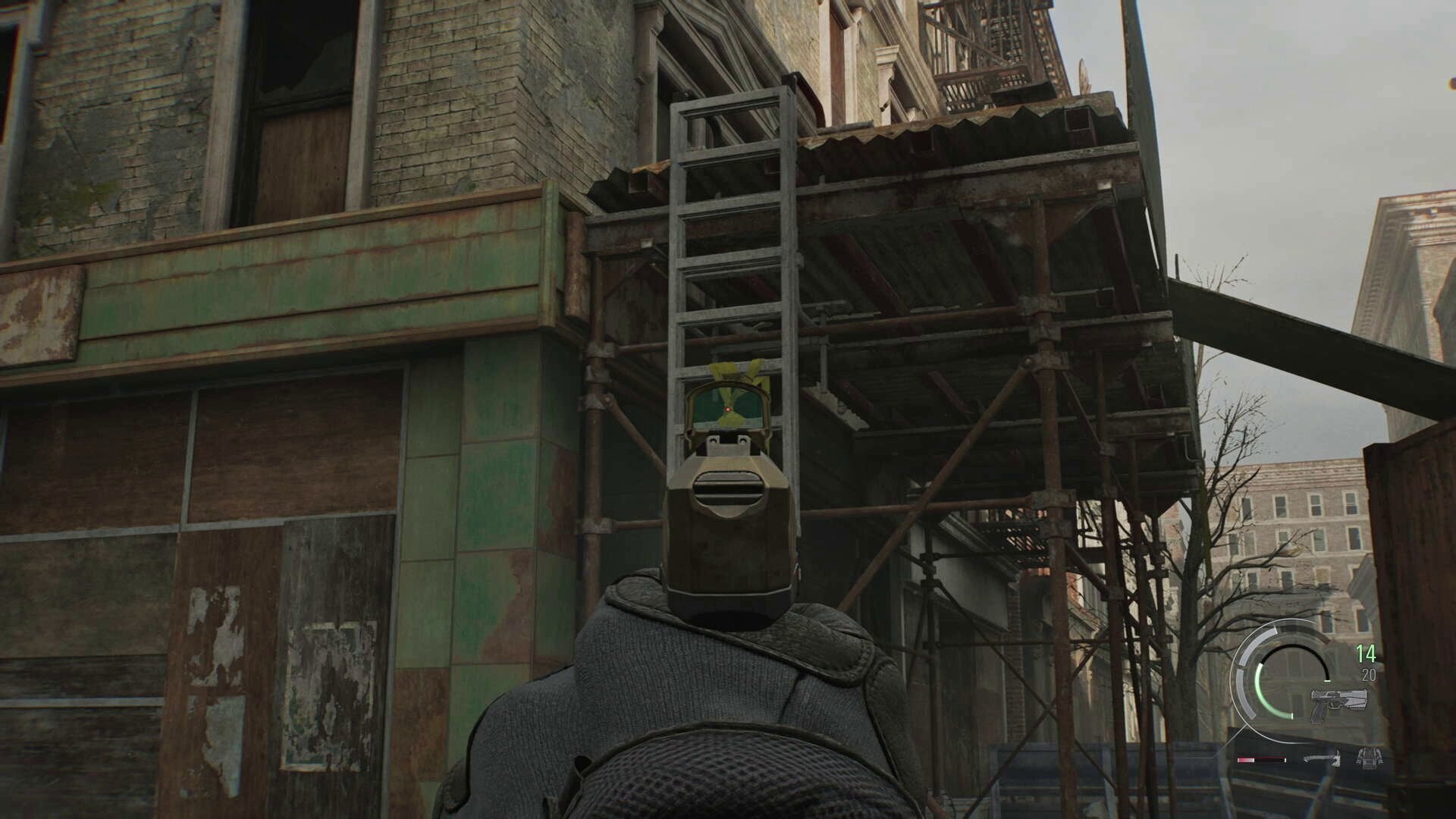
I’m about to tell you some forbidden knowledge and you won’t be able to stop noticing it once I do: these complications with ladders are why most games only place them in areas where there are no enemies. It removes a bunch of design considerations and bespoke work from the equation, turning ladders into safe spaces.
Ladders are also tricky because of what they represent – they’re a break in the regular gameplay. They take away your freedom and lock you into a vertical train track, where you can only choo-choo up or choo-choo down. Most game designers want you to get up as quickly as possible because of this.
Sometimes game designers throw out the rules in small but cheeky ways. In Arc Raiders, head to the roof of Research & Administration on Dam Battlegrounds and you’ll find a ladder on the side of the building. Games have programmed us to know that ladders are – unless you’re playing the original Rainbow Six on PS1 – generally safe spaces. You hold down and eventually you reach the bottom.
Not this ladder, no sir. This ladder only goes halfway down, and if you hold down you fall off the bottom and die. You have to stop and jump off to the side. It’s a funny little troll move from the devs, but it works to reinforce the overwhelming feeling that nowhere is safe Topside – you have to constantly stay alert.
Then there’s Hideo Kojima.
Metal Gear Solid 3: Snake Eater features the longest ladder in video games. It was actually the background image behind the “fuck ladders” quote at Arkane Austin. A three minute climb; it’s an absolute unit. It comes around the midpoint of the game as you transition from one biome to another. Everything slows down, the sound goes hollow, water drips and wind howls through the tunnel. As you climb, you begin to wonder if this intermission will ever end. Have you transformed into a metaphorical ouroboros? Then the music hits – a swelling, a capella Bond-style theme that warbles about eating tree frogs; a calm moment after an intense boss fight. What a thrill.
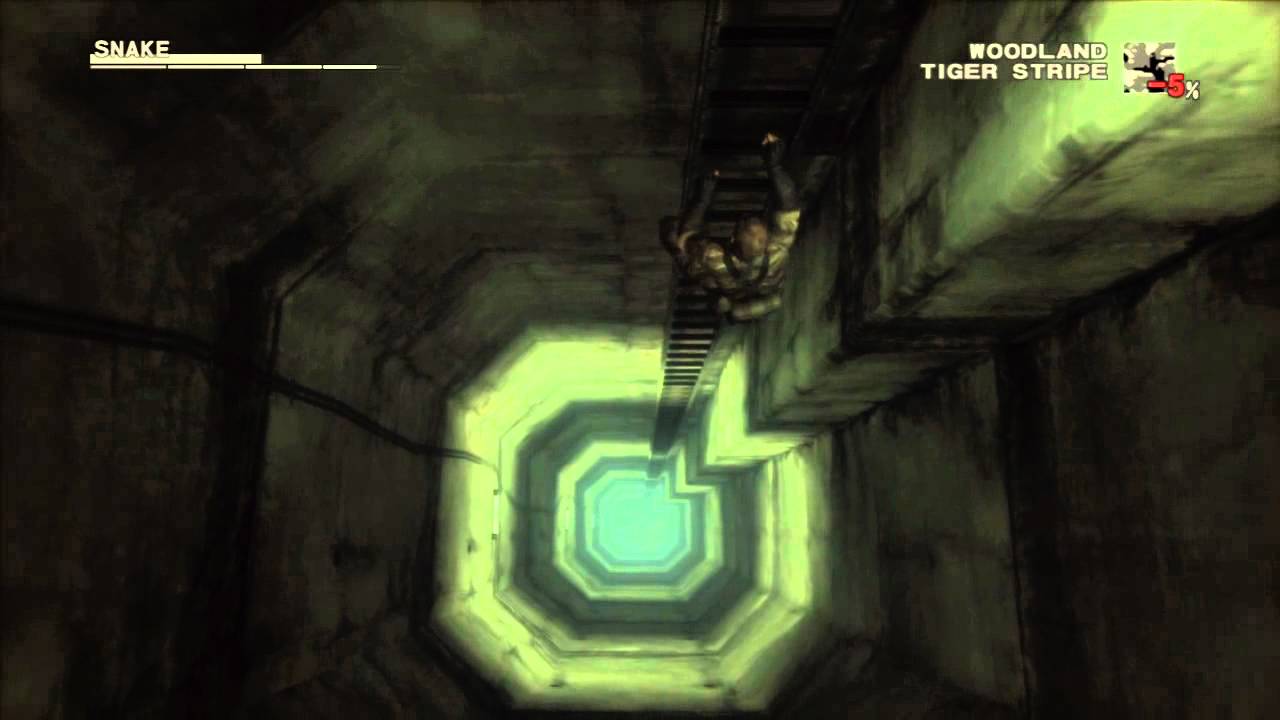
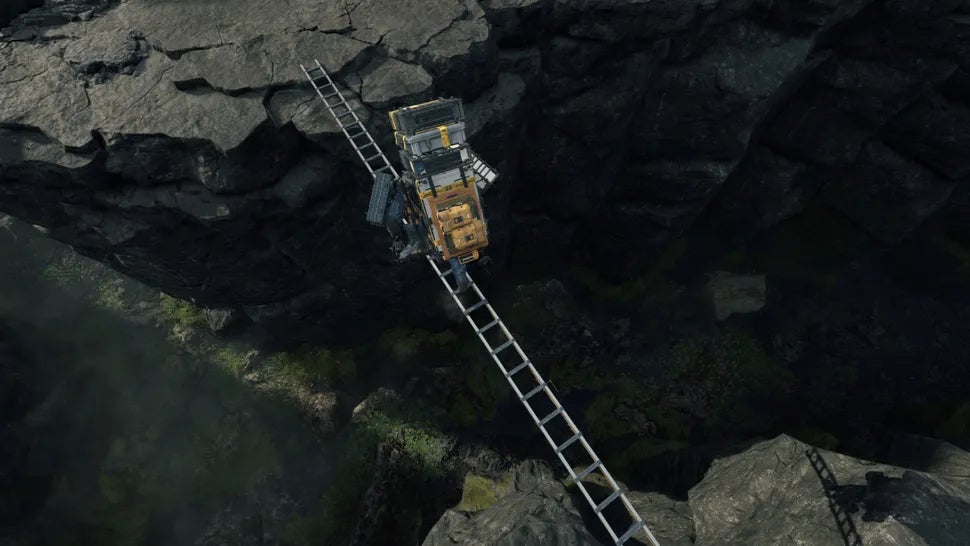
Kojima hasn’t stopped messing with ladders since Metal Gear Solid 3. In Death Stranding, Kojima Productions reinvented the ladder as a thematic tool – a literal way of connecting two previously unconnected places while also connecting players together, with structures you build appearing in the worlds of others.
Ladders in Kojima’s post-apocalypse delivery game are fully portable and can be placed anywhere in the world, at almost any angle. They can be used to climb – as ladders usually are – but they can also be used as a bridge over a river. It blends a bunch of different approaches to ladders to make perhaps the most versatile ladders in video games. When they’re below a 45-degree angle, you don’t stick to the ladder and can walk up them freely. Get more vertical and you stick. It’s just one of the smart ways that the series twists traditional game design to do something different while still managing to be intuitive.
Something simple like a ladder can be used to reinforce a theme or make the player feel something unique to games. You’d never get a three-minute, unbroken ladder climbing sequence in a movie (or at least outside of the arthouse), but the act of controlling the character transforms the context and you begin to wonder if your dwindling stamina will even hold to the summit. It’s a perfect example of vibes – where sound design, music, UI, pacing, and mechanics dovetail. As Kojima did for Death Stranding, you can even build an entire game around them and what they represent as a narrative tool and gameplay opportunity. It’s a nice reminder that there’s still places we haven’t been – we just might need a ladder to reach them.