dailynewsnblog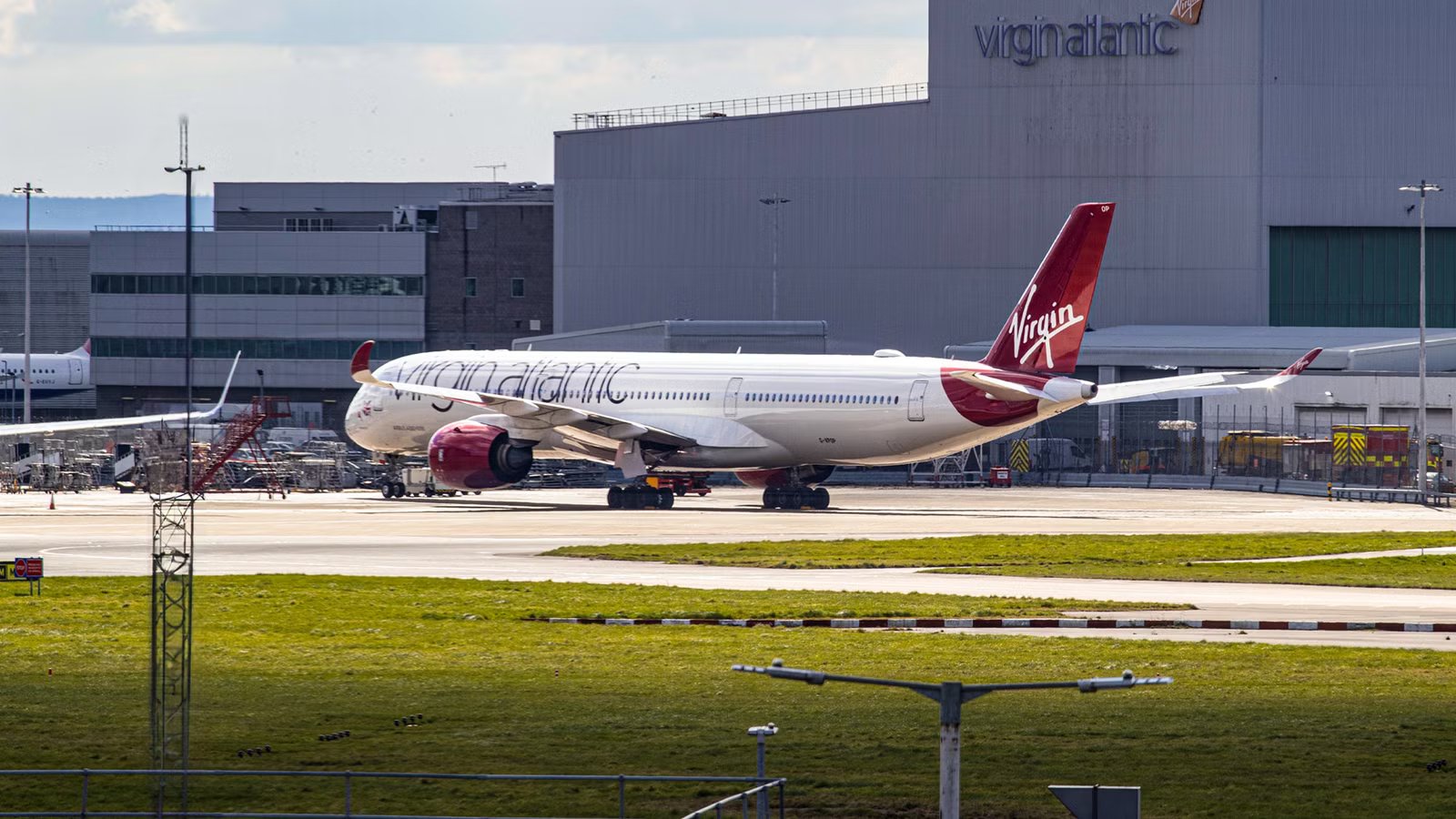
 London Heathrow Airport (LHR) is one of the busiest international airports in the world, yet it is also one of the most tightly regulated when it comes to aircraft noise. Despite handling 83.9 million passengers and 474,029 aircraft movements in 2024, Heathrow remains legally capped at 480,000 annual air transport movements, meaning airlines must maximize every available slot while complying with some of Europe’s strictest environmental rules.
Those restrictions become even more significant overnight. Between late evening and early morning, airlines are not simply competing for scarce runway capacity; they are also competing against a finite noise budget. This is where the Airbus A350 has emerged as one of the industry’s standout performers. Combining an advanced composite airframe with the Rolls-Royce Trent XWB, Airbus says the aircraft is up to nine decibels quieter than competing widebodies, giving airlines a valuable advantage when operating into airports where every decibel matters.
Heathrow’s Night Noise Rules Are Among The World’s Strictest

Unlike many major airports, Heathrow regulates overnight operations using a Quota Count (QC) system rather than relying solely on movement limits. Every aircraft is assigned a QC value based on its certificated noise performance for both take-off and landing. The quieter the aircraft, the lower its QC rating and the ‘less’ of the airport’s overnight noise allowance it consumes.
The airport’s scheduled night quota period runs between 23:30 and 06:00, when aircraft movements are tightly controlled to minimize disturbance for the hundreds of thousands of residents living beneath Heathrow’s arrival and departure corridors. Aircraft are assigned QC values ranging from QC/0 and QC/0.125 for the quietest types through to QC/16 for the loudest. Under current UK regulations, aircraft rated QC/4 cannot normally operate during the night quota period, while QC/8 and QC/16 aircraft are prohibited throughout the entire night period.
For airlines, that makes aircraft selection a commercial decision as much as an operational one. A quieter aircraft allows operators to preserve more of their overnight quota while maintaining valuable long-haul schedules. Heathrow also incentivizes the use of quieter fleets through its landing charge structure, with newer Chapter 14-compliant aircraft paying lower noise-related charges than older, noisier designs. Today, more than 80% of Heathrow’s aircraft movements are performed by aircraft meeting ICAO Chapter 14 noise standards, demonstrating how quickly airlines have modernized their fleets.
The Rolls-Royce Trent XWB Is Central To The A350’s Quiet Performance

Every Airbus A350 is powered exclusively by Rolls-Royce Trent XWB engines, making it the only modern widebody family designed around a single engine type. The larger A350-1000 uses the Trent XWB-97, producing almost 97,000 pounds of thrust, making it the most powerful commercial engine Rolls-Royce has ever certificated. Despite that enormous output, it is also among the quietest engines in its class thanks to extensive acoustic optimization throughout its design.
Aircraft noise is generated by far more than simply engine exhaust. Fan blade interaction, turbulent exhaust mixing, airflow around the nacelle and aerodynamic friction across the aircraft all contribute to the overall noise signature heard on the ground. Rolls-Royce addressed these sources using a high-bypass turbofan architecture, advanced acoustic liners inside the nacelle and an aerodynamically optimized fan designed to reduce both fuel burn and perceived community noise.
The results are reflected in the aircraft’s certification figures. The A350-1000 records a certified take-off noise level of approximately 88.8 EPNdB, placing it comfortably within the quieter categories used by airports such as Heathrow. Airbus also states that the A350 is up to nine decibels quieter than competing aircraft when measured at the front of the cabin. Because sound levels multiply rather than add up, a nine-decibel drop sounds small on paper but actually eliminates nearly 90% of the physical noise.
The Composite Airframe Contributes Far More Than Fuel Savings

The A350 is frequently described as a composite aircraft, but the scale of its advanced construction is remarkable. More than 70% of the aircraft by weight consists of advanced materials, including 53% carbon-fiber-reinforced plastic (CFRP), alongside aluminum-lithium alloys, titanium and advanced steel. Beyond reducing weight, these materials enable smoother aerodynamic surfaces, greater corrosion resistance and improved structural efficiency.
Catch what other flight trackers miss
Emergency squawks, holds, NOTAMs — live signals, no signup.
Open tracker
Catch what other flight trackers miss
Emergency squawks, holds, NOTAMs — live signals, no signup.
Open tracker
The aircraft’s wing is equally significant. Spanning 212 ft 5 in (64.75 m), the highly flexible composite wing was designed specifically for aerodynamic efficiency. During flight, the wing naturally flexes upward under load, reducing drag and improving lift characteristics. Combined with carefully designed flap track fairings, engine nacelles and wing-body integration, these refinements also help minimize aerodynamic noise generated during both departure and approach.
Passengers benefit from the composite structure as much as communities beneath the flight path. Because carbon-fiber fuselages tolerate higher pressure differentials than conventional aluminum designs, the A350 maintains a cabin altitude of around 5,500 feet while cruising between 35,000 and 40,000 feet, compared with approximately 8,000 feet aboard many older widebody aircraft. Airbus also designed the aircraft to maintain higher cabin humidity, improving passenger comfort on ultra-long-haul flights while demonstrating that the same engineering choices contributing to lower external noise also enhance the onboard experience.

While the Rolls-Royce Trent XWB is central to the A350’s acoustic performance, Airbus designed the aircraft as an integrated package rather than simply attaching quieter engines to an existing airframe. From the earliest stages of development, engineers focused on reducing the aircraft’s overall community noise by refining everything from the wing profile and flap mechanisms to the engine nacelles and landing gear fairings. The result is an aircraft that is not only quieter during take-off, but also during approach when aerodynamic noise becomes increasingly significant.
Airbus says the A350 has a noise footprint up to 50% smaller than that of previous-generation aircraft of a similar size. That’s particularly important around airports such as Heathrow, where hundreds of thousands of people live beneath arrival and departure routes. Even modest reductions in perceived noise can have a significant impact when multiplied across hundreds of daily aircraft movements, helping airports balance growing passenger demand with increasingly strict environmental expectations.
The A350’s design has also helped airlines perform well under Heathrow’s Fly Quieter and Greener program, which ranks airlines using metrics including aircraft noise performance, trackkeeping, continuous descent approaches and NOx emissions. Although the rankings assess airline operations rather than individual aircraft, carriers operating modern fleets that include the A350 are generally better positioned to score highly than those relying on older, noisier aircraft.
Airlines Gain Valuable Operational Flexibility

For airlines, quieter aircraft are about far more than passenger comfort; they create valuable scheduling flexibility. Heathrow’s overnight movement limits and Quota Count system mean every late-night departure and early-morning arrival must be carefully planned. Aircraft with lower QC ratings allow airlines to operate within those restrictions while preserving as much of their available noise quota as possible for other services.
 British Airways has embraced that advantage by building one of Europe’s largest A350-1000 fleets. The carrier now operates 18 A350-1000s, deploying them on routes including New York, Washington DC, Dubai, Bengaluru, Lagos and several other long-haul destinations. Many of these services depart Heathrow late in the evening or arrive early in the morning, making the aircraft’s low noise footprint an operational asset as well as a passenger benefit.
Virgin Atlantic reached a similar conclusion when replacing its aging Airbus A340-600 fleet with the A350-1000. Alongside reducing fuel burn and carbon emissions by around 30%, the newer aircraft also delivered substantially lower community noise. Airlines including Cathay Pacific, Singapore Airlines, Japan Airlines, Qatar Airways and Finnair have likewise made the A350 a cornerstone of their Heathrow operations, combining long-range capability with one of the quietest noise profiles of any widebody currently in commercial service.
Quiet On The Outside, Comfortable On The Inside

Passengers may never notice Heathrow’s Quota Count system, but they often notice the aircraft itself. The A350’s cabin is widely regarded as one of the quietest in commercial aviation, thanks to reduced structural vibration, extensive acoustic insulation and the naturally quieter characteristics of the Trent XWB engines. Lower cabin noise makes conversations easier, improves the in-flight entertainment experience and contributes to a less fatiguing journey, particularly on flights lasting ten hours or more.
The aircraft’s composite fuselage also enables a cabin altitude of approximately 5,500 feet, compared with the roughly 8,000-foot cabin altitude typical of many older aluminum airliners. Combined with humidity levels of around 20%, roughly double those found on many previous-generation widebodies, this results in an environment that many passengers find noticeably more comfortable, particularly on ultra-long-haul routes. These improvements have become key selling points for airlines marketing premium cabins, but they also benefit economy passengers by reducing dehydration and fatigue.
Ultimately, the A350 demonstrates how advances in aircraft design can solve multiple challenges simultaneously. Airbus estimates the aircraft burns around 25% less fuel and produces 25% lower CO2 emissions than previous-generation aircraft of a similar size, while its quieter engines, advanced aerodynamics and composite structure also reduce community noise. At airports such as Heathrow, where runway capacity, environmental regulation and neighborhood concerns are constantly competing priorities, that combination gives airlines a genuine operational advantage. The A350 is not simply a more efficient long-haul aircraft; it is one of the few widebodies purpose-built for an era in which noise is every bit as important as performance.


![10-Hour Flights: Airbus A321XLR’s 11 New Longest Nonstop US Routes Revealed [List & Map]](https://dailynewsnblog.com/wp-content/uploads/2026/09/american_a321xlr_clouds_1920x1080.jpg)