dailynewsnblog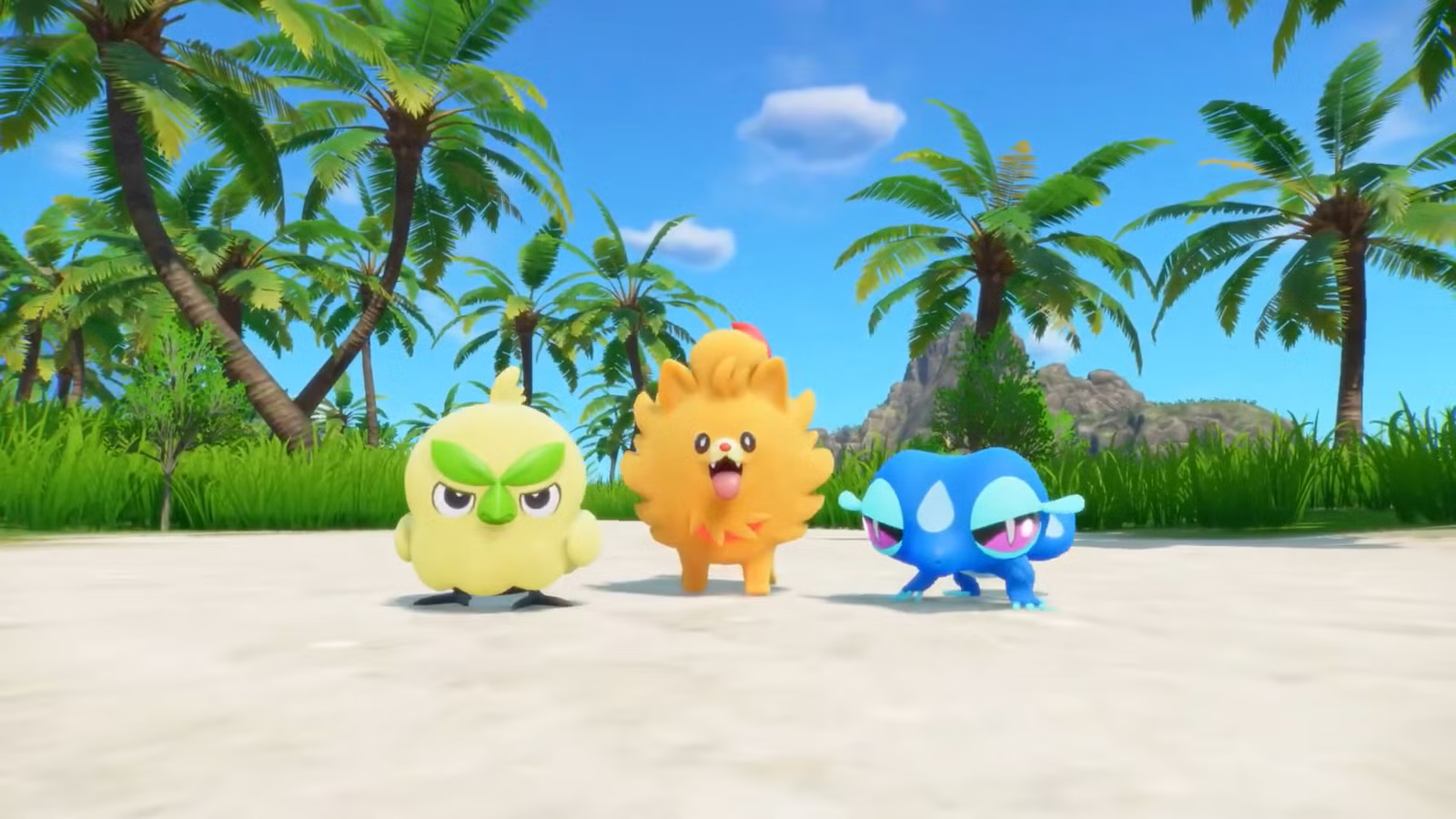
This week, a fresh round of Pokémon Winds and Waves rumors and leaks suggested that next year’s mainline entry could feature 300 new Pokémon. These leaks are, by any rational person’s read, should be taken with an entire deer lick of salt. But they’re nevertheless worrying. Hey, even a broken Hoothoot is right twice a day!
If these rumors turn out to be true, a crop of 300 new Pokémon would mark the single biggest new generation of Pokémon ever. For context, here’s how many Pokémon have been introduced with each new generation, according to data tracking from Serebii:
Generation | Starting year (U.S.) | # of new Pokémon |
|---|---|---|
1 | 1998 | 151 |
2 | 2000 | 100 |
3 | 2003 | 135 |
4 | 2007 | 107 |
5 | 2011 | 156 |
6 | 2013 | 72 |
7 | 2016 | 88 |
8 | 2019 | 96 |
9 | 2022 | 120 |
Fans are pretty split on whether 300 new Pokémon is a thrilling prospect of creature-collecting or an absurdly wild swing that would oversaturate an already pretty saturated compendium of monsters. One caveat, according to the leaks, is that Winds and Waves won’t literally add 300 entirely new Pokémon; that number could comprise alternate forms or regional variants in addition to wholly original Pokémon.
For all intents and purposes the distinction is meaningless. Alolan Ninetails is fundamentally different Pokémon than regular Ninetails in every meaningful way — its look, its typing, and its moveset, not to mention the strategies you need to memorize whether you’re fighting with it on your roster or against it on an opponent’s. But hey, Ninetails and Alolan Ninetails have the same name and National ‘Dex number, so are they really that different? (Yes, I say.)

300 new Pokémon… I wouldn’t even know what to do with that. For decades, Pokémon games championed the ideal of a six-Pokémon party: You’d choose six monsters, level them up from your first gym badge through the Elite Four, and forge bonds over the course of a lengthy RPG. There was an intentional tension to swapping party members out that forced you to give serious consideration before subbing in a new Pokémon. But starting with 2018’s Let’s Go Pikachu! and Let’s Go Eevee!, everything changed. You could swap out the Pokémon in your party from (mostly) anywhere at (mostly) any point. The real-time battles in last year’s Legends: Z-A actively encouraged swapping out Pokémon on the fly, further eroding the six-Pokémon party. Bringing 300 new Pokémon into the fold can only incentivize that shift even more.
There’s also the fact that — cue an old man yells at cloud moment — Pokémon designers are really starting to scrape the bottom of the barrel. Keys are Pokémon now. There’s a Pokémon that’s literally just an ice cream cone with a face. (Admittedly, Vanillite is 16 years old. But that was the beginning of the end!)
And this isn’t just nostalgia talking. In the Pokémon community, there’s a meme-ified refrain that “every Pokémon is someone’s favorite.” In 2025, one YouTuber actually put that notion to the test in a wide-ranging survey of more than 26,000 respondents. More than 50 Pokémon didn’t get any votes at all. Of those, just one of the original 151. (Pour one out for poor Tentacool.) Meanwhile, the most-beloved Pokémon largely originated in earlier generations.
For every Dragapult, there’s an Applin (it’s an apple). For every Sprigatio, there’s a Flamigo (think: a literal Flamingo). If the new generation comprised 100, maybe 150, Pokémon, I could see many of them being worthy additions to the Pokédex. But at this point, 10 generations into the series, I certainly don’t have faith that Game Freak could cook up 300 interesting creature designs for Winds and Waves.
So, what’s the ideal size for a new generation of Pokémon? I can’t say for sure, not without knowing more details about the overall structure of Winds and Waves, which have been kept so far under wraps we don’t even know the name of the tropical region they’re set in. But I can say that, if 300 new Pokémon do join the roster, there will be no catching them all.