dailynewsnblog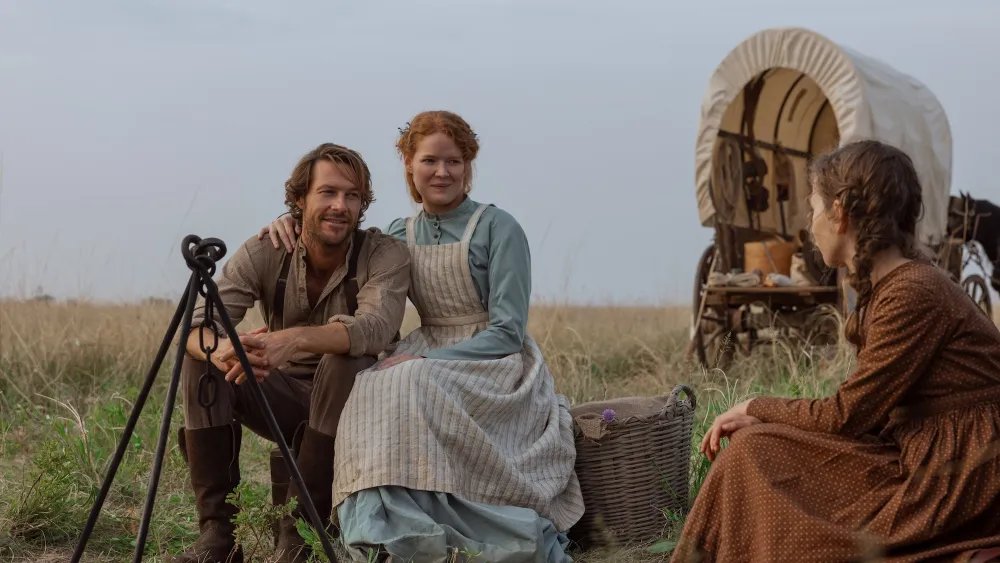
Like many Millennials, costume designer Mitchell Travers grew up with “Little House on the Prairie.” Watching repeat episodes of the original TV series from the ’70s and reading Laura Ingalls Wilder’s books for school, Travers developed a deep appreciation for the expansive representation of pioneer life that Wilder created on the page.
Now, Travers is part of that story through his work on a new screen adaptation courtesy of Netflix. After meeting with showrunner Rebecca Sonnenshine, Travers was quickly sold on the opportunity to put his own mark on the fabric of Wilder’s world.
“My initial conversations with Rebecca let me know how expansive she wanted this world to be, and that it wasn’t just a simple story in tall grass,” says Travers. “It was about a family who was very creative, and was able to make things with their hands.”
Travers, whose varied costume projects include “In the Heights” and “Hustlers,” rooted his approach to the costumes in historical accuracy, while balancing the need for contemporary storytelling.
“I’m quite aware of the built-in audience that we have for ‘Little House,’” he says. “Oftentimes, these are people who enjoy making things, and so there’s going to be some understanding of sewing skills, and there’s going to be some understanding of fabric.”

Warren Christie as John Edwards, Alice Halsey as Laura Ingalls, Skywalker Hughes as Mary Ingalls, Luke Bracey as Charles Ingalls, Crosby Fitzgerald as Caroline Ingalls in “Little House on the Prairie.”
ERIC ZACHANOWICH/NETFLIX
All of the costumes for the show were custom, handmade, and informed by historical accuracy — with some creative liberties. “I never set out to create a museum — we’re not replicating everything exactly,” says Travers. “When we build all of these clothes, we do the buttonholes by hand, and we are looking at period techniques for construction. We’re looking to our real research to figure out how to make babies’ clothes from Godey’s Lady’s Book of 1868,” he adds. “We’re interpreting it, of course — because that’s costume design.”
Travers began with the Ingalls family, the heart of the “Little House” story. After arriving on set in Winnipeg at the tail end of winter, Travers quickly discovered the family’s palette within the landscape of blue skies and grassland.
“As I was out walking my dog, I would watch little buds of flowers start to creep into these blues and greens,” he says. “And so I wanted to do that with our Ingalls, so that it slowly felt like they were these little wildflowers that were taking root and starting to grow.”
Travers grounded the family in “earthy” tones: taupe, blue, green, pink, and orange. “All things that you can point to naturally,” he says.
“ What I think the Ingalls bring to our town is an optimism,” adds Travers. “They’re bringing themselves to a place that can be quite harsh. [Prairie life] was actually very dangerous, very isolated, very lonely at times. And what I love about Laura’s recollection of her childhood is that it was bright.”
Townspeople were costumed to serve as a blank canvas, “ but then you inject this sense of life and purpose and childlike wonder into it,” says Travers. “I wanted [the Ingalls family] to pop away from that town at first, but then as they integrate themselves into it and as they form these bonds with these other characters, you start to feel the color seeps in.”
The first character that the Ingalls family encounters onscreen is Dr. George Tann, who offers his assistance after a river-crossing accident.
“It was really important to establish this idea of a really well-dressed man,” says Travers of his approach to the character, a Black doctor who was based on a real person. “ He needed to present to people at the time that he was a freed man, an educated man. And I think you can do that really well with clothes, where if you’re up against prejudice, you can let people know exactly where you stand before they’ve had a moment to shake your hand.”
Travers signaled Dr. Tann’s profession through his linen duster coat, reminiscent of a modern doctor’s white lab coat. “It’s that idea of cleanliness and safety and education,” says Travers. “We were able to interpret that through this 1860s lens.”

Jocko Sims as Dr. George Tann, Luke Bracey as Charles Ingalls, Maclean Fish as Adam Scott in “Little House on the Prairie.”
ERIC ZACHANOWICH/NETFLIX
The Ingalls settle on Osage land in Kansas, and the Netflix series offers a new perspective on the Native experience through the Mitchell family, a new addition to the “Little House” story. Travers collaborated closely with the show’s native consultant, Julie O’Keefe, and worked with Osage artisans to craft costumes for all of the Osage characters.
“By the time we got everything on camera, we had produced, in collaboration with Osage artisans, 3,200 pieces of Osage clothing,” says Travers. “We went to the community to ask for help. There’s no other place where this work can be done.” Featured pieces include porcupine quill brooches and ribbons, traditionally passed down through Osage families.
“We had moccasin makers, furriers, people building leggings out of broadcloth,” he says, adding that they wanted to showcase the variety of Osage culture. “We don’t want it to be a monolith. There’s certainly no uniform when it comes to the Osage,” he adds.

Alyssa Wapanatâhk as White Sun, Xander Cole as Little Puma in episode 102 “Little House on the Prairie.”
ERIC ZACHANOWICH/NETFLIX
The series recently began production on its second season, ahead of the series premiere. The next season will expand the sartorial landscape even further, as the Ingalls family find themselves on the move again.
“We’ve moved on to a new town, and with that means that we have new characters. We have a new visual language to the show. There’s a different color palette. Geographically, we’re in an entirely different place,” says Travers.
A place that was never far from Travers’ imagination, even as he worked on costumes for other projects between the first and second seasons.
“I had the books to turn to for guidance about where we were going,” he adds. “So while I didn’t have the scripts [yet], Laura Ingalls sort of guided me to where we were going to take the show.”