dailynewsnblog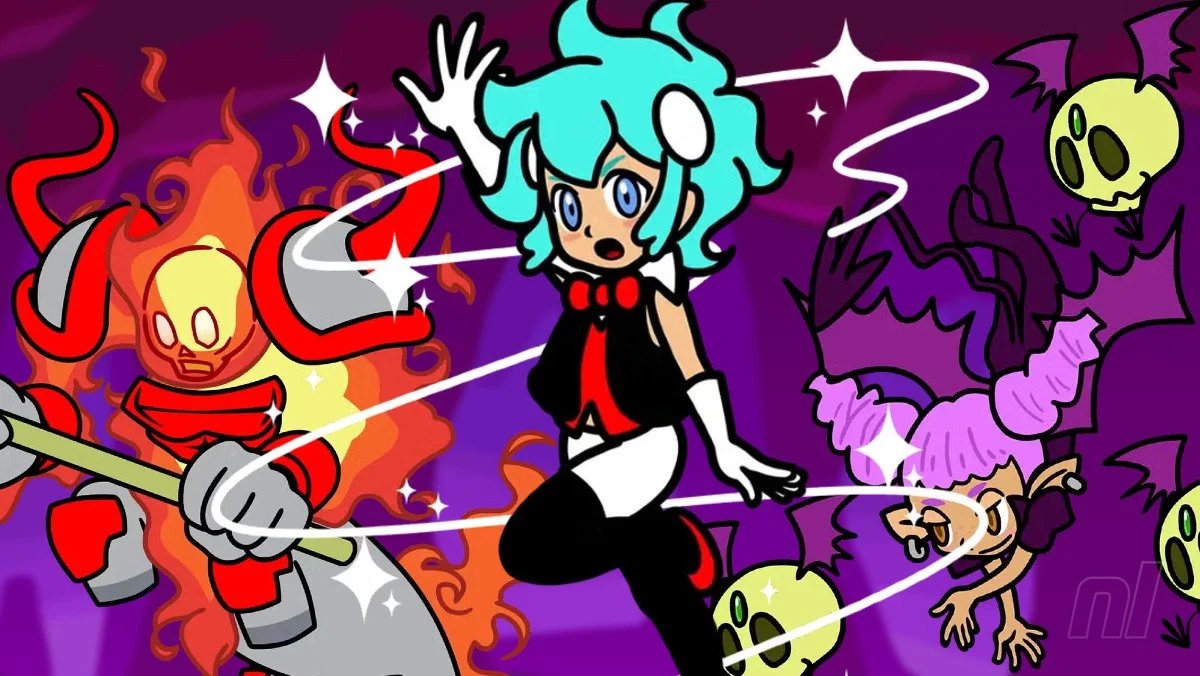

Here’s a sentence that I never thought I’d write: I’m about to discuss spoilers for Rhythm Heaven Groove.
That’s right, I have spoilers, and they’re for a Rhythm Heaven game. What’s more, it was a really lovely surprise to discover it myself. So, if you’re still working your way through the minigames and, more specifically, through the RPG Beatspell game mode and you don’t want anything spoiling, then I’d suggest clicking away now.
I’m going to get straight into it after the following picture, so this is your last chance! Go collect some more medals, and come back when you’ve seen everything for yourself….

Safe? Okay. I am obsessed with Beatspell’s secret roguelike mode.
I knew that I was going to be on board with Beatspell from the moment it was first revealed back in the June Nintendo Direct. It gave off all the vibes of StreetPass Quest with timed-attack mechanics that instantly brought my beloved Patapon series to mind. What’s more, it featured a bunch of weird little guy enemies, and if you need to know anything about me, it’s that I love weird little guys.
My optimism was proved correct when I started playing the game mode last week. I love Groove’s main minigames and the remixes are sublime, but Beatspell has been the standout for me — not so for Gavin in our review, but each to their own. Nintendo has pushed the genre boundaries a little by calling it an ‘Action RPG’, which probably paints the wrong picture. All you need to know is that it is an adventure game mode that tasks you (a character called ‘Yu’, confusingly) with navigating a series of caves, defeating enemies with beat-timed magic, and picking up upgrades along the way.
The story unlocks as you play through Groove’s main game, new chapters cropping up when you cross certain level or medal thresholds. Honestly, I could have played Beatspell and nothing but Beatspell and been a very happy boy, but it’s nice to have some enforced breaks — it makes the build-up to the finale all the more satisfying.
You see, after polishing off Beatspell’s main story (yes, there’s a story), an additional ‘Random Cave Quest’ chapter opens up, and this is the part that I have been struggling to put down.
Unlike the linearity of the previous levels — defeat the monster, unlock a new spell / item, repeat until you hit the boss — Random Cave Quest spins things out into a full-blown roguelike.
You have branching pathways to choose from, each with its own monster match-ups and unlocks, a brand new ‘Willpower’ health system that prioritises speed in all encounters, and best of all, a much, much deeper magic system.
Up to this point, I had been able to get through most Beatspell battles by spamming one attack (shout out to ‘Bolt’) and using ‘Cure’ when things get hairy, but the bonus roguelike mode opens up so many more possibilities. There are spells that buff your abilities for a set number of beats, redistribute damage, or gradually chip away at your opponent’s health. Some work better when deployed after others, and some are designed to be chained together.
Chest items suddenly become all the more important, too. These pick-ups had previously only served me as health or attack boosts, but suddenly there was a world of possibilities with tools that exploit type effectivenesses, debuff certain stats for the benefit of another, or put an increased focus on timing.
My Bolt spamming quickly changed to a technique where I’d boost my attack with an Amplify, send out Poison to start hurting my enemy, hit them with a few Viruses (the damage of which increases by a percentage if the enemy is poisoned), and then start chipping away with whatever base attack I had in the remaining slot of my five-spell arsenal. The satisfaction of stringing all of these together to the beat of the backing track? Immense.

But, of course, this is a roguelike, so there’s no guarantee that I’d pick up that exact spell loadout every run. The objective is to make it through the cave and defeat the final boss (a proper damage sponge, if I’ve ever seen one) as quickly as possible, but with only three of the 19 different spells appearing at Magic Circles throughout the run, I’ve had to get comfortable working on different approaches.
With almost every run, I’ve been forced into a different build, choosing to level up different spells and rely on items rather than risking it all to hunt down my old faithful. Some have been more successful than others — the trickier button combos for bigger spells always catch me out, especially with the fluctuating rhythm of those darn later stages — but the ‘one more run’ pull is strong. Come on, isn’t that the ultimate sign that it’s got its roguelike hooks in me?
Before I knew it, I had poured hours into the finale mode, completely neglecting the main game in favour of this extra. I nipped out and completed the last few Remixes, worry not, but I’ve been back on the Beatspell ever since. Who would have thought that the game’s biggest appeal for me would have been something Nintendo didn’t even mention before launch (even after a Treehouse section dedicated entirely to Beatspell)?
To be clear, this is no Hades. I’m talking about a side game of a side game here, so it’s far from the depth of my genre faves, but as a fully-fledged roguelike hidden at the end of an optional extra, it’s far more accomplished than I would have ever expected.
Of course I’d like to see more Rhythm Heaven (within the next decade, preferably), but I’d probably be even more excited by a beefed-up standalone Beatspell release at this point. The #YuForSmash campaign starts here.