dailynewsnblog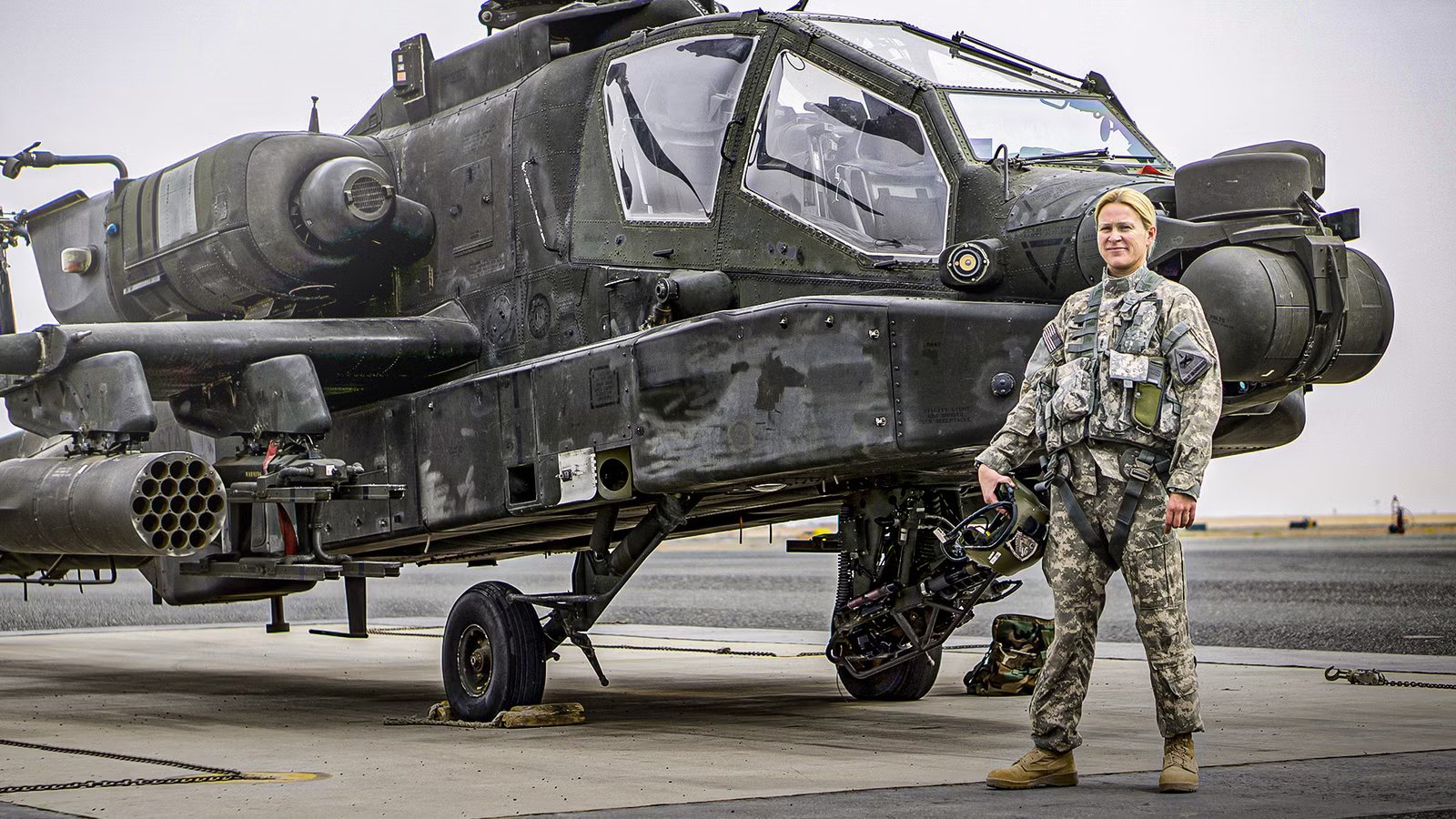
Beginning in 2020, the US Army now requires a ten-year contract for all new Aviation Warrant Officers who will fly in its vast fleet of tactical helicopters. Unlike the other service branches of the US Military, Warrant Officers compose 70% of the Aviation corps. Before the new policy was instituted, enlisted Army pilots were contracted for a six-year service obligation. The change was necessary to retain skilled aviators who were leaving at the end of their minimum contract time for commercial flying jobs.
The Army decided to add four years to the basic contract to ensure its investment in training pays off. Making the switch from a helicopter to an airline is less direct than for any other aviators in the Armed Forces, but the Army still spends hundreds of thousands of dollars to train every pilot. Although the commitment is now longer overall, the Army did clarify an important element in 2025 when it determined that the clock officially starts at the completion of the Common Core curriculum.
This remedied a problem identified after the new contract term took effect, in which training pipeline bottlenecks and delays in the completion of flight school due to maintenance and weather added months to the training time of some pilot candidates. This effectively pushed their total commitment over ten years closer to 11 or even 12 years if the training timeline was especially protracted. At the same time, the Army has also increased financial incentives to retain pilots once they have reached the end of their minimum commitment, to encourage them to stay in the service and keep flying.
Active Duty Service Obligation

The Army implemented the ADSO because its staffing level is not sustainable given high turnover at senior ranks. Aviation units suffer most acutely from a shortage of tactical experience, not just a raw shortage of personnel. It takes several years of active service, hundreds of flight hours, and advanced qualifications to build a Warrant Officer qualified as a Pilot-in-Command, a Maintenance Test Pilot, or a Flight Instructor.
Under the old six-year obligation, Army pilots were reaching their highly valuable PC and MTP milestones right as their contracts expired. Many of these aviators chose to take off the uniform and make the switch to flying for passenger carriers. In the past several years, commercial airlines have been ramping up recruiting, with a focus on military pilots, because they already have years of experience in the cockpit.
This match is very opportune for operators and pilots, even with the cost and time investment in transitioning training from helicopters to twinjets. The Army cannot match major airline salaries to keep pilots indefinitely if they are set on making the transition, but the ten-year ADSO allows the service to rely on a self-sustaining cycle to train new pilots to fill the eventual vacancies.
Aware that a ten-year contract alone can hurt recruiting potential and morale in the ranks, the Army has paired the increased obligation with a market-driven retention bonus. To keep senior Warrant Officers who have already exceeded their initial ADSO commitments, the service launched a new Warrant Officer Retention Bonus Auction system in 2026.
Warrant Officer Retention Bonus Auction

Eligible Warrant Officers submit a confidential figure for the bonus that they would be willing to accept to continue serving. At the end of the ‘bidding’ cycle, the Army evaluates all the submissions and retains the pilots whose amount is at or below the ‘market clearing rate’ and then pays an equal bonus amount to every Aviator. That rate is determined by analysts at the end of the bidding window to retain the maximum number of pilots within the Army’s budget.
This system discourages astronomical bid numbers by creating a clear cutoff, but keeps pilots from underselling themselves by paying out an even amount to all the retained Aviators. If an Army Pilot simply enters an exceptionally high number, they will automatically price themselves out as they do not have a realistic chance of bidding within the correct range. If a Warrant Officer bids a low amount just to guarantee a win, the system automatically bumps their actual payout up to match the higher, finalized market rate.
In the past, the Army would offer a $25,000 bonus annually for a four-year contract extension with a lifetime cap at $100,000, according to the VA Loan Network. Under the new system, the annual bonus maximum is $50,000, and Officers can also receive incentive pay for six years. The higher cap per year and longer term mean that Army Warrants can earn up to $300,000 total in incentive pay to fly.
Under the previous system, bonuses were traditionally calculated annually and often front-loaded. Dubbed the Warrant Officer Retention Bonus Auction, WORBA asks pilots to bid on a minimum monthly paycheck bump. This also works in favor of the Army, as payments are distributed evenly over the term as a continuous incentive to pilots with every paycheck.
Rotary Wing Pilots for the 21st Century

As the Army increases its incentive pay and stretches contract obligations, it is also downsizing the total number of aviators in the pilot corps. According to the Army Times, in 2026 and 2027, the Army will reduce the total number of Aviation billets by 6,500. This is part of a restructuring that will consolidate existing unit organization and introduce greater numbers of uncrewed aerial systems as the US Military dramatically increases its inventory of drones.
While overall numbers are shrinking, the critical requirement for highly experienced, mid-career aviators is higher than ever. Even as the Army will procure far greater numbers of drones, it is also fast-tracking the development of the future long-range assault aircraft to replace the Sikorsky UH-60 Black Hawk. As Army Aviation enters a new era, the mission and skills will also evolve from ‘stick and rudder’ flying to airborne battle management as primary skills.
Drone Dominance Plan

The cuts to billets and Scout Helicopters will help fund the massive increase in drone numbers as well as the more sophisticated FLRAA airframes flown by the remaining Combat Aviation Brigades. Those units will also be raised to 125% under the new force structure, but that is a minor change compared to the ambition of the Department of Defense Drone Dominance Plan.
Through a new program called Sky Foundry, the Army is establishing domestic manufacturing facilities capable of producing 10,000 small unmanned aerial systems monthly. The $1 billion program aims to bring more than 200,000 drones online by the end of 2027. It also aims to change procurement permanently by making development and production more iterative and adaptable to emerging threats.
According to Stripes, as Army spokesperson Maj. Montrell Russell clarified regarding the structural changes, “We won’t see a time when there will be no crewed systems… A lot of people say, ‘Oh, we don’t need pilots.’ That is not the takeaway.”
The DDP has also triggered sweeping changes to the enlisted personnel who support these Aviators. The Army has completely merged its traditional uncrewed specialties into a singular, highly lethal career track: the 15X Unmanned Systems Operator. These soldiers are trained not just to fly small drones, but also to fabricate, maintain, and adapt them directly on the front lines.
Air Cav Evolved

The sweeping changes to Army Aviation as well as the airframes flown by Warrant Officer Pilots represent a major watershed moment in the history of the US Army. The paradigm shift will be evident from day one, on the training field and on the front lines. Flight school will shift away from purely teaching manual flight mechanics toward a greater focus on systems management, data synthesis, and electronic warfare survival.
Advanced flight training will natively integrate Manned-Unmanned Teaming. Student Pilots will practice launching, directing, and receiving sensor data from Launched Effect, or air-launched drones, while also flying their own aircraft’s mission profile. They will serve as the mobile command hubs for automated weapon networks.
Pilots of the Bell V-280 Valor tiltrotor, officially selected as the FLRAA, will use cockpit interfaces to direct swarms of autonomous drone wingmen. One pilot will be primarily tasked with operating the V-280 while the other aviator on the flight deck will manage the digital ‘kill web’ from the cockpit.
The Army’s Valor: Bell V-280

Bell-Textron’s Valor tiltrotor was officially designated as the MV-75C Cheyenne II in April 2026. The first physical FLRAA/MV-75 prototype is scheduled to conduct its first flight. Low-Rate Initial Production is set to begin, with the Army deploying a full initial unit of 24 operational aircraft. The 101st Airborne Division based out of Fort Campbell, Kentucky, has been selected as the first active-duty unit to transition from the UH-60.
The performance leap from the legacy UH-60 to the MV-75 is a generational leap not seen by Army Aviation since helicopters first deployed en masse in the 1960s during the Vietnam Conflict. Instead of a conventional single-rotor system, the MV-75 functions like a helicopter during takeoffs and landings but rotates its rotors forward to cruise with the aerodynamic efficiency and blistering speed of a turboprop airplane.
This advanced platform changes the economic mathematics of pilot retention. Operating and mastering a multi-mission tiltrotor that flies at speeds exceeding 250 knots requires far more expensive, intensive simulator training and flight hours. The ten-year ADSO helps the Army keep pilots in uniform long enough to build this advanced experience, while WORBA provides the incentive to deter civilian poaching.
Catch what other trackers miss
Emergency squawks, holds, NOTAMs — live signals, no signup.
Open tracker
Catch what other trackers miss
Emergency squawks, holds, NOTAMs — live signals, no signup.
Open tracker