dailynewsnblog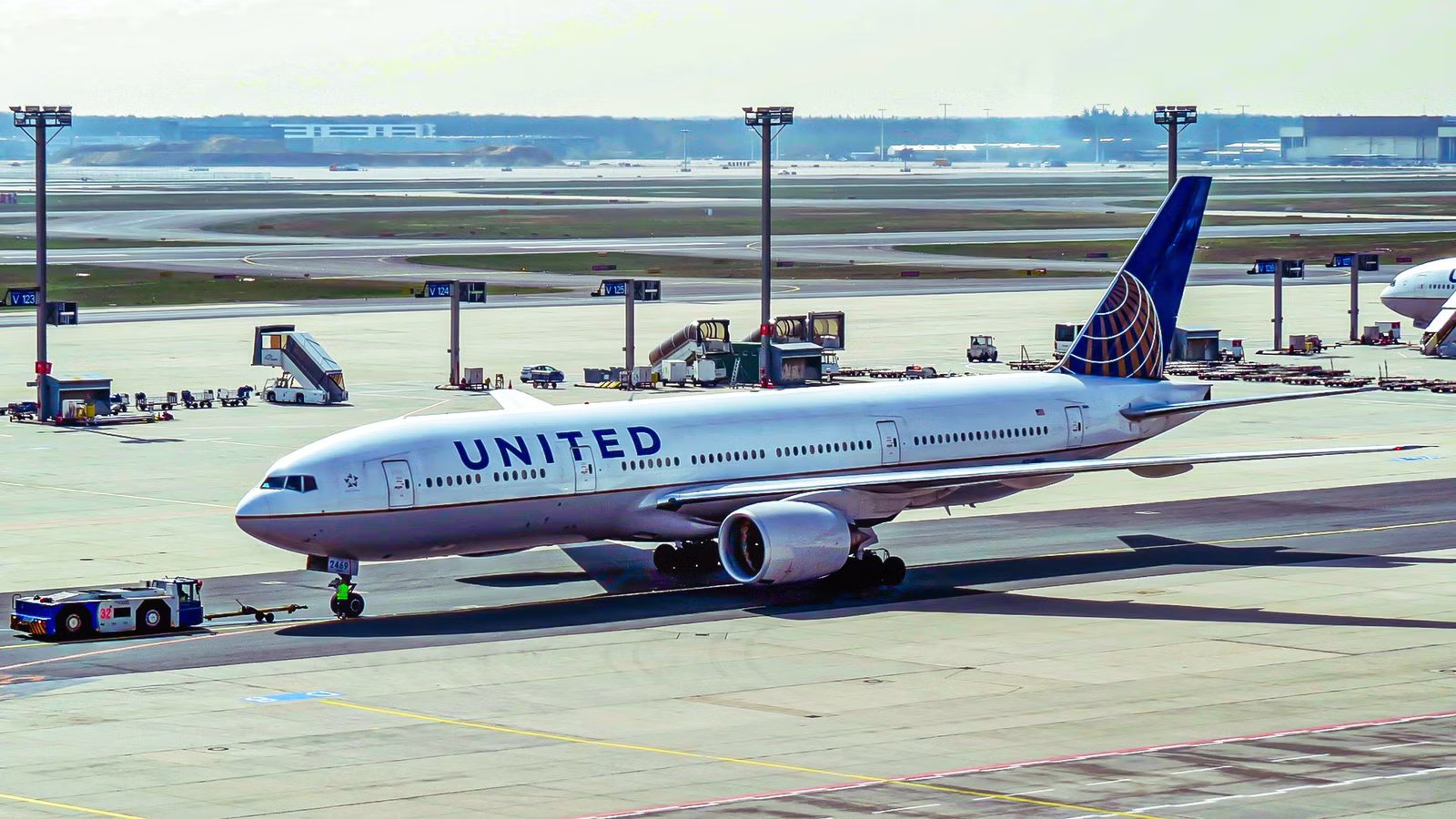
The US Federal Aviation Administration recently announced that airlines operating Pratt & Whitney PW4000-powered Boeing 777s would receive several more years to comply with a major engine nacelle modification program. Here, the headline suggested regulators were simply giving carriers extra breathing room.
The new compliance deadline, now stretching to March 2033, reflects just how difficult the redesign has become after years of engineering work, supply chain problems, and maintenance capacity shortages. A more significant story, however, is unfolding far from Washington.
Specifically,  United Airlines has already parked 14 Boeing 777-200 aircraft in long-term storage at Victorville, California, rather than investing immediately in aircraft that face increasingly expensive upgrades. What began as a safety-driven airworthiness directive following a dramatic engine failure has gradually evolved into something much larger – a slow-motion retirement event for one of the world’s few remaining fleets of Pratt & Whitney-powered Boeing 777s.
An Unusually Difficult Engineering Challenge

The FAA’s decision to extend the compliance deadline until March 2033 was not simply about giving airlines more flexibility. Instead, regulators acknowledged that  Boeing and Pratt & Whitney have encountered a far more complicated engineering project than originally anticipated when redesign work began after the United Airlines flight 328 engine failure incident in February 2021.
The engine failure exposed weaknesses in how the nacelle, fan cowl, inlet structures, and core case components responded during an uncontained fan-blade-out event. Although the aircraft landed safely, the separation of large cowling components highlighted vulnerabilities that required an integrated redesign rather than a series of isolated fixes. Boeing must now complete the final design work before March 4, 2029, allowing operators several additional years to install the modifications across their fleets.
Such projects often appear straightforward from the outside, but redesigning structures that must withstand extremely rare yet catastrophic failures while remaining lightweight enough for commercial operations presents enormous engineering challenges. Every reinforced latch, attachment fitting, hinge, and containment structure must be tested extensively before certification, creating years of development work before airlines can even begin installing the upgrades.
The Maintenance Bottlenecks Are As Significant As The Redesign Itself

Even if Boeing had completed the redesign earlier, airlines would still face another major obstacle: finding enough maintenance capacity to perform the required work. Heavy maintenance facilities around the world continue dealing with unprecedented demand as airlines keep older aircraft flying longer than originally planned.
Widebody maintenance slots remain scarce, while shortages of skilled technicians, replacement components, and specialized repair capabilities have created long waiting times for even routine overhauls. The required Pratt & Whitney PW4000 modifications add another layer of complexity because they must often be coordinated with scheduled heavy maintenance visits and engine shop events.
The supply chain has also become a limiting factor, as reinforced structural components, redesigned fasteners, and newly certified nacelle assemblies cannot simply be manufactured overnight. Production rates remain constrained, forcing operators to prioritize which aircraft receive modifications first.
Catch what other flight trackers miss
Emergency squawks, holds, NOTAMs — live signals, no signup.
Open tracker
Catch what other flight trackers miss
Emergency squawks, holds, NOTAMs — live signals, no signup.
Open tracker
Regulators ultimately accepted that insisting on the original timeline could have removed too many aircraft from service simultaneously, creating capacity shortages during periods of strong passenger demand. These maintenance realities explain why the FAA concluded that extending the deadline would have less operational impact than forcing airlines to accelerate a program that the industry currently lacks the capacity to complete efficiently.
Economics Increasingly Favor Retirement Over Expensive Upgrades

Although safety drove the original directive, economics now play an equally important role in airline decision making. Estimates place the worldwide cost of completing the required modifications at between $500 million and $750 million, representing an enormous investment for a shrinking fleet of aging aircraft.
For the  Star Alliance carrier, which operates by far the largest remaining fleet of Pratt & Whitney-powered Boeing 777-200s, analysts estimate the carrier could ultimately shoulder between $250 million and $350 million of those costs. That level of spending becomes difficult to justify when many of the affected aircraft are already approaching an age where airlines would normally begin considering retirement or replacement.
Aircraft | Number In Fleet | Number On Order |
|---|---|---|
Airbus A319 | 72 | – |
Airbus A320 | 66 | – |
Airbus A321neo | 68 | 137 |
Airbus A321XLR | 1 | 49 |
Airbus A350-900 | – | 45 |
Boeing 737-700 | 40 | – |
Boeing 737-800 | 141 | – |
Boeing 737-900 | 12 | – |
Boeing 737-900ER | 136 | – |
Boeing 737 MAX 8 | 123 | – |
Boeing 737 MAX 9 | 153 | 71 |
Boeing 737 MAX 10 | – | 167 |
Boeing 757-200 | 40 | – |
Boeing 757-300 | 21 | – |
Boeing 767-300ER | 37 | – |
Boeing 767-400ER | 16 | – |
Boeing 777-200 | 19 | – |
Boeing 777-200ER | 55 | – |
Boeing 777-300ER | 22 | – |
Boeing 787-8 | 12 | – |
Boeing 787-9 | 54 | 79 |
Boeing 787-10 | 21 | 56 |
Unlike newer aircraft that may have decades of service remaining, many of these Boeing 777-200s have already spent more than two decades flying long-haul routes. Their operating economics increasingly struggle to compete with newer twin-engine aircraft offering lower fuel burn, reduced maintenance requirements, and greater scheduling flexibility.
Consequently, airlines are not simply evaluating whether they can afford the modifications. They are asking whether investing millions of dollars into older airframes produces a worthwhile return when newer aircraft will eventually replace them anyway. For some operators, particularly those with relatively small fleets, retiring aircraft earlier than planned may represent the more financially sensible option. United Airlines’ mainline fleet, per the latest data from ch-aviation, is outlined in the table above.
United Airlines’ Victorville Storage Illustrates A Changing Reality

United Airlines’ decision to send at least 14 Boeing 777-200s to long-term storage in Victorville demonstrates how these pressures have already begun reshaping fleet planning. While the FAA extension provides additional regulatory flexibility, it does not solve the operational problems facing the airline today.
The stored aircraft are not sitting idle solely because of the pending cowling modifications. Limited availability of spare Pratt & Whitney PW4000 engines, lengthy overhaul timelines, and maintenance bottlenecks have combined to reduce fleet availability. Instead of investing heavily to return every aircraft to active service immediately, United Airlines has chosen to concentrate resources on keeping its most valuable examples operational while parking others for the foreseeable future.
Victorville has long served as one of the aviation industry’s preferred storage locations because its dry desert climate minimizes corrosion while allowing aircraft to remain preserved for possible future reactivation. However, aircraft sent there do not always return to airline service, with many eventually becoming parts donors, cargo conversions, or permanent retirements, depending on changing market conditions.
The storage decision has also affected network planning. Indeed, several high-density Hawaii routes that previously relied on the large-capacity Boeing 777-200 have required adjustments as United Airlines reallocates available aircraft across its domestic and international network. While passengers may not immediately notice the underlying maintenance challenges, fleet availability continues to influence scheduling decisions behind the scenes.
The Few Remaining Operators Of PW-Powered Boeing 777s

One reason the modification program has become increasingly expensive is the simple fact that relatively few aircraft remain. Only a small number of Pratt & Whitney PW4000-powered Boeing 777 aircraft continue operating worldwide, primarily with United Airlines. Many such aircraft previously operated by the likes of Japan Airlines and Korean Air have already entered storage or retirement, steadily shrinking the global fleet that must eventually receive the mandated modifications.
As fleet numbers decline, economies of scale become more difficult to achieve, and manufacturers must continue supporting specialized components for a smaller customer base, while maintenance providers invest in capabilities serving fewer aircraft each year. That dynamic naturally increases costs throughout the supply chain.
The limited operator base also means that fleet decisions made by one airline can significantly influence overall demand. If United Airlines permanently retires more aircraft instead of modifying them, production volumes for replacement parts could decline further, potentially increasing costs for the remaining operators.
Conversely, airlines planning to keep their aircraft well into the next decade may have little choice but to absorb the necessary investment because suitable replacements are not immediately available. This shrinking fleet explains why the FAA extension carries importance beyond one individual airline. Every remaining operator now faces similar strategic decisions regarding how much longer these aircraft will remain economically viable.
Safety Concerns Remain Despite The Longer Compliance Timeline

While airlines generally welcomed the additional time, not everyone supported delaying the compliance deadline. The ALPA union opposed the extension, arguing that extending the implementation period leaves aircraft operating longer without modifications specifically designed to improve safety. From the pilots’ perspective, the engineering challenges and maintenance shortages do not eliminate the underlying safety issue identified after the United Airlines flight 328 incident.
The redesign exists because investigators determined improvements were necessary, making any delay inherently less desirable than completing the work as quickly as practical. Regulators ultimately concluded that the operational consequences of maintaining the original deadline outweighed the potential benefits of faster compliance, particularly given the industry’s inability to complete the work within the previous timeframe.
At the same time, existing inspection programs, enhanced maintenance procedures, and other interim measures remain in place while the permanent redesign continues to go through the certification process. The resulting compromise reflects the difficult balance regulators frequently face with aging commercial aircraft.
Safety improvements may be technically achievable, but implementing them across a mature global fleet often requires years of engineering, manufacturing, maintenance planning, and financial investment. For the remaining Pratt & Whitney-powered Boeing 777s, that process will now continue until well into the next decade, even as airlines increasingly decide that some aircraft are simply not worth bringing back from the desert.