dailynewsnblog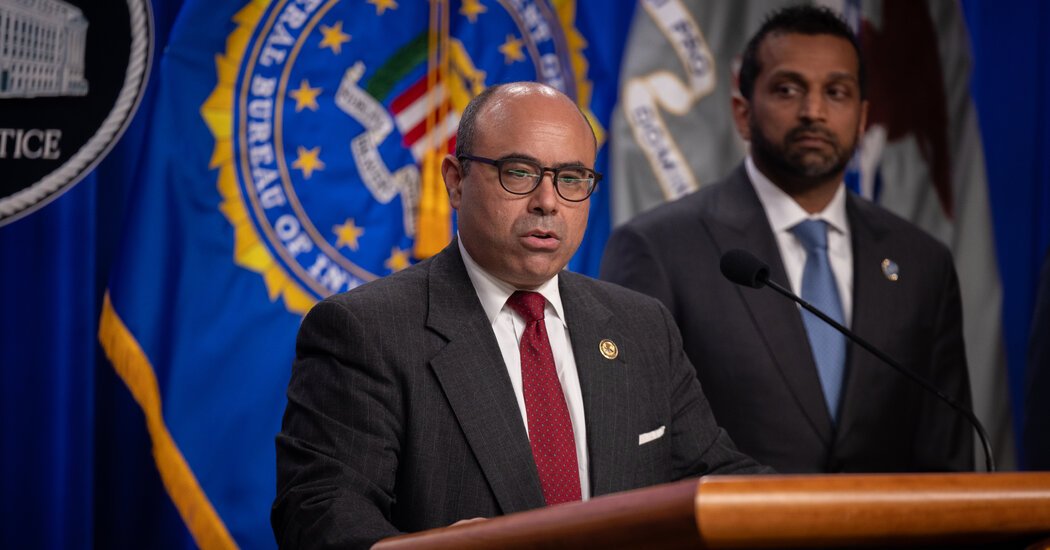
Andrew S. Boutros, who leads the U.S. attorney’s office in Chicago, boarded a flight to Washington last week so he could speak at a news conference alongside some of the Justice Department’s top officials.
There was one significant problem. The case Mr. Boutros planned to discuss, which accused three men of kidnapping conspiracy and murder, had been sealed at prosecutors’ request. The news conference went ahead anyway.
The magistrate judge overseeing the case was unamused. And so Mr. Boutros, who had already faced calls for his resignation, found himself on Thursday morning before that judge, Laura K. McNally, who scolded him at length for what she described as “a clear violation of the sealing order.”
“The orders of this court in this independent branch of government are effective until they terminate on their terms or are rescinded — and neither of those things happened here,” Judge McNally told Mr. Boutros, who stood silently behind a lectern in a nearly full courtroom in downtown Chicago.
Mr. Boutros has insisted that he acted in compliance with the sealing order. He argued that the order included a “carve out” for disclosing information “as necessary to facilitate the enforcement of criminal law,” which he said should have covered the news conference.
The sealing order would have dissolved on its own if all three defendants had been arrested before the news conference. But as the start time of the media event neared that morning, and as Mr. Boutros made his way to Washington, only two of the men named in the complaint were in custody.
Mr. Boutros’s office, recognizing the problem, pressed to have the documents unsealed, calling the judge’s deputy and dispatching a prosecutor to her chambers in hopes of getting a redacted version of the complaint unsealed.
But Judge McNally said she had been busy that morning, with hours of unrelated hearings scheduled. She said she had concerns that prosecutors’ original reason for requesting the seal order — that a defendant might flee or destroy evidence — remained valid with one man still on the loose. She took no immediate action.
At Justice Department headquarters, reporters had assembled to hear from Mr. Boutros and Todd Blanche, the acting attorney general, who shared details of the case without naming the defendant who had yet to be arrested. The officials described the men accused in Illinois, as well as those in another case in Texas, as members of the Venezuelan gang Tren de Aragua, which the Trump administration has designated as a foreign terrorist organization.
“Make no mistake that a new brand of crime fighting is underway in Chicago,” Mr. Boutros told reporters in Washington, adding that “the whole of federal government in Chicago is taking violent crime seriously in a way that hasn’t been seen in years.”
The dispute over the sealing order was the latest in a series of incidents that have raised questions about Mr. Boutros’s stewardship of the U.S. attorney’s office in Chicago, especially on cases that have attracted attention from top Trump administration officials.
Last fall, prosecutors dropped charges against a woman who had been shot by a Border Patrol agent during an immigration crackdown amid concerns about preservation of evidence. In another high-profile case, conspiracy charges against local Democratic politicians and operatives unraveled this year after a judge called out errors in the grand jury process.
“Your sole goal is to do justice,” Judge April M. Perry told Mr. Boutros in a hearing over that matter. She added later, “That trust has been broken.”
Along the way, and as questions about other cases have emerged, Democratic politicians in Illinois have called for the resignation of Mr. Boutros, the U.S. attorney in the Northern District of Illinois. Mr. Boutros, who previously spent several years as a career prosecutor, was given a 120-day appointment by former Attorney General Pam Bondi last year and then was selected by the district’s judges to continue in that role.
In front of Judge McNally on Thursday, Mr. Boutros called the dispute over the sealing order “all very regrettable and very unfortunate.”
“My intentions were never to not be in compliance with the court’s order but, to the contrary, to always follow the court’s order at every stage,” he told her. He added that his office was “going to go back and look at this from a root-cause perspective to see how we can do better.”
Judge McNally did not impose any discipline or order any further investigation of the matter. She also said she was not finding that Mr. Boutros had acted in willful defiance. And she said the case against the three men accused of kidnapping conspiracy, all of whom have now been arrested, would move forward.
“I’m not going to make a finding about what was in your heart,” Judge McNally told Mr. Boutros.
She added that “my goal here is to emphasize the critical nature of sealing orders” to the Justice Department. And she said she intended “to admonish the department and remind it and its leadership” that those orders must be followed.