dailynewsnblog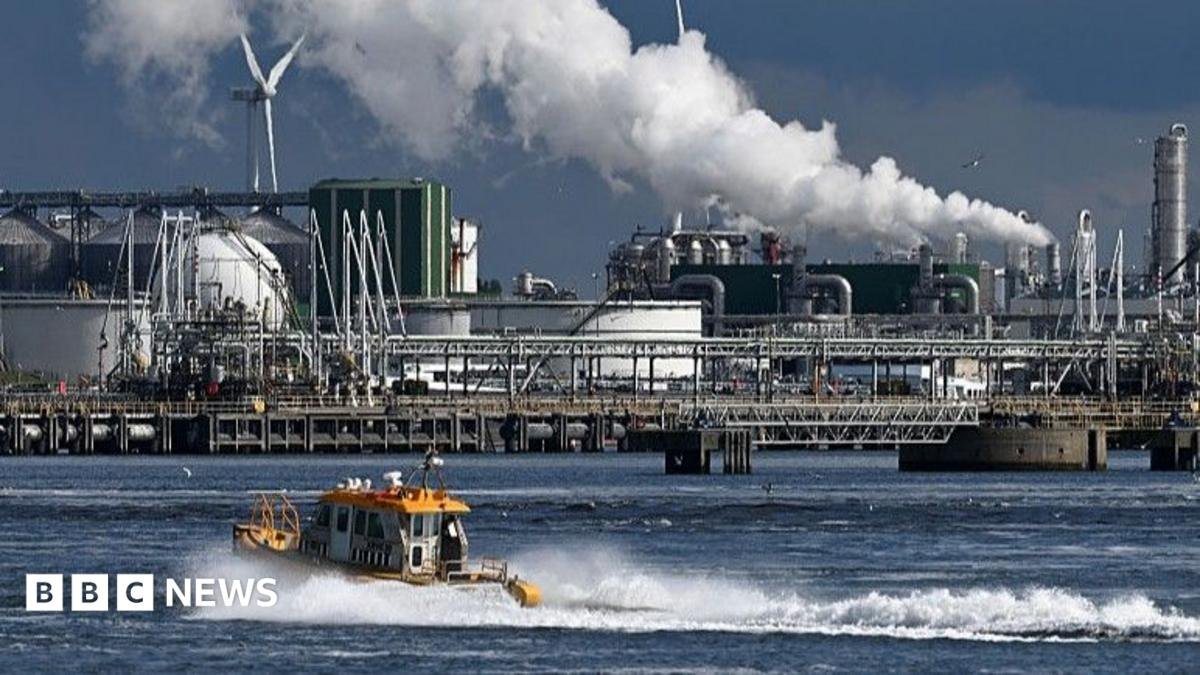
The port says it is making efforts to shift its business model.
“We try to work together with the polluters, and slowly phase them out,” says Oscar van Veen, director of innovation at the Port of Rotterdam, speaking on a small boat in the harbour. He pauses, then corrects himself: “As fast as possible, of course.”
But many of the biggest emitters in the port answer to headquarters in the US or China.
Their loyalty lies with boardrooms abroad. If the rules in Rotterdam become too tight, they can simply move – as Shell shifted its headquarters to the UK and Unilever left Rotterdam altogether.
“The Port of Rotterdam is a key player in this sustainable transition but their sphere of influence is limited,” says Bettina Kampman, from environmental consultancy CE Delft, which works for governments, companies and NGOs.
Even transitioning their own activities to lower emissions comes with challenges.
“New developments need physical space. They can speed up the energy infrastructure developments – the electricity needed to electrify the processes. That’s all limited at the moment due to the lack of power cables,” Kampman says.
Emeritus professor Harry Geerlings, of Erasmus University Rotterdam, has spent more than three decades studying sustainable transport and ports.
He is sceptical that any single port authority can drive a full transition on its own. What is needed, he says, is a global level playing field – the kind of framework provided in Europe by the Emissions Trading System and past rules on sulphur in marine fuels.
He points out how EU sulphur limits changed behaviour: ships calling at European ports had to switch to cleaner fuels or fit scrubbers to reduce pollution.
China initially resisted, he says, but when its ships could no longer enter US and European ports without complying, it followed suit. “If you have the right incentives, you change the behaviour of these companies.”
But there are limits to what regional rules can do. Many ships now sail with dual fuel set ups, burning cleaner, low-sulphur fuel as they enter European waters, then flipping back to cheaper, high sulphur heavy fuel oil once they are out on the high seas.
Geerlings believes Rotterdam’s port authority genuinely wants to change and is building the infrastructure for a smoother transition.
“But their biggest income is still tied to fossil fuel industries,” he notes. “It’s not simply a switch you turn on or off. A port needs activity as a logistics node – otherwise it’s no longer a port. It’s a real dilemma.”