dailynewsnblog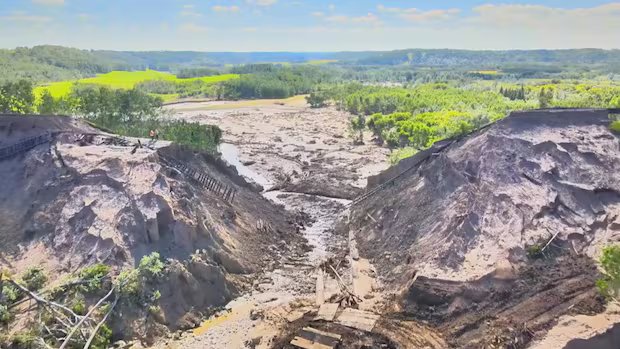
Cottagers and homeowners around Manitoba’s Whiteshell Provincial Park are the latest to experience damage from recent storms in the province, while dozens of other communities continue to labour through recovery work amid declining creek and river levels across parts of the province.
This harsh reality comes as more than 50 municipalities and First Nations have declared local states of emergency due to flooding and storms as of Tuesday, the province says.
The cities of Brandon and Dauphin are among the 45 local authorities that have made the declaration, and Minegoziibe Anishinabe, also known as Pine Creek First Nation, and Sioux Valley Dakota Nation are among the six First Nations under local states of emergency.
The Parkland region’s Municipality of Roblin still has about 70 road closures and just placed a nearly $700,000 order for more than 100 culvert pipes, said Robert Misko, the municipality’s head of council.
He expects that will amount to about half of what they will need to spend on piping.
“It’s just unbelievable how dramatic our weather was for this last six weeks,” Misko said in a phone interview on Wednesday.
Guy Hammond, who farms grain near Roblin, says he’s never seen damage to this scale.
“You just can’t believe it,” Hammond said.
Despite the upset, he’s among many local volunteers who’ve assisted in clearing waterways and pumping water out of low-lying areas in the community after the deluge on June 29 and 30.
Hundreds of others have helped clean out flooded basements and feed affected homeowners, volunteers and workers during recovery work, Hammond told CBC News.
On Sunday, a group gathered to build about 50 “road closed” signs after the municipality ran out, he said.


Access to the roads will become especially crucial for him closer to harvest season in late August, Hammond said, adding he knows “people are working around the clock” to fix them.
The municipality’s head of council Misko says they’re beginning to catch up on draining and water-pumping work, while also prioritizing provincial road repairs.
The Association of Manitoba Municipalities has been helping community leaders navigate the culvert shortage through procurement, AMM president Kathy Valentino said.
“Instead of all these one-offs of everybody phoning around Canada looking for culverts, let’s look at a procurement of culverts for the Parkland region,” she said.
Governments and municipalities will also need to have more conversations around climate change adaptation plans, along with better cellular networks for emergency communications, Valentino said.
She pointed to the community of St-Lazare, southwest of Riding Mountain National Park, which has been dealing with limited cell reception during the flooding.
Floods force road repair repetition
Last week’s heavy rain also disrupted and reversed a lot of progress to road repairs in the Municipality of Minitonas-Bowsman, CAO Lynda Parsons said.
The municipality first experienced extensive flash flooding in early June that swamped basements and washed out bridges and roads, including Highway 10, the main route connecting the community of Minitonas to the nearby town of Swan River.
Parsons estimates crews were about halfway done fixing the highway before last week’s 200 millimetres of rain forced them to start over.
“We did have several places that were in different stages of repair, and all of that material and work, unfortunately, was taken out in the second event,” she said.
Parsons expects it will be another four to six weeks before that highway reopens, although different fixes happening earlier could significantly reduce the nearly hour-long drive residents have been having to make between the two communities, which are only about 10 kilometres apart.

The municipality has identified 80 different areas needing repairs, especially closer to Duck Mountain Provincial Park.
“The river’s actually changed course in some places, and in some places twinned itself, so in some cases, we may have had a large culvert. Now, we need a bridge,” Parsons said.
Community members were largely spared from more basement flooding after the most recent rains, and Minitonas didn’t lose power, she said.
Christian Aid Ministries and Samaritan’s Purse have been in the community helping homeowners with restoration since June, Parsons said. She expects most of that work will be completed within the next two weeks. Any military or Team Rubicon help may be better served elsewhere, she said.
She hopes financial pressures in the community will ease with more repairs and restoration.
“I can’t say enough about how are community came together, and we’ve had really incredible support from the province.”

Dozens of municipalities have declared states of emergency after heavy rainfall and flooding hit southern Manitoba in recent weeks. CBC saw some of the latest devastation, after a windstorm hit Whiteshell Provincial Park on Monday.