dailynewsnblog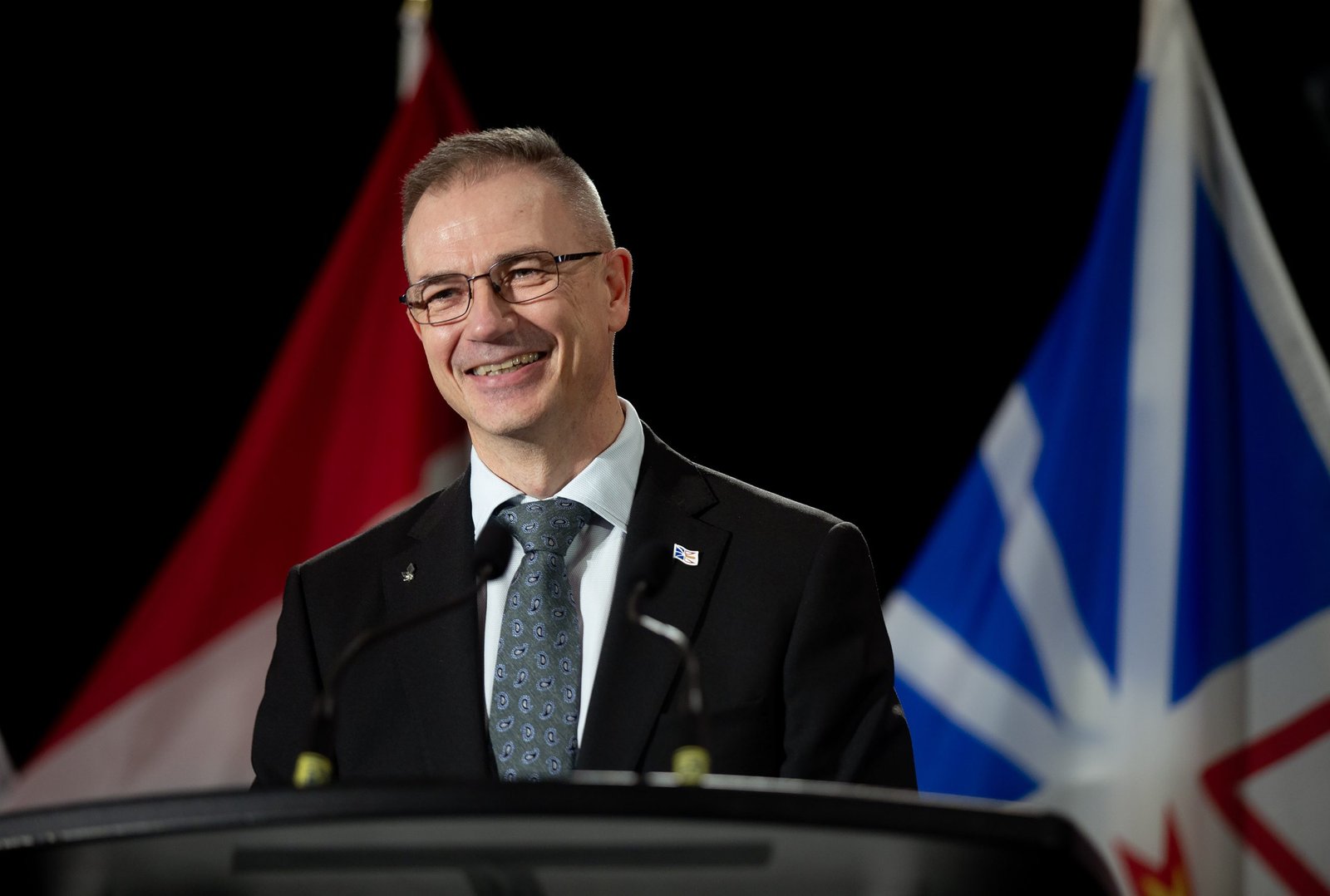
Commodity Context founder Rory Johnston says Equinor’s buyout signals confidence, but concentrating risk in one company ahead of a $14-billion investment decision can cut both ways.
BP’s sale of its stake in the Bay du Nord offshore oil project has left Norwegian energy giant Equinor as sole owner of what would be Canada’s first deepwater development.
The company and Newfoundland and Labrador’s premier are casting the shuffle as a vote of confidence, even as questions linger about the project’s path to a final investment decision expected next year.
Equinor executive Philippe Mathieu says the acquisition reflects confidence in the project after years of improving the business case and reducing key risks. The company temporary shelved the project back in 2023 amid challenging market conditions.
“… As we continue maturing it towards a final investment decision, we will seek opportunities to bring in partners as part of the project’s further development,” reads part of a statement attributed to Mathieu.
Newfoundland and Labrador’s Premier Tony Wakeham tells The Globe and Mail he isn’t worried about the transaction, arguing that Equinor’s willingness to buy the stake itself demonstrates belief in the project.
Rory Johnston, founder of the Commodity Context newsletter, sees some merit in that argument.
“It’s not like Equinor had to acquire BP’s stake,” he said in an interview with iPolitics. “It had to see value in that transaction. And given that it is the actor that is going to make the ultimate decision, that’s bullish on that aspect for sure.”
Still, Johnston describes the deal overall as “a mixed bag.”
Concentrating ownership in fewer hands means less corporate capital behind a project with a first-phase price tag of roughly $14 billion, and BP brought a larger balance sheet to the table than Equinor’s.
However, Bay du Nord fits squarely within Equinor’s strengths, argues Johnston.
The company specializes in difficult deepwater developments, with a track record in Norway and Brazil, and the project is a key piece of its growth portfolio, as described in the company’s earnings and analyst calls.
BP’s ‘fewer, better choices’
For BP, the sale lands amid a broader portfolio cleanup. CEO Meg O’Neill, marking her first 100 days in the job this week, wrote on LinkedIn that the company needs to make “fewer, better choices” about where it invests, listing portfolio simplification, cost reduction and capital discipline among her priorities.
Johnston cautioned against reading the divestment as a verdict on Bay du Nord itself. BP has plenty of options, he said, and is looking to deepen its position in onshore U.S. production.
Bay du Nord, by contrast, is a higher-risk bet on opening an entirely new producing region.
“There’s not always a first-mover advantage in this space,” said Johnston, noting that whoever comes after will benefit from the risks taken by the first entrant.
A tough year to announce growth
The transaction comes at a turbulent moment for oil markets. Johnston said the crisis in the Strait of Hormuz has permanently raised the risk premium on Middle Eastern barrels, strategically bolstering projects outside the region, Bay du Nord included.
But the market was heading into surplus before the crisis, and Johnston expects an even larger surplus next year as its lagged effects work through the system.
With Equinor hoping to make a final investment decision on the project in 2027, that timing may present some challenges.
“It’s going to be a tough year to announce [capital expenditure] growth,” said Johnston. “That said, I think that even in tough oil markets, the economics of Bay du Nord are promising.”
That squares with Equinor’s own signals.
In its own long-term outlook, published in its Energy Perspectives 2026 report, the company writes that the Paris Agreement’s 1.5-degree ambition “has drifted further and further away from being plausible,” and that for the foreseeable future, decarbonization “will remain subordinate to more politically pressing objectives” — namely energy security and affordability, priorities the report says have been cemented by the war in the Middle East and the closure of the Strait of Hormuz.
The company’s analysts argue reliable and geopolitically insulated suppliers are poised to benefit from this situation, an analysis that cuts favourably for a project in Canadian waters.
As for whether Ottawa might take an equity stake to help push the project across the line, Johnston is skeptical.
A more natural federal role, he suggested, would be backstopping the province’s stake rather than direct ownership.
The provincial government holds an option for up to 10 per cent equity under an agreement signed in March.
Under that agreement, Ottawa agreed to foot the bill for Bay du Nord’s international fees, as the project sits beyond Canada’s 200-nautical-mile exclusive economic zone and would trigger royalty payments to the International Seabed Authority under the UN Convention on the Law of the Sea.
It is unclear how large this bill will be, with provincial officials floating a figure as high as $1 billion and the federal environment minister insisting negotiations are ongoing.
READ MORE: Feds yet to lock in deal with Bay du Nord over UN fees, minister casts doubts on $1B price tag