dailynewsnblog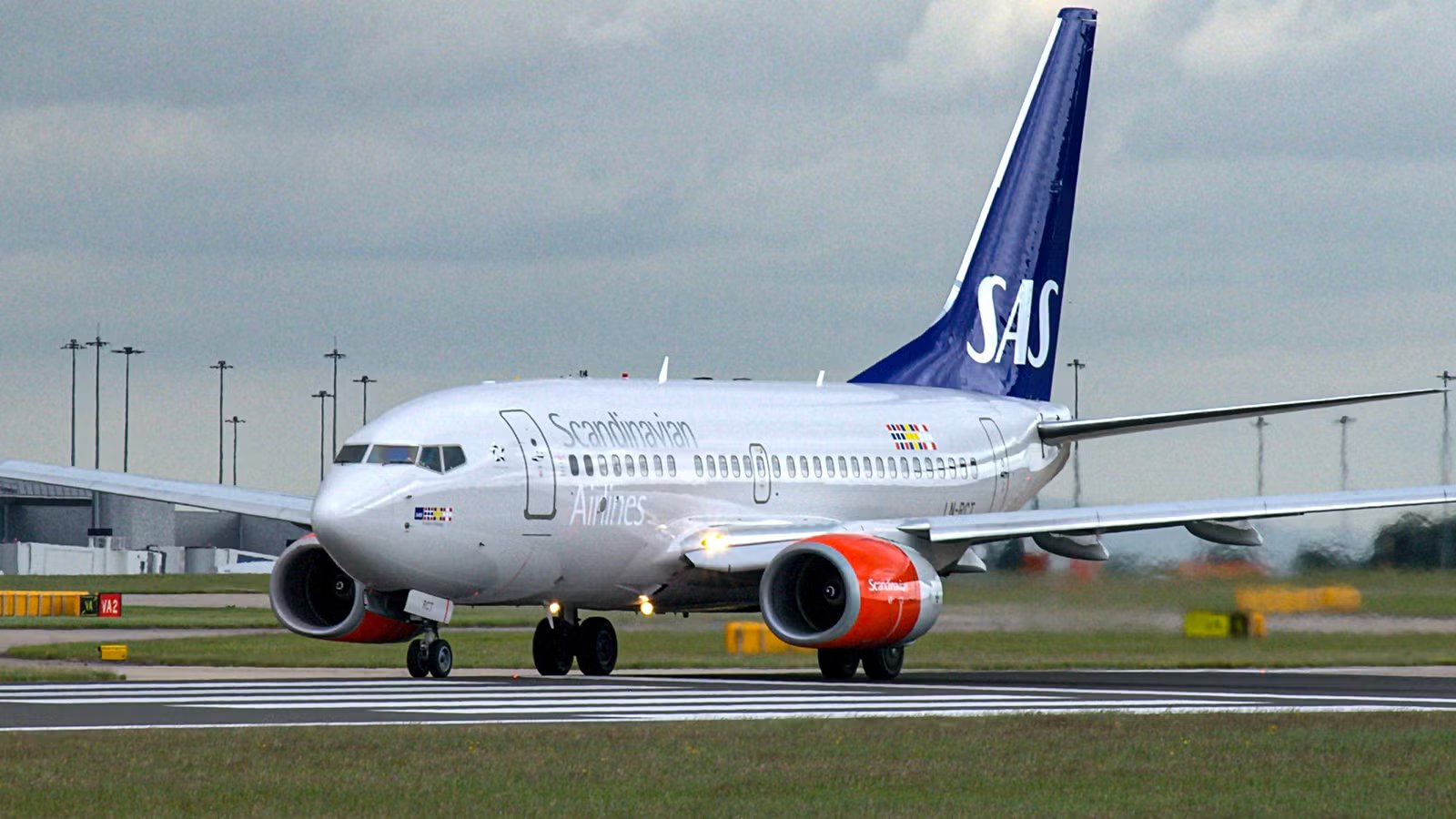
The Boeing 737 is history’s second-most successful commercial jetliner, and most of the variants in the 737 family have been quite popular. Some, however, were duds, with the 737-600 being one of the more peculiar ones. It directly succeeded the 737-500, which replaced the 737-200, and while both of these models were successful, the 737-600 sold only 69 units. This is even though a market clearly exists for small planes, and the 737NG far outsold the prior two 737 generations.
Examining the reasons behind the 737-600’s failure requires understanding how Boeing created the 737NG. Replacing the 737 Classic, the 737NG features updated engines, a new interior, improved avionics with a full glass cockpit, and a brand-new wing. In addition, the 737NG also came with more fuel capacity and higher gross weights to boost payload capacity as well as range. These design choices are crucial to why the other members of the 737NG succeeded, while the 737-600 failed.
The 737 Family Line

The 737 debuted with the 737-100, which was quickly succeeded by the slightly larger and more capable 737-200. The 737-300 was significantly larger, and  Boeing also stretched the airframe to develop the 737-400, but at the request of customers, it also developed the 737-500. This was the smallest variant of the 737 Classic family and was essentially a direct replacement for the 737-200. It sold 389 units, fewer than either the 737-300 or the 737-400, but still a fairly high number at the time.
With the 737NG, Boeing designed the 737-700 as the base model to directly succeed the 737-300, which was the most popular variant of the 737 Classic. The 737-800 was the replacement for the 737-400, but its improved range and compelling economics made it by far the most successful version of the 737NG. Meanwhile, the 737-600 would have succeeded the 737-500, but it ultimately was a shrink of the 737-700 with minimal changes to reduce weight, making it a heavy plane for its size.
The selling point of a shrink aircraft is performance and capability. These attributes make up for the fact that shrinks have high per-seat costs, worsening operating economics. Manufacturers can modify the plane’s structure to cut weight, but this comes at the expense of performance and range. But with the 737-600, Boeing derated the engines and certified it with a much lower gross weight than its siblings, which meant that it lacked a range or performance advantage over the 737-700.
The Failure Of The 737-600

The 737-600 is smaller than the 737-700 as it’s meant to succeed the 737-500. However, it burns almost the same amount of fuel as the 737-700 because it retains the same wings and structure from the 737-700 with minimal modification. In turn, the plane has practically the same operating costs as the larger variant, but has fewer seats. The 737-600 has less revenue potential and has higher per-seat costs, making its economics challenging compared to the larger variants.
As previously mentioned, the 737-600 didn’t offer a materially improved range nor was its takeoff distance superior to the 737-700. The aircraft was solely designed to be a small plane for regional flights, except it wasn’t light enough to serve this role effectively. In the end, the 737-600 was an uneconomical plane that didn’t offer anything that the market truly desired, and timing also played a role here. When the 737-600 debuted in 1998, many 737-500s were relatively young, further shrinking the market for the plane.
The 737-600 ultimately faced limited demand when it debuted, and was usurped from underneath by larger regional jets, while being outsold above by the 737-700. Boeing delivered just 69 737-600s from 1998 to 2006, and it was dramatically outsold by the 737-700. Meanwhile, although the 737-700 was designed as the base model, it effectively served as the shrink option given how compelling the 737-800 was, offering worse economics but superior capability compared to its larger sibling.
Who Bought The 737-600?

SAS was the launch customer for the 737-600, and ended up operating 30 of them, which were retired by 2019. WestJet acquired 13 737-600s, which were all retired by 2021, while Tunisair bought seven examples. Lauda bought two 737-600s, both of which later went to Austrian Airlines. China Southwest Airlines took six 737-600s, and Air Algerie acquired five units, while Malev Hungarian Airlines bought six examples. In total, just seven airlines took delivery of the 737-600.
One of the former WestJet 737-600s went to Air North, while another ended its life with Kelowna Flightcraft. All of the China Southwest Airlines aircraft went to Janet Airlines. Today, Janet Airlines is the largest operator of the 737-600 as it flies all six examples, while Air Algerie has parked four of its five 737-600s. The Air North 737-600, which was delivered in May 2026, has not been retired yet, but this aircraft is also parked as of the time of writing, resulting in a worldwide fleet of 12 aircraft, five of which are parked.
Boeing 737-600 Customers | Orders |
|---|---|
Scandinavian Airlines | 30 aircraft |
WestJet | 13 aircraft |
Tunisair | Seven aircraft |
China Southwest Airlines | Six aircraft |
Malev Hungarian Airlines | Six aircraft |
Air Algerie | Five aircraft |
Lauda | Two aircraft |
Total | 69 aircraft |
Janet Airlines, however, is a secretive government agency that operates flights from Las Vegas to military bases and installations. The name ‘Janet‘ comes from the operation’s air traffic control callsign and is informally used as the operation’s name. This means that, unless you work in Area 51, the only 737-600 that you can travel on today is 7T-VJQ, Air Algerie’s only 737-600 that isn’t parked as of the time of writing. This aircraft mainly operates flights from Algiers to destinations within northern Africa and Europe.
The Competition From Below

Compared to other 737NG models, the 737-600 was uneconomical to operate, but it also faced mounting competition from regional jets. The 737-600’s primary selling point was its smaller capacity, enabling airlines to serve smaller destinations more economically. However, the 1990s and early 2000s saw the rise of regional jets in the form of the Bombardier CRJ, Embraer ERJ, and the Embraer E-Jet.
Compared to turboprops, these regional jets were quicker and could fly farther. While earlier regional jets carried only about half as many passengers as a 737-600, they were significantly cheaper to operate, in part because they were staffed by regional partners that paid their staff much lower rates. Meanwhile, the E-Jet and the larger CRJ variants still maintained their cost advantage, while seating over 70 passengers, making them even more compelling versus a 737-600.
In the mid-2000s, Embraer released the E190 and E195 shortly after introducing the E170/E175, while Bombardier introduced the CRJ1000 in 2010. Depending on union agreements, these are sometimes flown by mainline crews, but they’re still more economical to operate than a 737-600. These aircraft burn far less fuel and weigh less, reducing weight-related charges at some airports. While they lack the range of the 737-600, the market ultimately didn’t require a 100-to-115-seat plane with 3,235 NM (5,991 km) of range.
Comparing To The Airbus A318

The Airbus A318-100 was the most direct competitor to the 737-600. The A318 was a double-shrink (as the A320-200 was the base model of the A320 family), but Airbus sought to reduce the impacts of shrinking the aircraft again by cutting empty weight and installing new, smaller engines. As such, the A318 had a significantly lower gross weight than the A319 or A320 and had less range than the A319. Ultimately, however, Airbus only sold 80 examples, and the program was a massive flop.
The A318 suffered from the same issues as the 737-600, in that it was overbuilt for its size and burned almost as much fuel as its larger siblings. The A318 also struggled to compete against smaller regional jets and regional jet-derived mainline planes, as it burned too much fuel. In addition, the other problem with the A318 and the 737-600 is that the 100-to-115-seat space is a difficult market due to fixed costs and semi-fixed costs, which become much larger in proportion to variable costs.
Aircraft | Orders | ||||
|---|---|---|---|---|---|
Airbus A220-100 | 108 | Boeing 737-600 | 69 | Bombardier CRJ1000 | 63 |
Airbus A220-300 | 1,001 | Boeing 737-700 | 1,135 | Embraer E170 | 191 |
Airbus A318-100 | 80 | Boeing 737-800 | 4,991 | Embraer E175 | 1,003 |
Airbus A319-100 | 1,486 | Boeing 737-900/900ER | 557 | Embraer E190 | 568 |
Airbus A320-100/200 | 4,756 | Boeing 737 MAX 7 | Roughly 300 | Embraer E195 | 172 |
Airbus A321-100/200 | 1,784 | Boeing 737 MAX 8 | Roughly 4,700 | Embraer E190-E2 | 65 |
Airbus A319neo | 57 | Boeing 737 MAX 9 | Roughly 450 | Embraer E195-E2 | 439 |
Airbus A320neo | 4,267 | Boeing 737 MAX 10 | Roughly 1,400 | ||
Airbus A321neo | 7,739 | Bombardier CRJ700 | 346 | ||
Boeing 717-200 | 156 | Bombardier CRJ900 | 487 |
Smaller mainline planes have fewer seats to spread out expenses like crew salaries and airport fees, which makes their economics challenging. While the Embraer E190, E195, and Bombardier CRJ1000 outsold the 737-600 and A318, none of them were as popular as their smaller siblings that are operated by regional airlines. The Embraer E2 and Airbus A220 have also sold considerably fewer units than the A320 or 737 families.