dailynewsnblog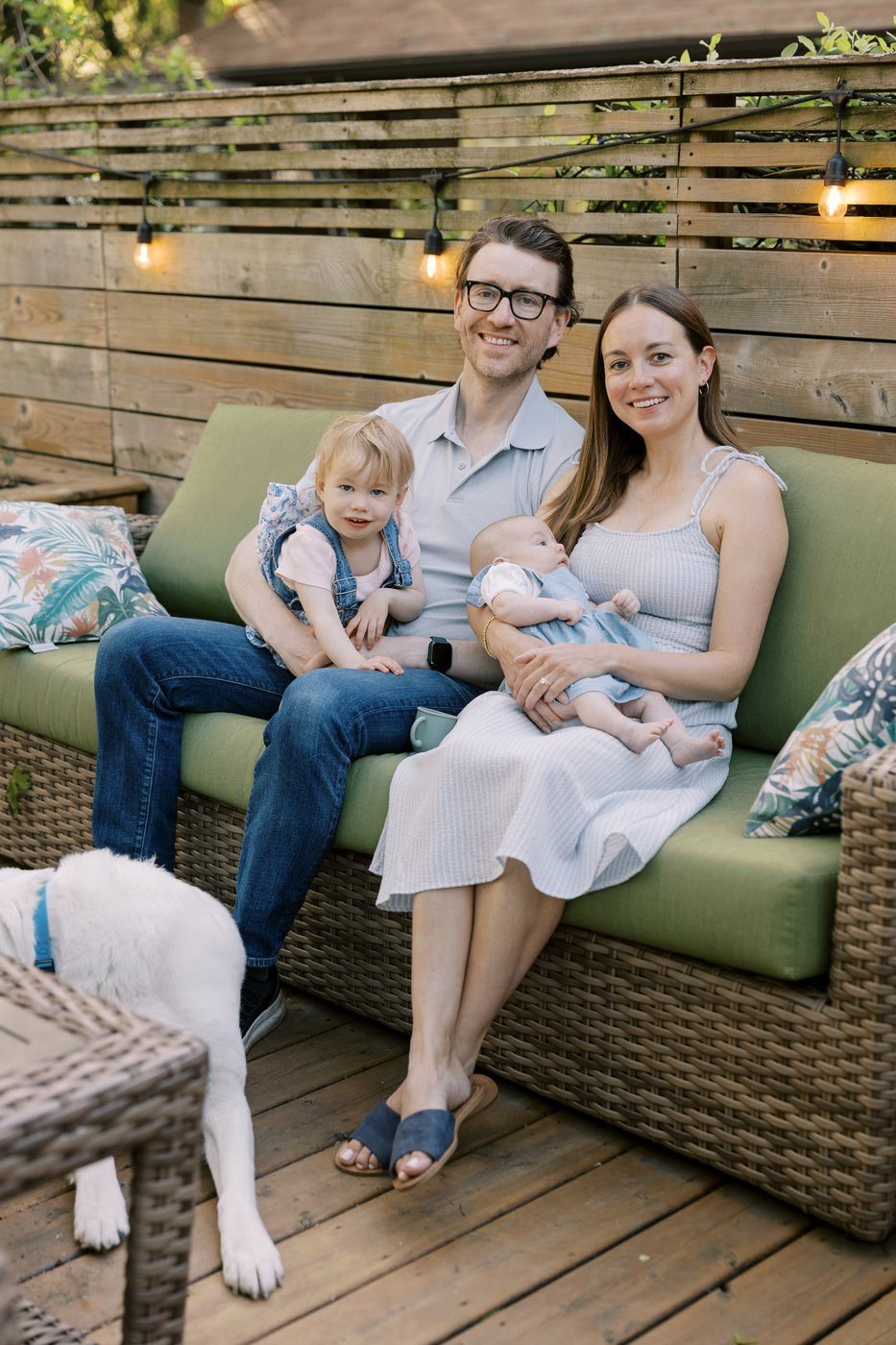
TORONTO — Alex Shved is fighting his Stage 4 cancer on two fronts.
Medication he is receiving as part of an early-stage trial is working with his body, he hopes, to attack melanoma that has metastasized. At the same time, he is taking up arms against another formidable foe: the health-care bureaucracy.
Shved, 37, has tried various treatments since first discovering a growing mole in 2020 and continues to feel well, working in private equity and parenting his two daughters, both under two years old.
“I will do anything and everything it takes to stay in their lives,” he said in a recent interview. “I have no choice but to keep going.”
But the cancer is progressing, having spread to his bones and lungs, and his oncologist said he would be a good candidate for tumour-infiltrating lymphocyte, or TIL, therapy. It involves doctors removing tumours, extracting immune cells that have infiltrated the tumours, multiplying them in the billions and infusing chemotherapy, then the multiplied cells back into the patient to attack the cancer.
It is not publicly funded in Ontario but could be in the future, and therein lies the catch.
A version of TIL therapy called lifileucel was approved for sale last year by Health Canada, and is now undergoing reviews for consideration of possible funding by provincial drug plans, a process that could take years.
“I don’t have the time to wait, because not only am I not going to be medically — may not be medically — fit by the time it gets approved, I might not even be here by the time it gets approved,” he said.
Shved’s oncologist requested out-of-country funding for Shved to receive TIL therapy at the Moffitt Cancer Center in Florida. It could cost about $1 million, Shved said. The Ministry of Health rejected the request this spring, citing the funding review period.
“The (Out-Of-Country) Prior Approval Program is not a mechanism to provide interim drug funding for indications that are currently being reviewed or expected to be reviewed for public funding in Ontario,” the letter said.
The section of regulation cited in the rejection letter says that for cases primarily involving administration of a drug, the executive officer appointed under the Ontario Drug Benefit act must recommend it for someone in the same medical circumstances.
The executive officer does not recommend payment, the letter states, offering no further explanation other than the interim funding period.
Shved was surprised by not only the brevity and formulaic nature of a letter describing what may be a life-and-death decision, but most of all by the fact that the regulations governing Ontario’s out-of-country coverage do not mention interim funding periods as a basis for denials.
The stated reason for the rejection amounts to a catch-22 of sorts, Shved argues, saying Ontario won’t fund the treatment now because it might fund it later — when it may be too late.
Shved has appealed the decision to the Health Services Appeal and Review Board, filed an application for judicial review of the decision, filed freedom-of-information requests asking for internal notes and memos that could show how the decision was reached, emailed the executive officer, and dozens of cabinet ministers and other politicians.
“(To) have the government reject it without even, frankly, looking at your case, without considering your situation, just applying some categorical copy and paste legal statement that doesn’t exist in the policy feels like a bit of a slap in the face,” he said.
“I think what makes it worse is that when you try to reach out to them and ask them to explain, not to change their minds necessarily, but just explain how this decision was made, you hear nothing.”
Health Minister Sylvia Jones called Shved after his story was in the Globe and Mail recently, he said. He urged her to make expedited regulatory amendments to the out-of-country funding program and noted that TIL therapy is also offered in Israel and Turkey at a fraction of the cost in the United States. The minister told him she can’t intervene in individual cases but would talk to her team, Shved said.
The Ministry of Health said provinces that are part of the pan-Canadian Pharmaceutical Alliance don’t provide out-of-country funding for drugs that haven’t completed the established review and funding process.
“Once that process is complete, each participating jurisdiction will independently decide whether to publicly fund the therapy for eligible patients,” spokesperson W.D Lighthall wrote in a statement.
“Consistent with this approach, there have been no instances of Ontario approving out-of-country funding for a drug while it was actively undergoing the national (drug) negotiation process.”
Neither the ministry statement nor the rejection letter to Shved explains why.
Dr. Joel Lexchin, professor emeritus from the school of health policy and management at York University and an expert on pharmaceutical policy, said his assumption is that the province does not want to pay the American price because if the therapy gets funded in Ontario it will likely be significantly cheaper.
“The public payers are looking at it from the point of view of well, on average American drug prices for patented drugs are between two-and-a-half and three times the Canadian price,” he said.
The province is likely also considering other ways the money could be spent in the health system, Lexchin said.
“These decisions are never easy, because you’re dealing in one case with one specific person,” he said.
It takes on average 730 days from when a drug is approved by Health Canada to a funding decision by provinces, Lexchin said, some of that time due to government agency processes but some also due to how fast a drug company moves to submit applications.
There are several steps between a Health Canada approval and provincial funding, including a drug review assessment of the cost versus how much longer a drug can give a patient a good quality of life, and negotiations between the company and provincial and territorial drug plans on price.
That is time that Shved may not have.
While he is fighting to stay in his wife and daughters’ lives for as long as possible, hoping the province funds TIL therapy for him in the United States, and hoping the Phase 1 clinical trial he is part has measurable success in fighting his cancer, it’s not his only wish.
He wants to see such consequential decision-making of the health-care bureaucracy become more transparent.
“Maybe (other people rejected for out-of-country funding) don’t have the time, the energy, or the health span to fight this,” Shved said.
“I feel a duty to do this on behalf of both myself and lots of other people.”
This report by The Canadian Press was first published July 9, 2026.
Allison Jones, The Canadian Press