dailynewsnblog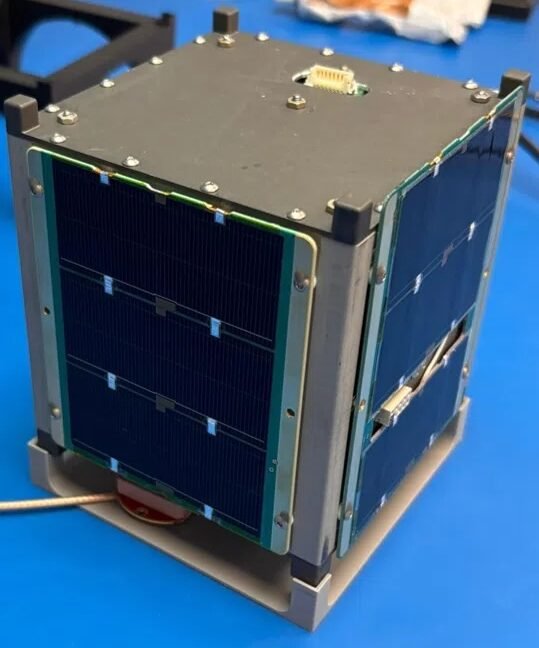
The proliferation of nuclear power in space got a little more real Tuesday with the launch of a small satellite developed by a Florida-based company specializing in nuclear micro-power technology.
It’s a long way from launching a bona fide nuclear reactor, a breakthrough that could help power a permanent Moon base and efficiently drive rockets throughout the Solar System. But you have to start somewhere.
The satellite from Miami-based City Labs is named BOHR, short for Betavoltaic Orbital High-Reliability, and it launched on a SpaceX rideshare mission Tuesday alongside 80 other payloads. SpaceX’s Falcon 9 rocket released the BOHR satellite into an orbit between 350 and 400 miles (nearly 600 km) in altitude.
Starting small
City Labs bills the BOHR mission as “the world’s first commercial nuclear-powered satellite and first nuclear CubeSat.” CubeSats are modest in scale, and images released by City Labs suggest BOHR is built on a “1U” CubeSat platform, a cubical design measuring about the same size as a softball. BOHR’s power source is a nuclear betavoltaic battery that generates electricity from the decay of tritium, a radioactive isotope of hydrogen.
“This is a historic step for commercial nuclear power in space,” said Peter Cabauy, CEO of City Labs, in a statement. “BOHR demonstrates that safe, compact, and regulatory-approved nuclear power systems are ready for routine commercial deployment. This capability enables persistent, always-on payload operations that are not constrained by sunlight or battery life.”
City Labs will use its experimental NanoTritium power generator in demonstration mode to supply electricity to a payload onboard the BOHR CubeSat. The spacecraft itself uses conventional solar power for regular operations, the company said. Betavoltaic batteries are best suited for low-power applications that require a reliable, long-duration source of electricity. These use cases include remote terrestrial sensors—such as in undersea or polar locations—and instrumentation for secure communications. City Labs is also studying the use of its NanoTritium technology to power implantable medical devices.