dailynewsnblog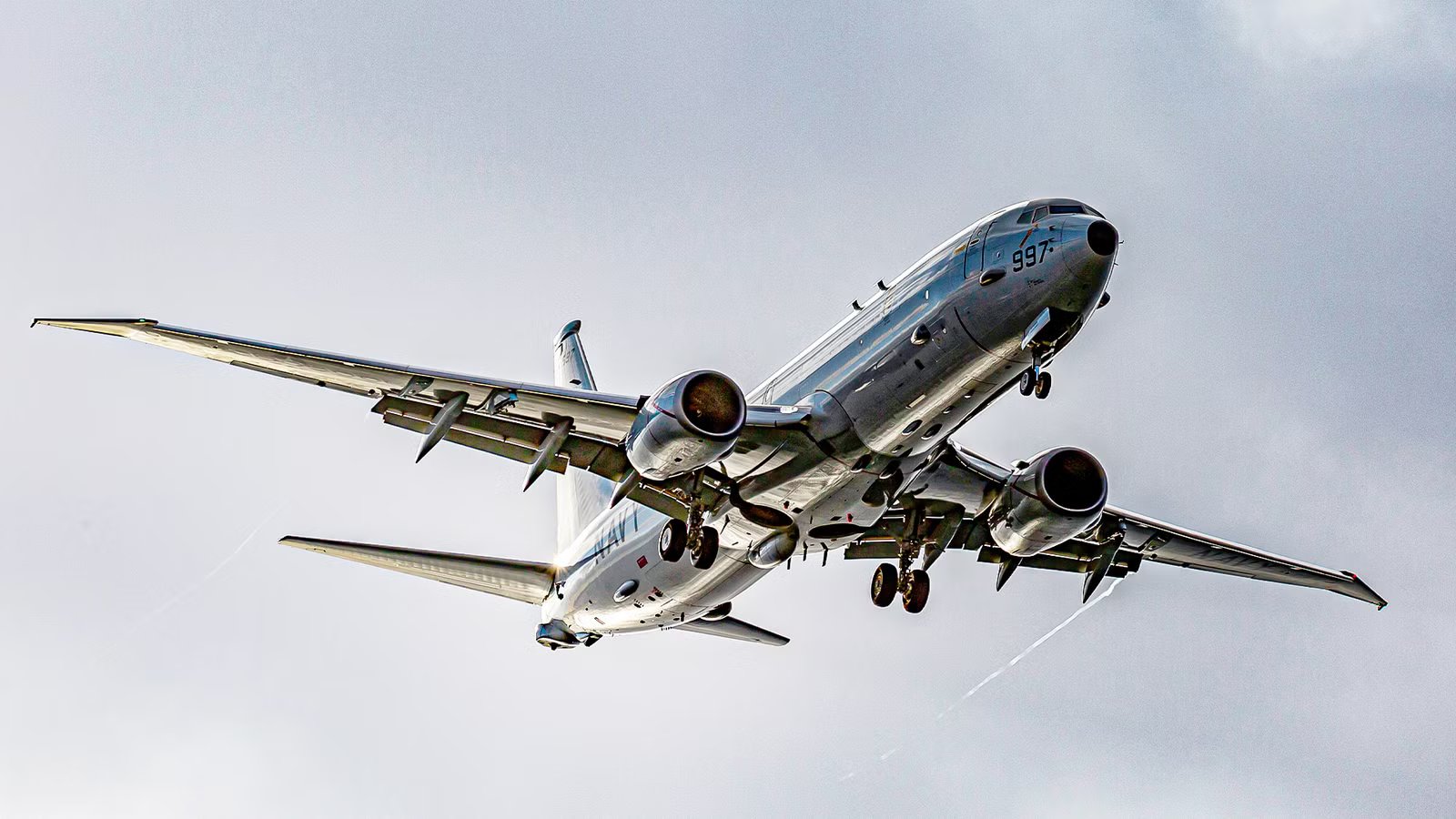
When the US Navy introduced the  Boeing P-8A Poseidon, it did a lot more than trade turboprop engines for turbofans. The military-grade 737 Next Generation is the successor to the Lockheed P-3C Orion Maritime Patrol and anti-submarine warfare aircraft. The Orion was a 1960s-vintage submarine hunter made to serve in the Cold War to track and deter Soviet submarines.
Made for the 21st-century battlefield, the Poseidon is a much more flexible and capable intelligence, surveillance, and reconnaissance aircraft that can outperform the Orion and Maritime Patrol and reinvent ASW tactics. The plane can carry torpedoes and sea mines, and crews are trained to fly at low level for special tactics, but rarely do so because the plane’s sensors and engines perform much better at high altitude.
The P-3 carried magnetic anomaly detection equipment to find the huge metal submarines in the ocean, the P-8 does not. So, on top of every piece of gear on the Poseidon performing better from high above the waves, it also lacks the primary system that is needed for skimming the surface of the ocean.
Intelligence, Surveillance, And Reconnaissance In The Poseidon

Over 60 years have passed since the Lockheed P-3C first flew in 1959. Its successor is a quantum leap forward in aerospace technology as well as computing power and digital systems. Combined with the proliferation of drones and space-based surveillance equipment, the advanced technology in the Poseidon has made low-level surveillance inefficient and ineffective. Everything the Orion could do at the wave top level, the Poseidon can do better from cruising altitude.
The US Navy entirely removed the MAD boom from its P-8 fleet to save weight and maximize range. Rather than relying on low-altitude visual or magnetic checks, the P-8 relies on massive processing power. It processes fields of advanced, multi-static active and passive sonobuoys from high altitudes to search the deep ocean for submarines over a wider area than the P-3 could with its slower turboprop and lower service ceiling.
Rather than focusing strictly on sub-hunting, a massive portion of P-8 sorties are dedicated to broad-area electronic intelligence, overland monitoring, and surface warfare tracking. Because the P-8 spends its time cruising comfortably at high altitudes, up to 41,000 feet, its radar horizon and sensor reach are exponentially wider than the P-3’s. This environment naturally transformed it into a premier theater-wide ISR asset.
P-8: Multi-Mission By Design

Officially, the US Navy still classifies ASW as a primary mission for the P-8. However, the Poseidon functions more as an airborne network node. This greatly expanded mission set is largely thanks to its AN/APY-10 multi-mode radar and extensive electronic support measures suites to map entire oceanic theaters in real time. Yet, it still draws inspiration from its predecessor. During the post-9/11 era, P-3 crews spent significant time over land in Iraq, Afghanistan, and later the South China Sea, acting purely as standard ISR platforms.
To ensure that the ASW mission is still fulfilled alongside its expanded ISR mission, the P-8 executes using different technology and different tactics. Instead of dropping unguided torpedoes from just above the water, the P-8 utilizes the High Altitude Anti-Submarine Warfare Weapon Capability (HAAWC). The HAAWC adds a GPS guidance kit with wings to the Mk 54 torpedo that was previously used by the Orion that allows the munition to glide down to the water surface from high altitude.
The Poseidon has given the Navy dramatically more Maritime Patrol capability and replaced an antiquated platform with an aircraft that is not only modern but one of the most widely supported commercial airframes ever made. Because it is built on the 737-800 with turbofan engines, the P-8 delivers superior performance and all the pre-existing missions fulfilled by the P-3 while also offering a modular systems architecture to ensure that it is future-proof.
Flying With A Loyal Wingman

The US Navy pairs the P-8 with the MQ-4C Triton, a high-altitude, long-endurance drone. The Triton handles the continuous, monotonous broad-area maritime surveillance. The P-8 remains at a standoff range from contested airspace and seas while leveraging its larger systems suite and full crew to prioritize the top targets. By pairing a high-endurance drone with a high-speed manned jet, the US Navy successfully separated the grueling task of finding targets over vast areas from performing precision strikes.
The Triton is a specialized maritime derivative of the Global Hawk drone. It can stay airborne for over 24 hours at altitudes above 50,000 feet (15,240 m). Its primary job is continuous broad-area maritime surveillance, which means that it patrols millions of square miles of open ocean. It uses a 360-degree AN/ZPY-3 Multi-Function Active Sensor Radar system to track hundreds or thousands of targets at the same time in order to create a digital ‘picture’ of an entire theater.
The P-8 is much faster than the Triton but has a fraction of its loiter time, around four to ten hours depending on the range to the target area. The Triton will pass off information to the Poseidon directly over the data link when it finds a suspicious contact, including a potential submarine. The P-8 dashes to the specific coordinates, drops a targeted field of sonobuoys to localize a sub, and uses the munitions in its weapon bays to strike the target.
Submarines transit sea lanes quickly and only briefly use their snorkels to vent. Aircrew on the P-3 used to spend hours and hours at a time basically staring at a blank scope in order to find a target when it popped up. A P-8 operator can look at their console, see a radar return captured by a Triton flying 100 miles (161 km) away, and command the Triton’s optical camera to slew over and visually identify the vessel, periscope, or even aircraft.
Pivot To The Pacific: Shared Defense

In a high-intensity Pacific theater conflict, the P-8 Poseidon operates as the ultimate connective tissue within the Joint Force’s kill web. Differing from the strategic philosophy of the ‘kill chain’ where one platform is responsible for searching, identifying, and striking, the kill web is a decentralized, highly resilient mesh network. If one sensor or platform is destroyed, the network automatically reroutes data through other nodes.
The Poseidon is particularly valuable in a theater like the Pacific with enormous expanses of open ocean and the threat of advanced adversary platforms like stealth fighters, aircraft carriers, and standoff munitions. On top of being able to communicate with any aircraft, ship, or ground unit with a data link, the P-8 can even integrate with the US Space Force’s growing tactical satellite network. This effectively transforms the maritime patrol plane into a flying command and control node in a network that includes all US service branches as well as coalition allies in the region.
In the Pacific, the Chinese Air Force (PLAAF) Chengdu J-20 Mighty Dragon stealth fighter is a particularly dangerous threat to aircraft like the P-8 but also tankers, bombers, and cargo planes. Additionally, the stealth fighters that provide the counter to the hostile stealth fighter do everything they can to avoid detection until the last moment of engagement. Operating as a low-observable forward screen, F-35s can penetrate contested airspace, gather target data, and silently burst-transmit that data back to the P-8, which distributes it to the rest of the joint fleet.
Catch what other flight trackers miss
Emergency squawks, holds, NOTAMs — live signals, no signup.
Open tracker
Catch what other flight trackers miss
Emergency squawks, holds, NOTAMs — live signals, no signup.
Open tracker
This can allow the data collected by stealth fighters inside contested airspace to be translated over to a plane like the Northrop Grumman B-21 Raider or Boeing B-52J Stratofortress armed with long-range anti-ship missiles or the incoming hypersonic cruise missiles. These huge strategic strike planes can then fire standoff munitions from over the horizon and destroy the target far beyond the reach of enemy aircraft. That is thanks to the bridge provided by the P-8 from the stealth jets downrange, like Lockheed Martin F-35 Joint Strike Fighters.
The Navy-Marine Corps Team

As a US Navy asset, the P-8 Poseidon is dedicated primarily to serving the needs of the fleet as well as the US Marine Corps, which falls under the Department of the Navy. These two service branches work together as a team to project power across the ocean and ashore while providing organic air superiority as well. The P-8 has become one of the primary ‘eyes in the sky’ in this huge apparatus that is organized under deployed carrier strike groups and the Marine Air Ground Task Forces.
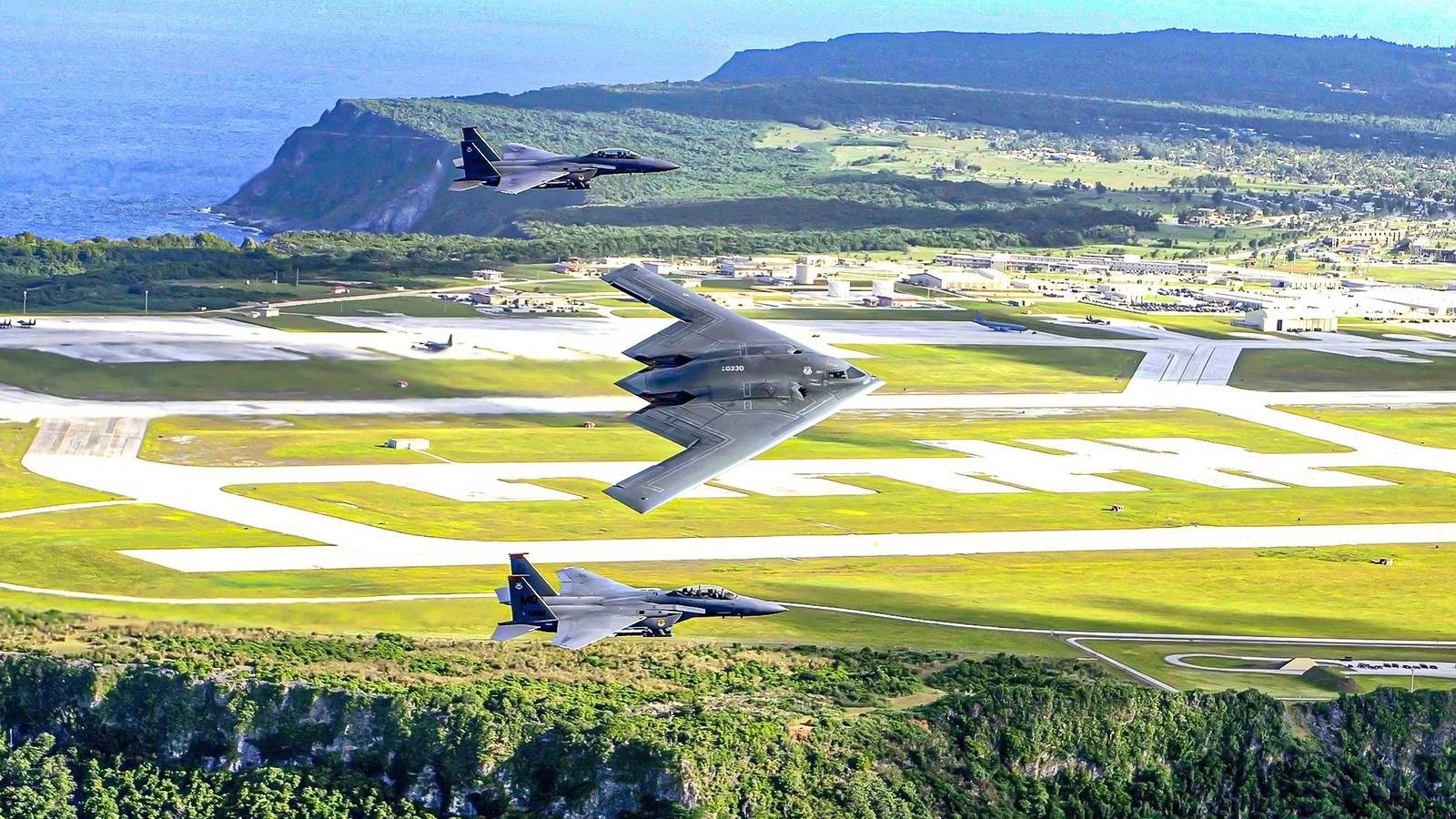
Poseidon crews operate from naval air stations in places like Guam, Okinawa, or Northern Australia to support the CSG and MAGTF deployed anywhere in the theater. The P-8 acts as the outer defensive ring for the aircraft carrier. While the carrier’s organic aircraft handle the short- and medium-range defense, the P-8 pushes the battle space out hundreds of miles. If a P-8 spots an enemy surface warship or low-flying cruise missile far beyond the radar horizon of the CSG’s cruisers and destroyers, it can stream high-fidelity tracking data straight into the ships’ Aegis combat systems.
When a Marine Expeditionary Unit is moving via amphibious assault ships, they are highly vulnerable to submarine ambushes and fast-attack craft. Ashore, if Marines are operating on a contested island under strict emissions control, turning off all their radios and radars to avoid being targeted by the enemy, the P-8 can passively monitor the airspace and waters around them.
In support of USMC Expeditionary Advanced Base Operations, the P-8 goes beyond simply providing the Marines with sensor data. The Poseidon can act as a targeting platform for Naval Strike missiles launched from the ground by Marines and guided to a hostile warship at sea by the sensors of the P-8.
This fire support and connection to the fleet provided by the Poseidon is a fundamental component of how the Marine Corps is transitioning back to a ‘raider’ strategy with small, highly mobile, and highly lethal Marine units on remote islands across vast areas of the first and second island chains.