dailynewsnblog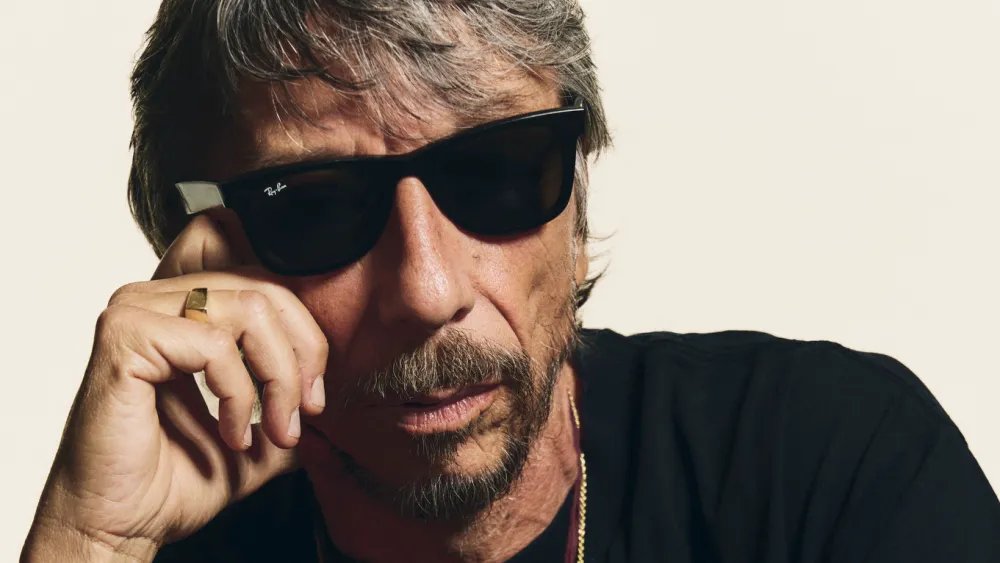
It’s a tall order to be a couturier, according to Pierpaolo Piccioli, one of its most seasoned and accomplished practitioners, who is making his high-fashion debut at Balenciaga on Wednesday, one year after arriving at the French house after a long, glorious career at Valentino in Rome.
“I really get that idea of Cristóbal Balenciaga: that a couturier has to be a sculptor, or architect for the shapes, has to be a painter for the colors, a philosopher for how people feel in your clothes. All of this is something that I can take inspiration from,” he said in an interview. “But in a way, it also has to be very personal; I’ve learned to react in a very instinctive way.”
Since Balenciaga resumed its couture activity in 2020 under then-creative director Demna, some 53 years after the Spanish master closed his legendary house, it has held annual shows at its mythic salons at 10 Avenue George V, which were meticulously restored to the way they were before the founder retired from fashion and closed shop in 1968.
But Piccioli — who once paraded Valentino couture an a nightclub under a bridge in Paris — is taking Balenciaga couture to the streets, opting for an open-air, midday display at the Cité Universitaire, an idyllic university campus and private park in the 14th arrondissement.
“I wanted to have couture related to the moment,” he said. “You will see the collection paraded in this formal garden… It makes it more real in a way; it’s more related to life.”
Piccioli also plans to show couture only for women, whereas recent Balenciaga couture shows were always coed.
“I felt it was important to redefine a vision of a woman in couture here, so setting up this idea of easiness, of effortlessness, of garments that could be extravagant combined with daily wardrobe pieces, fusing tailoring and flou,” he said. “We can use techniques that are super modern.”
On his personal Instagram account, and on Balenciaga’s, the designer has been sharing portraits of the men and women who work with him in the Balenciaga couture ateliers and studio.
“It is so important to understand the people that make couture,” he explained. “It takes time to understand each other, to know each other, and to find a common way of working, because you cannot arrive in a company and impose only your vision.
“You have to involve people in your own vision, in order to have not only their techniques, but also their passion, their enthusiasm, their love. That’s how you get the magic,” he added.

A sketch of Balenciaga couture by Pierpaolo Piccioli.
Courtesy of Balenciaga
In a wide-ranging conversation over water and espresso, Piccioli elaborated on his approach to couture, its place in fashion, and the importance of hiding the painstaking labor of handmade fashions:
WWD: How does it feel to be back doing haute couture?
Pierpaolo Piccioli: So good! I love doing couture. I feel that this is the laboratory of experimentation, innovation and challenges. I really feel good doing couture, especially in a house where its identity lies in the couture.
It’s an approach that changes everything and informs the way you work.
I started this collection thinking about the methods of Cristóbal, what made him so unique: His continuous conversation with the body… More than ever I feel that the conversation with the body and the idea of lightness and movement, the negative space between the body and the fabric, and the engineering of the cut becomes central.
WWD: The Balenciaga couture atelier is much younger than Valentino’s. What are your impressions of it?
P.P.: Without them, I couldn’t have done such a couture show. Yes, they are younger if I compare them to the people I worked with at Valentino. Young means that you have maybe fewer years of experience, but also a different mindset, and it can be an open mindset.
For example, we fused tailoring and flou in a way that is kind of new and they never experienced in the past. So what is really interesting is to know people, know their skills and try to find a way to fuse together these intentions and arrive at something that is new.
Couture involves a more free mindset, which is something I like.
WWD: From your investigations of the archive, what elements from Cristóbal will guide you?
P.P.: Engineering the cuts, not using so many fabrics, not using additional structures, but arriving at the perfect meld between the fabric, the shape, the color and the surface — as if you used only one gesture to create the object. I feel that he managed a balance between maximalism and minimalism, which I like, and it’s very close to my way of seeing fashion.
WWD: Do you have a favorite collection, dress or technique of his?
P.P.: It’s more about his method, emphasizing movement and the body. Freedom of the body is something that is so modern, so relevant today. It’s a method which is so precise, but also distinctive.
In this collection, I use some flower motifs, but more as surfaces. I noticed that Cristóbal never used flowers in a very pretty or romantic way. They were almost always bold and deep. They were maximal surfaces despite minimal shapes, which is kind of an oxymoron. To me, this tension is interesting.
WWD: What do you hope to accomplish with your first couture collection for Balenciaga?
P.P.: I hope that we can deliver the idea that we are a modern couture house that is relevant today, and that this approach, this culture of couture is something that we can spread over all categories and aspects of the brand.
WWD: How does your first couture collection relate to the ready-to-wear collections?
P.P: To me, couture is the soul of this company, and this informs all categories. If you do a T-shirt or pair of denim using the approach of couture, engineering the cuts, it’s a different way of approaching modern garments and daily wear garments. It’s a mindset.
WWD: When did you first start on the couture collection?
P.P.: Last October, November. We started doing some toiles, some experiments, some research together. One of the pieces took six to seven months to be achieved exactly as it is now. It takes time. I start with drawings, but first I have to know what I want to say.
It was very important to create a couture collection that would be modern, light and relevant for these times. When I react with fabrics, colors, it’s very personal and instinctive, and this is something actually I learned over the years, being more instinctive and less rational.
It takes time to experiment, to try, to innovate, and then also to hide all the techniques and all the efforts. It was important to get the emotion and the magic of the couture, and you only get that when you hide all the process, and it looks easy and effortless.
WWD: Were the Met Gala looks your first couture designs, or were there others?
P.P.: Yes, and I did some brides also. (He declined to elaborate.)
WWD: Do you consider couture to be still relevant in today’s fashion world? Why?
P.P.: Couture is still relevant because it gives you the culture to approach every category in a different way. That said, I don’t believe in the elevation of garments. I feel that the garments have to be exactly what they are. They have to maintain their authenticity, but they can be engineered in the best way, and I think couture and making couture helps in doing this. It’s a different way of thinking about the value of the garments.

A sketch of Balenciaga couture by Pierpaolo Piccioli.
Courtesy of Balenciaga