dailynewsnblog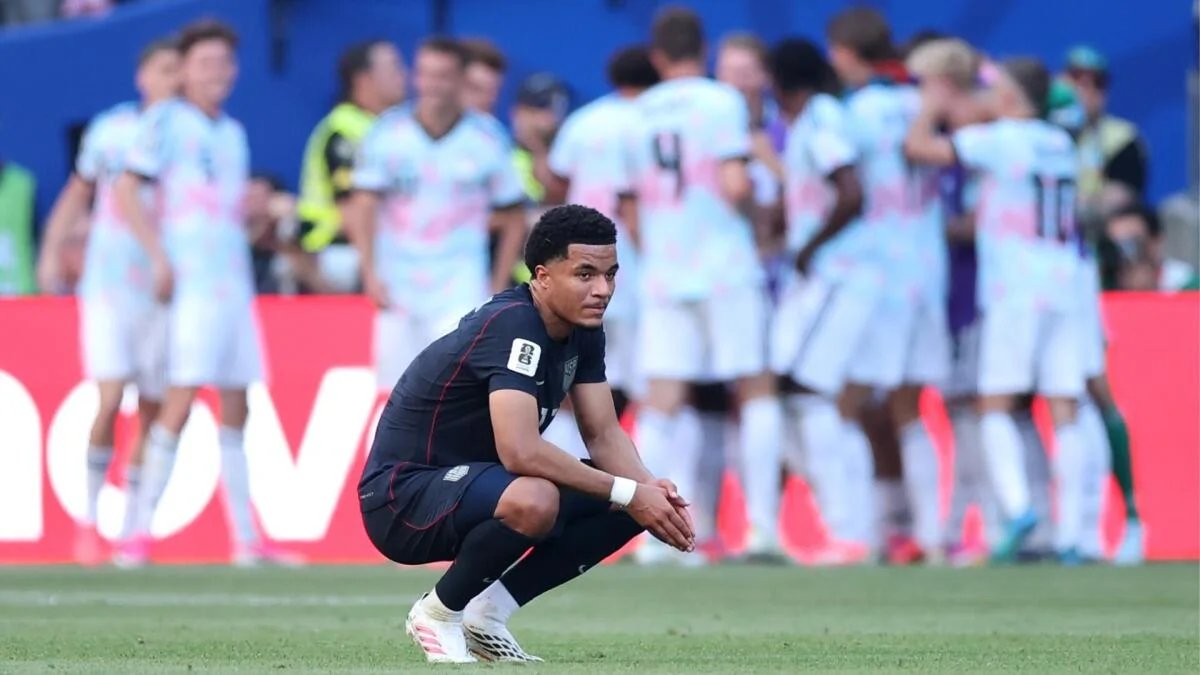
In a quiet pocket of a snowy Washington, D.C., seven months ago, hours after they had been drawn into a favorable World Cup group, U.S. men’s national team head coach Mauricio Pochettino had a message for his players.
“My dream always was to play in the World Cup, to play for my national team, Argentina,” he reflected. “In some moments in my career, I was thinking it’s not going to happen but [then] it happened and [at] 31 years old, I had the possibility to play at the World Cup and it disappeared so quick.”
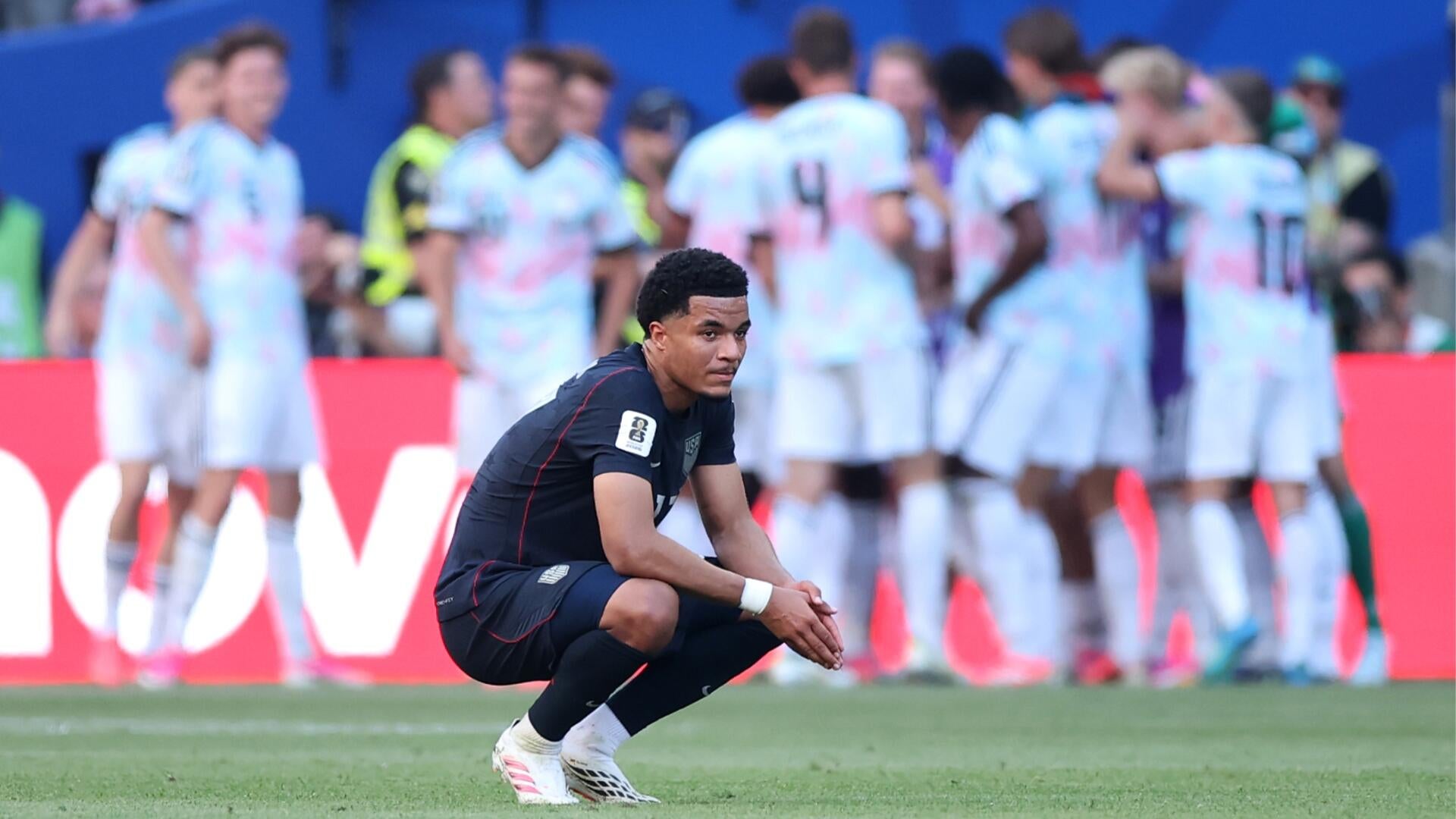
Pochettino’s second World Cup may have stretched longer than his first, which ended with Argentina’s surprise group stage elimination in 2002, but as the USMNT crumbled to a 4-1 defeat to Belgium in the round of 16 on Monday, it was hard not to feel like a golden opportunity came and went in the blink of an eye. The U.S. team had always come to a World Cup on home soil hoping to punch above their weight, in need of a best-case scenario to have a chance to compete with the world’s best. Losing was always on the table but it felt like a necessary series of events had, at long last, stacked up for the USMNT – they had a great run of form behind them, defined by a dynamic and attack-minded style, and all of their best players finally available and at the peak of their careers.
The U.S. team, though, never showed up.
In a culminating moment for the national team and especially the individuals who make it up, they let the moment swallow them completely. From start to finish, they barely registered anything of note, nervous with the ball at their feet and unwilling to solve any of Belgium‘s problems. It was not the first time the USMNT have looked so listless and aimless – truthfully, it was exactly how they appeared to be for much of the build-up to this World Cup. The brutal difference, though, is that they had failed to thrill in a series of friendly games while making the argument that all the things they got wrong were important lessons learned for the World Cup. On Monday, though, not a single one of those lessons was in sight.
The harsh truth is that Monday’s game confirmed every unsavory allegation that the USMNT had spent years trying to beat. The talent pool is currently not at the level it needs to be to reach the quarterfinals for the first time since 2002; no amount of money spent on high-profile coaches enough to change that reality even if Pochettino was not inherently the wrong hire. Harder to swallow but even harder to ignore, though, is the fact that these are not players who have ever demonstrated an ability to collectively handle the demands of a high-pressure situation. The USMNT have been in the habit of hoping a failure would be a wake-up call they needed. Pochettino’s predecessor Gregg Berhalter lost his job after their group stage exit at the Copa America in July 2024, failing their pre-World Cup litmus test. The USMNT then lost to Panama and Canada in the span of a few days in March 2025 in the Concacaf Nations League, their mentality the only talking point after a dismal week.
“One year [ago], we [thought] that we were in a mess,” Pochettino said. “Thinking today in the way that we perform in that World Cup, I say we improved a lot but the problem [is] you improve but sometimes, you grow little by little. It’s not linear that you are going to grow so quick.”
Their World Cup, though, ended so anticlimactically – there was not a new thing to be learned about this team or these players, many of whom will never get Monday’s moment back. Mainstays like Christian Pulisic, Chris Richards, Tyler Adams and Weston McKennie will be in their early 30s when the next World Cup begins, ending a tournament on home soil with shockingly poor individual showings. The faces of the USMNT’s so-called golden generation, each of them waiting for the better part of a decade to perform in front of a home crowd, failed to rise to the occasion. It will not jeopardize their national team futures, nor should this one game alone have the power to do such a thing. It is simply the difference between realizing your potential and not, which is a crushing blow in its own right.
“Today I think we closed the chapter about [assessing] players,” Pochettino said in a remark that was not designed to sting but almost certainly does anyway. “Now we have a complete assessment form a lot of players and if we commit to be here in the future, I think we have a clear idea about our decisions [of] the future. That was, before, very difficult because we didn’t have official games, mindset, all the circumstances that you know [were] so difficult to manage and to deal with.”
The circumstances, of course, were not ideal. Pochettino only took charge of his first game in October 2024, a big-name crunch-time hire if there ever was one. Things naturally might have been better with more time, same as it is for everything else. He is not totally blameless in it all, though – his rigorous, and at times tiring, experimentation in his first 20-plus games in the job saw him come up with a team that should have put up a fight against Belgium. His big bet on goalkeeper Matt Freese, who had no caps in May of last year but became the USMNT starter in almost an instant, failed completely. Freese has been error-prone over the course of his career but the U.S. team’s first World Cup opponents barely tested him. The blunder that led to Hans Vanaken‘s 57th-minute goal, officially allowing the game to slip away from the U.S. team as the score went from 2-1 to 3-1, was not exactly out of the realm of possibilities.
The good news for the USMNT is that with a fresh four-year cycle ahead of them, they stand a chance at integrating some fresh faces who can hopefully raise the quality of the player pool as a whole. That will undoubtedly be true in goal, Pochettino putting in quite the work to vet a batch of young players who will no doubt target the 2030 tournament. MLS is currently an incubator for a batch of exciting young talents, from Real Salt Lake’s Zavier Gozo to New York Red Bulls duo Julian Hall and Adri Mehmeti. There will never be a bad time to finally get over the hump, either – if the USMNT reach the quarterfinal that has long eluded them, they will have earned the right to celebrate it even if it happens an ocean away.
“I think with all the circumstances, I think this team showed that we can play football, we can play soccer, we can compete, that we need to keep improving,” Pochettino said. “A lot of young players with a lot of potential and a future and I think a generation of young kids that come in behind, I think only it’s about to keep believing in that process.”
As the dust settles on a World Cup defined by missed opportunities, though, the onus returns to U.S. Soccer’s leaders so the semblance of the momentum they picked up this summer via their “Take Me Home, Country Road” singalongs, if not the actual end result that matched every other World Cup exit since 2010. Sporting director Matt Crocker exited in April and it is unclear whether Pochettino will be next – he has an offer to stay and conversations will continue in the weeks to come, though it is entirely unclear which way things will go. There are a myriad of things that are also out of their control, chief among them the results of a fractured youth development pathway the federation leaders inherited – but have not fixed just yet. The hopes of the next four years will ultimately rest on the talent of the players that are rising up the ranks, same as it ever was.
At this point, though, it feels clear that the baton needs to be passed on to the next generation of players who will undoubtedly benefit from the long runway they have until the next World Cup. The current crop, for all their talents, have already ceded their moment.