dailynewsnblog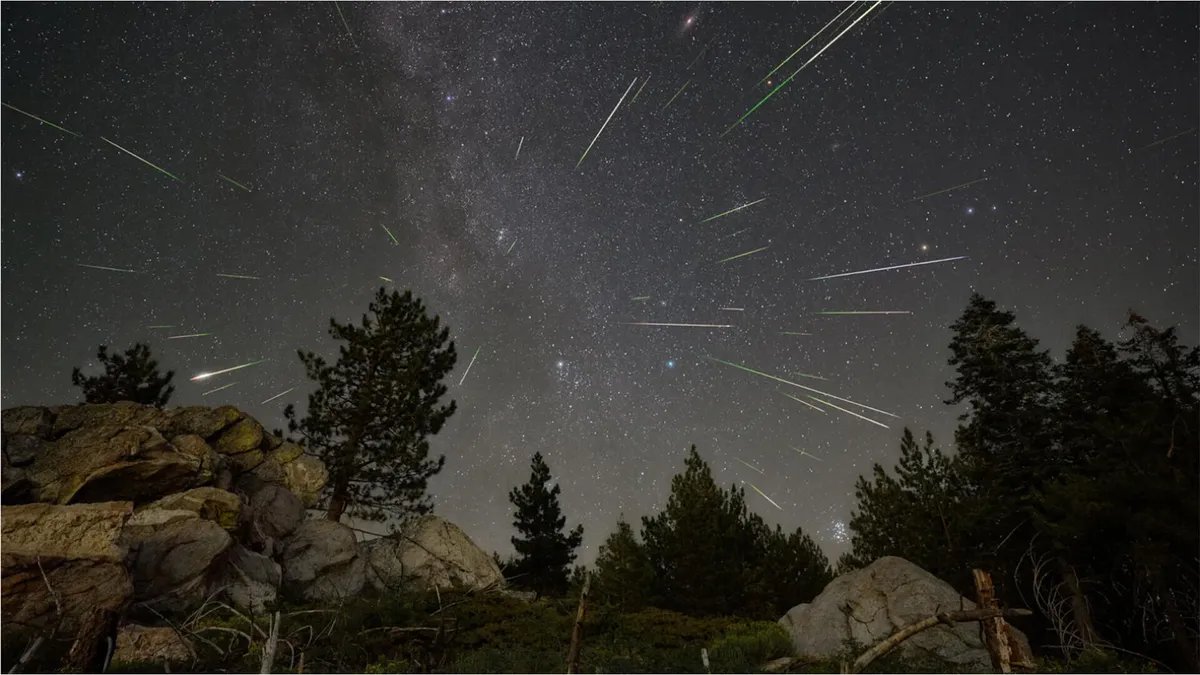
There are all kinds of cool things to see in the sky during summer, including the Summer Triangle, full moons, constellations and the occasional planet parade. The crown jewel of summertime stargazing is arguably the Perseids, one of the biggest meteor showers of the year, and it’s coming soon.
The Perseids shower begins on July 17 and continue until Aug. 24. During that time, you can expect to see the occasional shooting star if you look up long enough. The meteor shower is expected to peak on the evenings of Aug. 12-13, and that’s when the real fun happens. According to NASA, this meteor shower can generate upwards of 50 to 100 meteors per hour in ideal viewing conditions, which is more than any other meteor shower during this part of the year by a country mile.
That high meteor count and the fact that the Perseids take place during the warmth of summer, when it’s easy to hang out outdoors, are what make this a great viewing opportunity.
The Perseid meteors come to Earth thanks to the 109P/Swift-Tuttle comet, a rather large one at 16 miles across. NASA says that’s twice the size of the asteroid that is theorized to have killed the dinosaurs. The comet leaves behind a healthy trail of debris in its wake. The Earth moves through that debris trail every year, and the debris flying through Earth’s atmosphere is the Perseids meteor shower.
Perseids will have some of the best meteors
One of the hallmarks of the Perseids is that its meteors tend to be bright with long trails. According to Doug Welch, professor emeritus of physics and astronomy at McMaster University, most meteor showers have unique meteors based on a variety of factors. That includes how much material, what kind of material and the angle relative to Earth’s movement through space.
“It is true that different meteor showers spawn different ‘characteristic’ meteors,” Welch told CNET in an email. “This largely has to do with how long the spawning object (Comet Swift-Tuttle in this case) has been resident in the inner solar system and what the relative velocity of the material along the comet’s orbit and the Earth’s motion is.”
Welch says there’s a maximum speed at which comet material can hit Earth, and the Perseids shower is on the higher end of the spectrum.
The Perseids has all the right materials for bright, long-tailed meteors, although Welch notes that the light we see here on Earth is actually superheated air as the meteor flies through the atmosphere and not actually the meteor itself.
The new moon hits on Aug. 12-13, which means there is no lunar light pollution to deal with.
Perseids should be lovely to watch this year
This year should bring some of the best viewing conditions since 2018. Last year’s Perseids were hindered by a nearly full moon during the peak nights. Even if you drove far away from built-up areas to avoid light pollution, the moon’s bright light still washed out many of the smaller, dimmer meteors.
This year’s Perseids won’t have that problem. The darkness of August’s new moon is on the calendar for Aug. 12, which is the first night of Perseids’ peak. That is outstanding news for stargazers hoping to get a good view. The last time a new moon and Perseids happened at the same time was Aug. 11, 2018.
Whatever the phase of the moon, one of the biggest tips for seeing a meteor shower to best effect is to get away from the city and suburbs. This lowers the ambient brightness of the sky, making meteors easier to spot.
The Perseus constellation starts the night perched on the northern horizon before rising up into the eastern sky.
How to see Perseids
All meteor showers are named for their radiant, which is the point from which the meteors appear to originate in the sky. The Perseids name comes from the Perseus constellation. Find the Perseus constellation and that’s where the Perseids meteors come from.
Perseus starts the night of Aug. 12-13 on the northern horizon. It rises into the northeastern sky after midnight and climbs into the eastern sky by around 3:00 a.m. ET. It will continue to rise in the eastern sky until sunrise. If you’re having trouble finding it, Stellarium has a free mobile app for Android and iOS, and a free website you can use to help you find it.
Perseus is visible all night on both nights, but gets more visible and higher in the sky as the night goes. The best time to view it is in the morning before sunrise when Perseus is the highest in the night sky.
Shortly after sundown isn’t the best time because Perseus is still on or below the horizon. “It isn’t a good source of meteors for those who want to go to sleep early,” Welch said. “The longest meteor trails will be seen just as [Perseus] is rising into the sky.”
It’s pretty easy from there. Once you find Perseus, sit down facing that direction and keep an eye on the sky. Since the Perseids is one of the busiest meteor showers of the year, it shouldn’t be hard to see the meteors once they get going.
You’ll want to get away from the city. All those lights make it much harder, if not impossible, to see meteors, even during very active showers like the Perseids.
Tips and tricks for watching Perseids
The great thing about skygazing is that it’s essentially the same rules no matter what you’re looking to see. As noted, the first thing you need to do is get away from the city and the suburbs. Light pollution from brightly lit urban areas has a major impact on how many meteors you’re likely to see.
According to NASA, light pollution means that someone in a suburb could see a reduction in viewable meteors of around 75%, and in big city, over 95%. That is, if someone out in the countryside sees 100 meteors, a suburbanite may only see about 25, and a city dweller will see less than five.
“City dwellers might see a Perseid or two in an hour. Not very inspiring,” NASA’s Bill Cooke wrote. “Perhaps the only good news is that, if someone in a city sees a Perseid, it has to be really, really bright and spectacular.”
Welch echoed this sentiment, saying that the Zenithal Hourly Rate (the hypothetical number of meteors per hour) only happens under ideal conditions.
“To be honest, a casual observer under suburban conditions won’t see more than a dozen meteors an hour,” Welch said. “So, what people call a meteor shower is more of a shower leak.”
Other than seeking the darkest possible sky you can drive to, there are a few other tips and tricks that might help make the night better.
Get to your viewing destination a little early to give your eyes time to adjust to the darkness, and bring low-powered lights to find your way around so you don’t ruin your night vision. It shouldn’t be as hot as it was in the eastern US during the heat dome in late June and early July, but even so, it’s summer, so bring plenty of fluids, wear comfortable clothing and have something to sit on.
Meteor showers are a waiting game and even at 100 meteors per hour, that averages out to about three or so meteors every two minutes. Also, ditch magnification devices like telescopes and binoculars. These obstruct your view of the whole sky and may cause you to miss meteors.