dailynewsnblog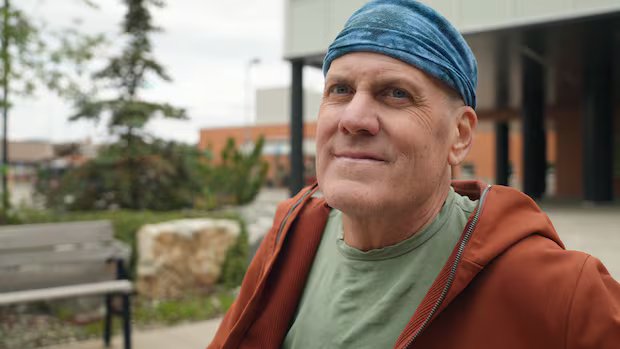
When Whitehorse resident Trevor Mead-Robins needed help for excruciating pain in June, he says it took three attempts to get through to 911 operators from his home in the Copper Ridge neighbourhood.
First, Mead-Robins said, the operator couldn’t properly hear him and the call got rerouted out of town. At that point, he said he was politely asked to call back.
Another call failed, he said.
On the third try, he said, the operator figured out where he was and what he needed.
But Mead-Robins said he had to repeat his issue multiple times because the operator still had difficulty hearing him. He said the whole ordeal took between eight and nine minutes, instead of one or two.
“I was 10 out of 10 for pain,” he said. “I was in tears, and having that additional stress of just trying to call for help was a lot.”
Unreliable calls and data, coverage gaps along major highways and network degradation during periods of peak use and emergencies: all are longstanding complaints about cellular services by both rural and city-dwelling Yukoners.
Mead-Robins is undergoing chemotherapy. His cellular provider is Public Mobile, which is owned by Telus. He said he worries that someone in an emergency won’t get the help they need when they need it because of cellular reception issues and “dead zones” throughout Whitehorse.
“My biggest fear is that the next time someone calls, they may not be able to get through and that may result in something more, like a tragedy, or something more serious. Fortunately, I was able to call back multiple times, but it took far too long and too many calls,” he said.
“It seems to be happening more and more.”
Dead line
Anne Lewis relies on cellular connectivity to keep her garden centre afloat. For cellular services, she’s a Telus customer.
Last year, Lewis said she had a 911 call drop when she sought help for her unresponsive father.
They were at Decora, the business Lewis runs and her father works at in the Hillcrest area, near the Whitehorse airport.
“We were doing a breathing-counting exercise. I got to the end of it and the line was dead,” she said.
When Lewis tried calling back, she said the call didn’t go through. She said she eventually regained connection with an operator.
More than a year later, Lewis is still seeking public reassurance.
“When I leave the town and travel between communities, I fully expect that those services become limited. That’s the reality and the risk we take on as northerners and we make other adjustments,” she said.
“But certainly I do expect [service] in Whitehorse.”
Urgent need
The Yukon RCMP said dispatchers at the operations centre have received “911 hangups” where a call unexpectedly disconnects. However, police said the centre doesn’t track the specific reasons 911 calls get cut off.
Possible reasons include an accidental caller hangup, a misdial, entering a service “dead zone” and network issues, RCMP said.
A spokesperson for the Yukon Hospital Corporation didn’t comment on whether 911 call issues have affected patients.
“As Yukon’s only critical care provider, we rely on the availability of telecommunications (including cell service) and work closely with Emergency Medical Services to ensure the community can access hospital care when they need it,” the spokesperson said.
A spokesperson for the territorial Community Services department explained by email how 911 works in the Yukon, where telecommunications carriers offer the routing and interconnection for 911 calls from a caller’s device to an operator.
Two carriers are involved in the process: the company that provides the service to the caller, as well as the local carrier, Northwestel, which is owned by Bell. The email says the local carrier directs the call to the public safety call centre, which also deals with abandoned or disconnected 911 calls to assess them for emergency purposes.
The email adds that cellphone calls are subject to “dead zones and limitations.”
‘Yukoners are pissed’
Mead-Robins also runs MEADIAsolutions in Whitehorse. He said his business regularly sees customers confused about cellular issues that are sometimes outside of their control.
“It’s not a secret that the quality of cellphone service in many areas are not at a satisfactory level,” he said. “It seems to be an issue that’s being constantly … ignored.”
Two years ago, former premier Ranj Pillai wrote to Bell saying “Yukoners are pissed.”
Pillai called on major communications companies like Bell, Rogers and TELUS to improve cellular services.
According to the Commission for Complaints for Telecom-television Services, complaints have increased nearly six-fold in the territory, from nine in 2023-24 to 60 in 2024-2025.
‘They’re responsible’
Highways and Public Works Minister Linda Benoit and Economic Development, Tourism and Culture Minister Jen Gehmair are also weighing in on spotty cellphone service.
The Yukon ministers recently sent letters to Bell CEO Mirko Bibic, the Canadian Radio-television and Telecommunications Commission (CRTC) and the federal industry minister.
The letters outline the Yukon government’s observations and complaints it has received.
In an interview, Benoit said cabinet ministers and other MLAs have been fielding “many” complaints about poor cellular reception. They said the problem is getting worse.
“It’s not necessarily that we’re blaming Bell,” Benoit said. “However, they are the cellphone infrastructure provider here in the Yukon. It is their infrastructure that the mobile network runs on and they’re responsible for maintaining it, upkeeping it, upgrading it, and that kind of thing.”
The recent letter to Bell demands that it acknowledge the problem, explain it and share its plans to make the network better.
In the letter to CRTC, the ministers ask the federal telecommunications regulator what tools it has to improve transparency and service.
The Yukon ministers are also seeking support from Innovation, Science and Economic Development Canada, the federal department that regulates cellphone towers, via Industry Minister Mélanie Joly. They want the feds to help track progress.
Problem complex and costly to fix, Bell says
A Bell spokesperson said by email it has no record of 911 outages on the dates CBC referenced in June.
“Yukon’s 911 architecture relies on the traditional landline network to route emergency calls to 911 operators,” reads the email. “In this instance, the 911 service was operating as designed. Any issue would have been related to the wireless network coverage or connectivity in the area from which the individual was attempting to place the call.”
Bell said it has spent $20 million on its wireless network in the Yukon since 2019 to make it faster and more reliable.
It cites ongoing discussions with the territorial government.
“Expanding the network in the Yukon remains a significant challenge that comes with logistical complexity and high upfront and long-term operational costs, due to the unique conditions in the region,” it said.
“Government funding can help unlock opportunities that would otherwise be unfeasible.”
Priority calls
A statement from CRTC said federal, territorial and municipal governments, as well as telecommunications service providers, are tasked with ensuring that Canadians can access 911.
CRTC regulates the service providers that connect 911 calls to first responders.
“The cellphone provider is responsible for carrying the 911 call over its network where there is coverage and for delivering it to the Yukon 911 call centre,” reads the statement. “The call centre will confirm the caller’s location and dispatch the appropriate emergency response.”
No 911 outage notification was received for the recent time period in question, CRTC said.
CRTC requires service providers to report 911 outages. It’s considering taking further measures to make the overall network more resilient and protect consumers during outages, but the emails don’t elaborate on those actions.
It also said it’s coming up with a standardized approach to collecting and reporting cellphone coverage data to better determine where coverage is strong and work is needed.
Daniel Sokolov is a veteran telecommunications journalist based in Whitehorse. He said mobile companies all share the same network in the territory.
Sokolov doesn’t know why the issue feels like it’s getting worse.
“The first thing is Bell has to recognize the problem,” he said. “911 calls should always get priority.”