dailynewsnblog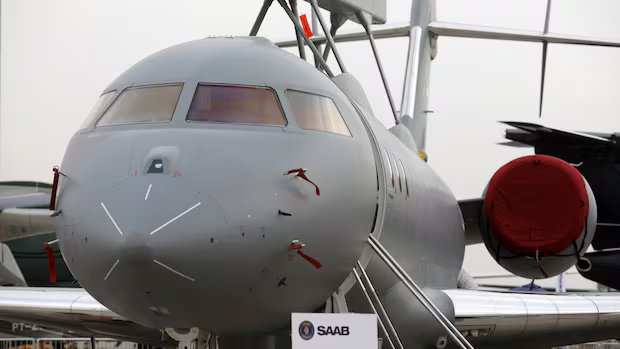

Listen to this article
Estimated 2 minutes
The audio version of this article is generated by AI-based technology. Mispronunciations can occur. We are working with our partners to continually review and improve the results.
NATO has made it official, announcing Tuesday that it intends to acquire up to 10 Saab-manufactured GlobalEye early warning surveillance aircraft in a plan that has important implications for Canada.
Secretary General Mark Rutte said at the outset of this year’s leader’s summit in Ankara, Turkey, that the Western military alliance will open formal negotiations with the Swedish company in order to secure the planes.
The alliance had previously signalled it was looking at the high-tech jet as a replacement for NATO’s existing fleet of aging Boeing E-3 AWACs.
Rutte said 11 countries, including Canada, are banding together in a joint procurement effort.
The GlobalEye will “provide enhanced detection and tracking of complex threats, including drone swarms, ballistic missiles and cruise missiles. The aircraft will strengthen NATO’s situational awareness and support operations,” the alliance said in a statement.
The early warning system is built on a Bombardier 6500 executive jet with Saab radar and sensors. The jet is manufactured at the company’s plant in Toronto.
In late May, Prime Minister Mark Carney announced Canada intended to buy up to six GlobalEyes and also opened a separate set of contract negotiations.

Canada has entered negotiations with Sweden’s Saab on a deal to buy its GlobalEye airborne early warning aircraft, Prime Minister Mark Carney said on May 27. Saab beat out the U.S.’s Boeing and L3Harris in a bid that would see the planes used by the Royal Canadian Air Force for domestic and overseas flights, particularly for surveillance in the Arctic.
The Royal Canadian Air Force had planned to acquire surveillance aircraft for both domestic and overseas operations. Chief among Canada’s concerns, though, is surveillance of the Arctic.
In a statement Tuesday, the president of Saab said the GlobalEye will significantly improve NATO’s ability to detect threats.
“We are confident that GlobalEye is the right choice for the Alliance, delivering proven capability, adaptability and long-term operational advantage,” said Micael Johansson.
“Today’s announcement clearly positions GlobalEye as the world-leading solution for advanced airborne early warning and control. We look forward to the next steps in the negotiations.”
The decision, coming on the first day of the NATO Summit, runs the risk of drawing the ire of U.S. President Donald Trump.
He has often criticized European allies for relying too heavily on the U.S. to defend the continent, while pressing them to boost defence spending and buy more U.S. equipment.