dailynewsnblog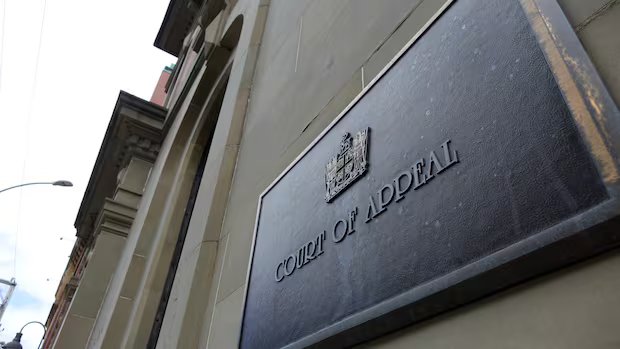

Listen to this article
Estimated 5 minutes
The audio version of this article is generated by AI-based technology. Mispronunciations can occur. We are working with our partners to continually review and improve the results.
The Newfoundland and Labrador Court of Appeal could soon hear its first ever case in French.
The Crown is appealing a ruling that stayed sexual assault charges against a Quebec man due to trial delays.
Defence lawyer Marie-Élaine Poulin, whose francophone client elected to have his trial conducted in French, said she’ll soon request the appeal be heard in the same language.
Crown prosecutor Paul Thistle said such a request could be accommodated by the public prosecutions division. But he said no such request has been made, as of yet.
For the time being, the special prosecutors office appears to have prepared for an English appeal, spending months translating reams of trial transcripts and other related documents and filing them with the appellate court.
In a request to the court on March 26, Thistle requested a 40-day extension to the deadline for making its submissions to the Court of Appeal, given lengthy delays translating trial transcriptions into English.
“Appeals of French-language trials are exceptionally rare in this jurisdiction — to our knowledge there has never previously been one filed and we can find no published record of one — and so we have run into delays in procuring translations of the transcripts and materials which has delayed us significantly,” Thistle wrote.
Poulin said in an email she was “surprised” to receive all the Crown’s submissions in English, given the trial had been conducted in French. She said she would soon formally request the appeal be heard in her client’s mother tongue.
Dearth of French-speaking Crown attorneys
In the same document filed March 26, Thistle wrote that the special prosecutions office, a six-member team of Crown prosecutors that deals with the most serious criminal court cases, “does not currently have any fluently bilingual lawyers.”
However, in an email to Radio-Canada on Monday, he wrote that “there are multiple prosecutors within the broader prosecution service who are fluently bilingual and we regularly conduct trials in French throughout the province.”
“If there was a request to conduct an appeal in the French language we would accommodate it.”
What are the appeal court’s language obligations?
Canada’s Criminal Code stipulates that an accused person has the right to have their trial heard in their official language. But once a trial court’s decision is appealed, the rules regarding language obligations vary from province to province.
Regina-based lawyer Roger Lepage said in provinces such as Quebec and New Brunswick, appeals can be heard in either French or English, but that in other jurisdictions, such as Saskatchewan, appeals are heard in English with simultaneous translation.
“That’s far from ideal,” Lepage said. “You’re presenting your arguments and you’re doing it as slowly as you can so the interpreters can follow along. You can’t really get a feel for what’s going on, so it’s always better to have a bilingual judging panel.”

Shelley Organ, the CEO of the Newfoundland and Labrador Supreme Court and Court of Appeal, confirmed in an email that a French-language appeal could be accommodated in her province “if the circumstances require it.”
She said to her knowledge no appeal had ever taken place in French in Newfoundland and Labrador.
Organ said there are currently three “functionally bilingual” judges on the appellate court. Three judges are needed to hear an appeal.
She also said Supreme Court judges could also step in if needed, given they are considered ex officio judges of the Court of Appeal.
Organ added that interpretation services could also be available if requested and if the court is given advance notice.
Crown looks to overturn decision on trial delays
In its landmark R. v. Jordan ruling in 2016, the Supreme Court of Canada established strict time limits for criminal trials to protect the accused’s Charter right to be tried within a reasonable time.
It set a limit of 18 months for trials in provincial courts, and 30 months for cases heard in superior courts — with the clock starting when the accused is charged.
The calculation should not include delays caused by the defence or “exceptional circumstances” — and in the case that will soon be heard by the Court of Appeal, the Crown is questioning the trial judge’s math.
According to the Crown’s submissions, filed May 20, Provincial Court Judge Wynne Anne Trahey failed to deduct “discrete, unavoidable events in particular the complainant’s weather-related travel delay [from Nain] and the interpreter’s illness.”
The judge said travel-related delays are not unusual in Labrador and precautions could have been taken to avoid any impact on the trial.
In its filings, the Crown disagreed and said Trahey’s approach “risks compounding the access-to-justice barriers faced by complainants and witnesses in northern and Indigenous communities.”