dailynewsnblog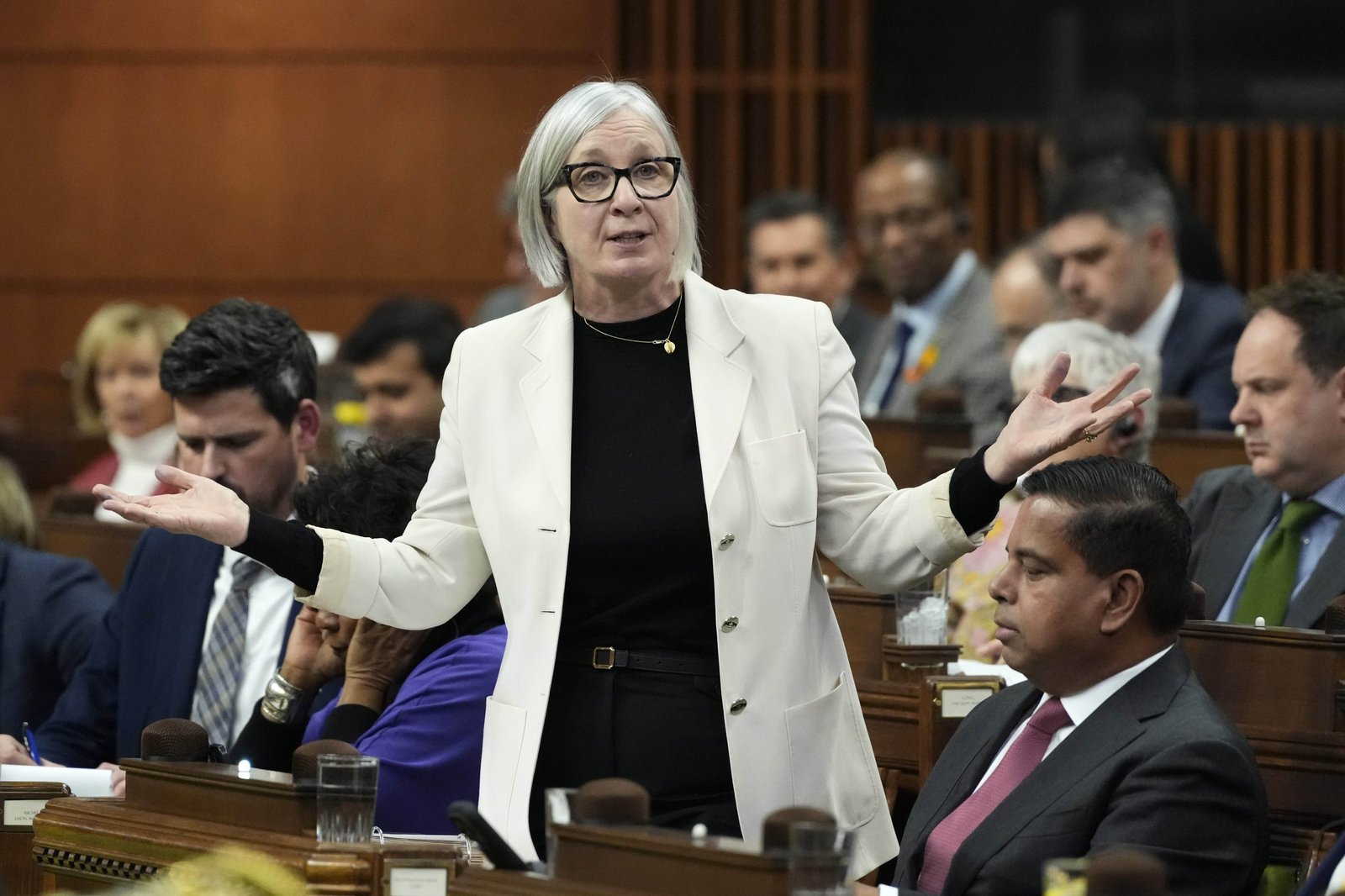
“Our goal as a union is to focus in on where we can have the most constructive dialogue. What I’ve seen from the employer side is they are looking clearly to be able to get to a situation where, where the right to strike is being eroded, and having an ability to just send things to binding arbitration,” said Unifor’s Lana Payne.
Canadian businesses are securing meetings with Jobs and Families Minister Patty Hajdu and senior officials in the Prime Minister’s Office as the Liberals move forward with a review of federal labour laws that has unnerved the major unions.
The Liberals launched consultations in April on the Canada Labour Code and other issues impacting federally-regulated sectors, setting a 35-day deadline to receive feedback. Unions slammed the aggressive timeline as evidence the government had already plotted out its planned revisions, warning the changes would likely be friendly to industry.
But Ottawa hit the brakes on introducing reforms this spring, and announced last week that it was holding a second round of consultations that would run until early August.
A review of filings with the federal lobbyist registry show that industry has been pleading their case on the Code to top officials in the Prime Minister’s Office and Hajdu herself.
Since the consultations launched in mid-April, businesses and their representatives were the only ones to record meetings with Hajdu and PMO staff.
Those lobbying the PMO on the Code included UPS Canada, the major freight railways CN and CPKC, and the BC Maritime Employers Association (BCMEA), which represents West Coast ports in labour talks.
In the past two years, the Liberal government has invoked a controversial section of the Labour Code to end disputes at the railways, and B.C. and Quebec ports, as well as at WestJet and Air Canada.
No meetings with unions were recorded in the registry with PMO staff on the Code, though others like Public Service Alliance of Canada and unions for operating engineers and representing industrial workers held meetings on other issues.
Over that span, Hajdu held three meetings on the Labour Code, including with CN and twice with the Canadian Federation of Independent Businesses, which represents small business owners.
The minister met with Unifor — Canada’s largest private sector union — a few weeks prior to the start of consultations, but the disclosure said that discussion focused on the government’s Buy Canadian policies.
Some labour leaders say they are still talking to government officials, but are mostly doing so through the consultations, which wouldn’t require registering with the lobbying commissioner’s office.
The Canadian Labour Congress, an umbrella organization for Canadian unions, said it has participated in “several official government consultations” on the potential changes, while president Bea Bruske sits on the government’s advisory council for labour policy.
Under federal law, all consultant lobbyists — which captures those who work for an outside firm — must register with the commissioner’s office. Internal staff that lobby on behalf of their employer must register if that works makes up a significant part of their job.
The lobbyists also need to file a report with the commissioner when they communicate with public office holders.
Lana Payne, national president of Unifor, said she hasn’t met with anyone from PMO, but has held “numerous” back-and-forth conversations with Hajdu and John Zerucelli, the secretary of state for labour.
She said she’s been making her case to cabinet ministers for quite some time as industry’s aggressive lobbying for reforms predated the start of the consultations, with many pointing to the raft of high-profile labour disputes that occurred amidst the post-pandemic spike in the cost of living.
Between 2023 and 2025, ports in B.C., Quebec and along the St. Lawrence Seaway, the country’s major railways and WestJet and Air Canada services have been shuttered because of labour disputes.
Payne said things have shifted since then, and labour relations are moving back into the “normal ebb and flow,” though it hasn’t stopped big business for calling for changes that would have major impacts on collective bargaining.
She cautioned that it would be unwise to upend the entire system where over 95 per cent of agreements are reached without a work stoppage.
“Do we have to look at what can we do to improve in those circumstances where… a union and a particular employer have a history of kind of bad blood, [or] just a bad relationship for all kinds of reasons, instead of throwing the baby out with the bath water here?” she asked, citing the possibility of appointing special mediators.
“Our goal as a union is to focus in on where we can have the most constructive dialogue. What I’ve seen from the employer side is they are looking clearly to be able to get to a situation where, where the right to strike is being eroded, and having an ability to just send things to binding arbitration.”
The registry shows that officials from Hajdu’s department, Employment and Social Development Canada, met with several business groups and major Canadian companies on the Labour Code. These include the Canadian Chamber of Commerce, the Chamber of Marine Commerce, WestJet, the Business Council of Canada, CN and the BCMEA.
Only one union held a meeting on the Code, according to the registry, with the Air Line Pilots Association recording a communication with Zerucelli.
In a statement to iPolitics, Hajdu’s office said the consultations were “expressly designed to hear directly from unions and other stakeholders about potential measures that could strengthen worker protections, the collective bargaining process, and the labour framework as a whole.”
The statement noted that Ottawa recently launched a new Tripartite Advisory Council that would bring “together unions, employers and the federal government to help shape federal labour policy.”
Her office also defended the government’s track record on unions, pointing to doubling funding for union-led trades education, refundable tax credit for personal support workers, and its $6 billion Team Canada Strong program to recruit, train, and hire up to 100,000 new skilled trades workers.
Next steps…
While it’s expected the Liberals will table legislation stemming from the consultations, it’s unclear what direction the government is moving towards.
The government said it launched the review to modernize the Canada Labour Code to better support Prime Minister Mark Carney’s economic agenda, while Bruske claimed Ottawa is working in concert with industry to help “determine pathways to preventing strikes and lockouts that will impact the economy.”
Hajdu hasn’t tipped her hand at this point about what the government is planning, other than hinting at support for early intervention by mediators and reiterating that the right to strike is protected by the Charter.
She also mused recently about the need for guardrails in using section 107 of the Code, which gives the government wide discretion to make any order to maintain industrial peace.
This section has become a lightning rod in labour circles as the government has increasingly used it to curtail strikes and lockouts in federally-regulated sectors.
Payne said Ottawa made a miscalculation by using s. 107 to end labour disputes, warning that unresolved issues at the bargaining table prevent the fostering of industrial peace and set back gains for workers across the country.
“The most frustrating part is the reality is the way we approach collective bargaining as a union is that this isn’t a transaction — it is a way to transform the conditions of work and not just for the people who are in a particular workplace that you happen to be bargaining for,” she said.
“If you look at any number of things that we have made advances on as unions over many decades in this country — whether it’s what does a workweek look like, what does overtime look like — these were not things that were in legislation. These were things that were first bargained in a collective agreement and then advanced through legislation.”
The group that represents federally-regulated employers said s. 107 should be coupled with new opportunities for early intervention in the bargaining process.
“Currently, it’s a reactive tool, and often it has been invoked after a catastrophic work stoppage has already begun. We don’t think that’s the best approach forward,” said Derrick Hynes, the president and CEO of FETCO.
“It could be used in a better way, but we think what we need are tools that are more preemptive in nature — before we get to this point of crisis, we have tools in the toolbox, steps in the process that would allow these parties that would increase the odds that these parties would get a deal.”
One solution offered up is the creation of a new special mediator, whose role would be to help guide tough negotiations and provide updates to government.
It was one of several recommendations from a government-ordered report last spring on labour disputes at the West Coast ports. That was ordered after a nearly two-week-long strike shut down all of B.C.’s ports in 2023.
Other discussion points in the consultations include revising the timelines for the cooling off period and conciliation, where unions and employers are prevented from striking or locking out workers.