dailynewsnblog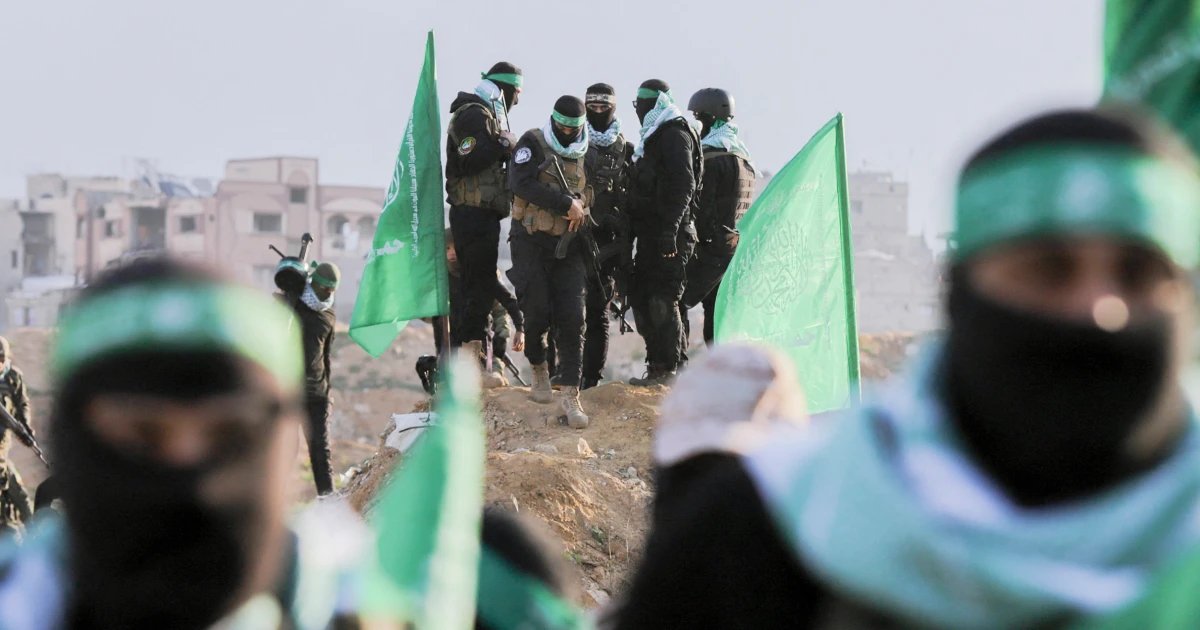
Hamas on Monday announced the dissolution of the body that has governed the Gaza Strip for nearly two decades as the militant group prepares to hand over power to a technocratic committee backed by President Donald Trump.
Limited time: Save 25% on NBC News subscription
Get exclusive reporting, live Q&As and ad-free reading.

The Hamas government announced the resignation of its “Emergency Committee,” which has overseen the enclave since October 2023, and expressed “full readiness” to transfer authority to the National Committee for the Administration of Gaza.
The NCAG, which describes itself as a “transitional, technocratic, and apolitical Palestinian committee” on its website, was established in January under Trump’s “Comprehensive Plan to End the Gaza Conflict.”
Trump’s plan, which outlined that the committee governing Gaza would be overseen by the president’s “Board of Peace,” was signed off in October by Israel and Hamas. A meeting of the board was held last month in Cyprus to discuss peace efforts in the enclave.
In a statement Monday, the Board of Peace, of which Trump is the chair, said it had “taken note of the announcement,” but that ultimately its “assessment will be guided by actions, not promises, to meet the critical needs of the people of Gaza.”
That would mean having “one authority, one law and one weapon” in Gaza, or one ruling body enforcing one law and with a single armed force operating under that body, according to the statement.
Hamas’ announcement is seen as being largely symbolic, observers say, and makes no mention of the group’s disarmament — a key requirement by Israel in order for a lasting peace deal to proceed.
Palestinian official Ali Shaath, who is leading the NCAG, said in a statement Monday following Hamas’ announcement that the committee was “fully prepared to assume its national responsibilities as soon as the necessary resources and capabilities are available.”

He added that in order for the NCAG to successfully assume authority, there would have to be a “single law with a clear mandate, and a single armed force under the authority of this single entity” in Gaza.
Speaking with Agence France-Presse, Hamas spokesman Hazem Qassem said the announcement marked a “new step” by Hamas “in that it will no longer be in charge of the Gaza Strip.”
The decision was taken “in order to remove any pretexts for the occupation, which continues its aggression and war of extermination,” he added.
However, Andreas Krieg, a senior lecturer at King’s College London’s School of Security Studies, cautioned that the group was “giving up the visible burden of governing a devastated Gaza, but it is not yet giving up the instruments that allow it to shape what happens next.”
“I would not confuse the dissolution of an administrative body with the surrender of power,” he said. “Hamas was never just an institution. Its power rests not only in offices, salaries and municipal administration, but in weapons, internal security networks, social penetration, tunnel infrastructure, patronage, coercion and the idea that armed resistance remains legitimate.”
None of that was “addressed in this announcement,” he said, adding that the statement said “nothing about weapons, nothing about command structures, and nothing about who controls security on the ground. That remains the real test.”
More than 72,000 people have been killed in Gaza, including thousands of children, according to Palestinian health officials, while much of the enclave has been destroyed, since Israel launched its assault following the Hamas-led Oct. 7, 2023, attacks on Israel in which some 1,200 people were killed and 251 taken hostage.
Hundreds of thousands of people continue to live in tent camps across the enclave in desperate conditions as they await rebuilding efforts amid an ongoing ceasefire between Israel and Hamas that has been marked by continued deadly airstrikes by the Israeli military.