dailynewsnblog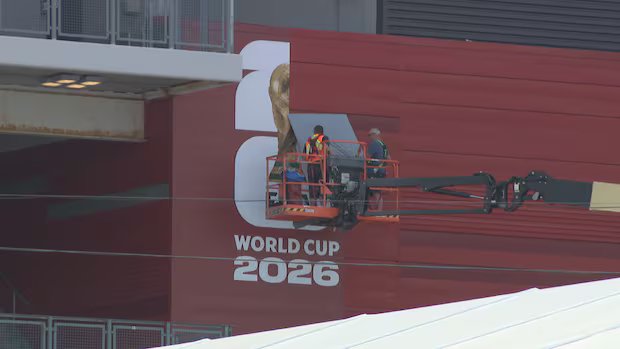

Listen to this article
Estimated 5 minutes
The audio version of this article is generated by AI-based technology. Mispronunciations can occur. We are working with our partners to continually review and improve the results.
As Toronto’s official FIFA World Cup hosting duties come to an end, data shows that the city saw little economic gain during the first two weeks of the tournament.
That’s in large part due to the model that the World Cup and other large international sporting events are based on, former Toronto mayor David Miller said. Major sports organizations such as FIFA make the biggest gains, he said, while hosting countries and cities bear the brunt of the costs.
“They’re sharks,” said Miller, who is managing director of the C40 Centre, an international urban policy think-tank focusing on climate change, public health and the economy. “They really do ensure that every single cost is passed on to the hosts.”
It’s estimated that Canada’s 2026 World Cup hosting gig came with a price tag of $1.066 billion, according to a report by the Parliamentary Budget Office. It said taxpayers in Toronto dished out $380 million to host six games, while the seven matches held in Vancouver cost about $578 million.
Despite the costs and logistics, Miller said one thing has made hosting the World Cup worth every penny: “They’re fabulous for the city, and people love them when they’re going on. It creates tremendous community, excitement and joy.”

The Parliamentary Budget Office says hosting the 2026 FIFA World Cup will cost Canadians over a billion dollars, but how much return comes from that investment? For The National, CBC’s Eli Glasner asks industry insiders for their cost-benefit analysis.
While Toronto won’t be hosting any official teams or matches for the rest of the World Cup, which ends on July 19, FIFA-related events, such as the fan festival, will continue for visitors and local fans.
Canada is not quite done its work as a host, with a Round of 16 game scheduled in Vancouver on July 7.
World Cup vs. Swift’s Eras Tour
Data from payment processing company Moneris between June 12 and 26 — the first two weeks of the World Cup in Toronto —showed that debit and credit card spending at restaurants and bars in the city rose by just three per cent compared with the same time last year. Among international visitors, the data showed there was a 34 per cent increase in similar spending.
But it seems soccer fans didn’t spend as much as Swifties when Taylor Swift’s Eras Tour came to Toronto in November 2024.
Moneris data found there was a 12 per cent boost in overall restaurant spending with debit and credit cards during that time, while international visitors spent 57 per cent more at restaurants.
Hotels in the city saw an increase in debit and credit card spending of 18 per cent during the first two weeks of World Cup action, compared with the same period in 2025. That spending was more comparable to the Eras Tour frenzy, where hotel spending rose 16 per cent.
Large sports events ‘stacked’ against host cities: expert
Sporting events like the World Cup are “always stacked in the dealer’s favour,” with the “house,” or FIFA, coming out the winner, said Tyeshia Redden, an assistant professor of urban planning at the University of Toronto.
She said Montreal crunched the numbers and decided not to come on board as a World Cup host due to the costs and to not “throw off the vibes of the city.”
“These events can be very disruptive for long-term annual visitors … and inconvenient for our own residents,” she told CBC Radio’s Metro Morning.
Miller, who was part of the team that helped bring the World Cup to Toronto, said it seemed like “an impossible dream” back then. Now that it’s here, he said, cities should have negotiated harder for a fairer deal.
“You can’t justify it financially, which is why you have to really fight hard with FIFA around the various agreements,” he said.
Financial benefits, such as the sales tax, go to the provincial and federal governments, not to municipalities, Miller said.

Mayor Olivia Chow says the city may be forced to scale back the budget for FIFA World Cup games after a “clawback” in provincial funding. CBC’s Clara Pasieka has the latest details — and reaction.
Redden said many host nations will justify the move to bring in a tournament by saying it will put their cities “on the map” for tourism, but that might not be a good enough reason for cities like Toronto and Vancouver.
“It’s a bit of an odd sentiment because I’m pretty sure the world knows about Toronto, right? We’re not a secret here,” she said.
Redden said the city may have seen the same growth in restaurant and hotel spending had it implemented the same upgrades and projects during a regular year.