dailynewsnblog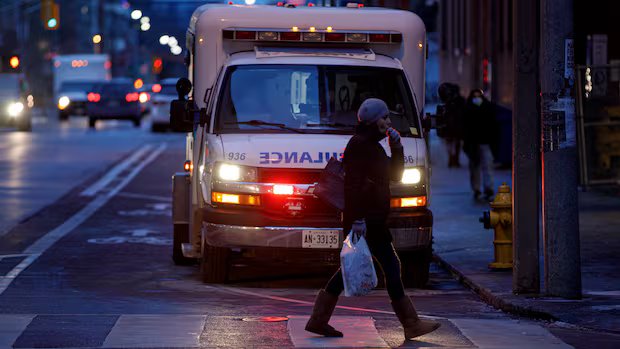
The number of opioid overdose calls to paramedics has risen sharply in four Ontario cities compared with a year ago, a new CBC data analysis has found.
In the first five months of 2026, calls for suspected opioid poisonings increased by 20 per cent in Thunder Bay and 199 per cent in Hamilton from January to May compared to the same period last year. Non-fatal opioid overdose calls rose by almost 115 per cent in Toronto; Ottawa Paramedic Services recorded a 52 per cent increase in overdose calls, including incidents not related to opioids.
While the data doesn’t show what’s behind the increases, researchers, health-care workers and advocates suggest the toxic drug supply and the closure of supervised consumption sites (SCS) in the past two years may be factors.
Gillian Kolla is a harm reduction researcher and assistant professor at Memorial University of Newfoundland who studies the impacts of Ontario drug policy.
Kolla said Ontario is experiencing a drug toxicity crisis, with newer and more poisonous substances like medetomidine, a veterinary tranquilizer, entering the supply.
“So we’re playing a little bit of a game of whack-a-mole.”
The Ontario government, which has forced the closure of provincially funded SCS, is instead investing in abstinence-based treatment hubs which it claims will be more helpful to those with drug addiction.

Ontario previously had 17 sites, where people could bring their own drugs to use while monitored by trained health professionals. A bill passed in 2024 targeted 10 sites for closure near schools or daycares by March 2025 and banned new facilities from opening.
In March 2026, the province announced it would end funding for the remaining provincially funded sites immediately. The last such sites closed in Toronto last month. However, three privately funded sites, run by Street Health, Kensington Market Overdose Prevention Site and Casey House, are still operating.
Most former provincially funded sites chose to convert to Ontario’s Homelessness and Addiction Recovery Treatment (HART) Hubs instead of closing altogether. The hubs run on an abstinence-based model, offering treatment and recovery services — rather than a supervised space to inject or test drug safety.

Two supervised drug consumption sites in Moss Park received letters on Friday from the Ontario Ministry of Health saying that their provincial funding will end in 90 days. CBC’s Ali Chiasson spoke to advocates who are concerned this could lead to more open drug use in the area.
Matt Johnson, a long-time harm reduction worker with Street Health in Toronto, said every time a site has shut down, he’s seen calls for EMS go up “dramatically,” while privately funded Street Health has also seen more medetomidine (a veterinary tranquillizer approved for animal use) in the supply.
“EMS is fantastic. Like it’s not a slight on them, but they can only get there so fast,” said Johnson.
“One of the things that the sites, all of the sites, do is connect people to health care, but in a slower, more non-judgmental way, where it can happen at people’s pace, and we can connect people with health-care professionals that then they can feel comfortable with.”

According to an evidence brief prepared by Kolla and Tara Gomes, a drug policy researcher and professor at the University of Toronto, decades of research show supervised sites save lives, lead more people to get treatment and decrease HIV transmission, easing pressure on overburdened emergency departments and saving health costs.
Bill Sinclair, CEO of the Neighbourhood Group Community Services in Toronto, said part of the reason people are making more 911 calls is because those who use substances “are making smart decisions of using publicly,” as the only way they can get oxygen, or reverse an overdose, might be through the paramedics.
“Everywhere I go, people are telling me that people are using on the sidewalk, in the TTC, in the libraries, places where they will be seen and saved,” he said.

Impact of SCS closures felt
According to an open letter to Premier Doug Ford and Health Minister Sylvia Jones from the Ontario Drug Policy Coalition, following the 2025 SCS closures, Ontario-wide data shows a 69.5 per cent increase in EMS and 67 per cent rise in emergency department use for opioid-related overdoses, as well as an increase of deaths in private residences and outdoor settings.
Medora Uppal, CEO of YWCA Hamilton — which operates a Safer Use program for women and gender-diverse people — said the combination of an increasingly toxic drug supply and fewer harm reduction services are an “exceptionally dangerous” combination. But with the province’s new HART Hub model, people are less likely to come and access services if they think they will be forced into treatment they’re not ready for, she said.
“It’s a hard sell to somebody who’s actively engaged in drug use … it also further worsens their trauma, and their experiences of shame, and increases their drug use,” Uppal said.
In Thunder Bay, where per-capita opioid overdose rates have been as high as five times the provincial average, the city’s only SCS — Path 525 — closed in March of 2025. The site has since transitioned into a HART Hub.

Vanessa Tookenay is a social worker in Thunder Bay. She says the former consumption site was a safe place for its clients, offering not just harm reduction, but connection, support and monitoring.
Tookenay, who is in recovery, said the site saved her life.
“That makes a huge difference, giving people that space to do that in a safe way in hopes that maybe someday they do want to change,” she said.
“Had that place not been there I would not even be here today.”

Vanessa Tookenay is in the fight against the homelessness and addiction crisis in Thunder Bay, Ont. – but she only recently escaped life on the streets herself. Her story is one of hope but also a call to action.
Between March 2020 and November 2024, Ontario’s supervised consumption facilities successfully reversed 22,000 overdoses, according to a report by the Centre on Drug Policy Evaluation.
“There is no one arguing we don’t need treatment,” Kolla said, “but we have to avoid framing drug policy as magic bullets.
“We need both [treatment and harm reduction] … so that anyone who wants support around what they’ve identified as problematic patterns of substance use can get that.”
Benefits of new approach, says province
In an emailed statement, a spokesperson for the health minister said the Ontario government is helping people break the cycle of drug addiction “instead of giving them tools to use harmful, illegal drugs.”
“We are investing a historic $560 million to build 29 Homeless and Addictions Recovery Treatment (HART) Hubs, replacing the failed approach of drug injection sites … including HART Hubs that provide services to the Toronto, Ottawa, Hamilton, and Thunder Bay regions,” the statement said.
According to the province, since the first Hubs opened on April 1, 2025, the Office of the Chief Coroner has shown a 41 per cent decrease in opioid-related deaths.