dailynewsnblog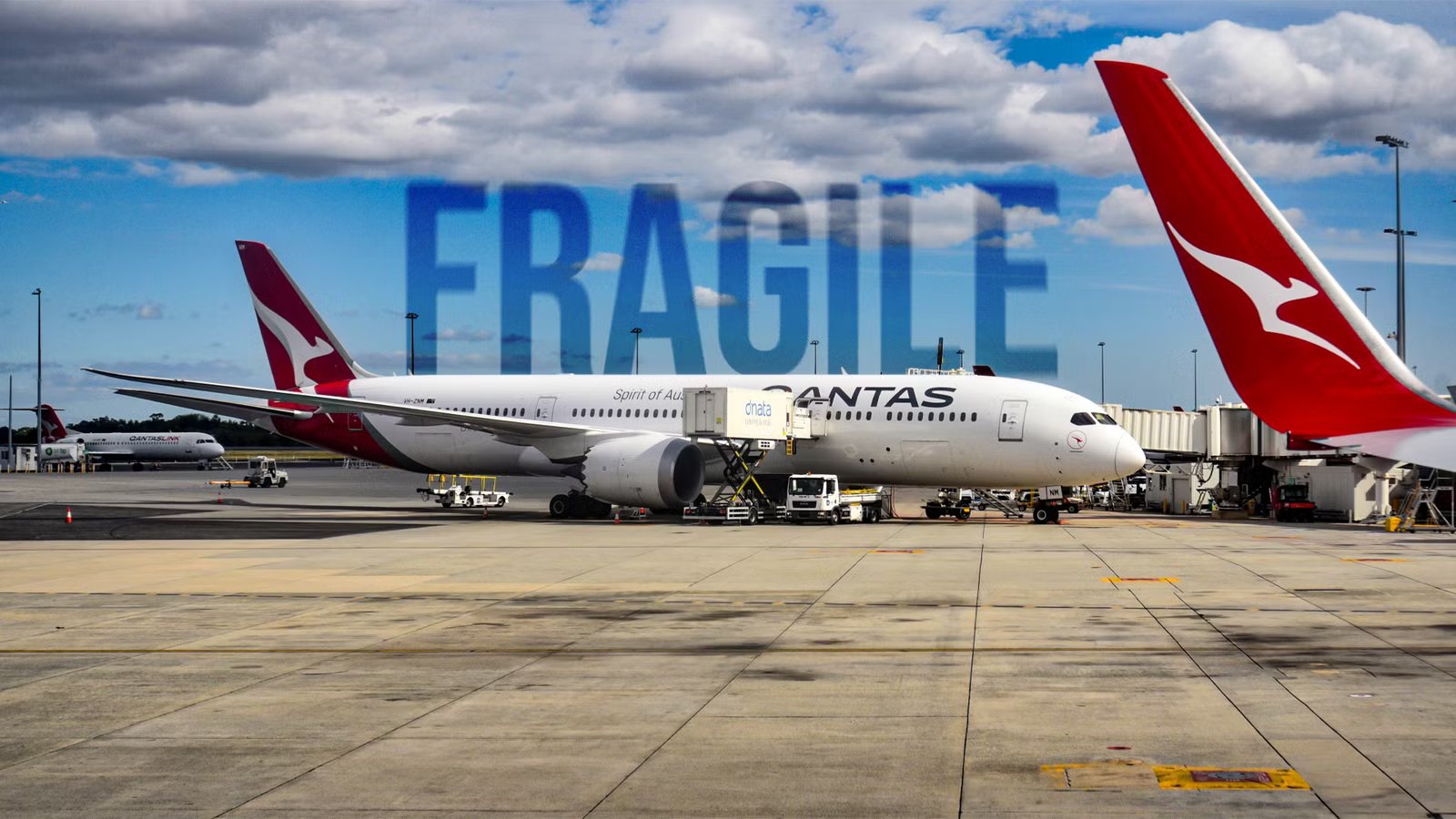
Airlines love to publicize their newest ultra-long-haul achievements, and marketing materials usually emphasize passenger comfort, premium menus, and the impressive technological range printed on aircraft specification sheets. On paper, the modern twin-engine widebody seems fully capable of crossing vast oceans and continents without intermediate stops, promising a seamless point-to-point travel experience. However, the operational reality of working at the absolute margins of commercial aviation capability is much less glamorous.
During schedule adjustments on Qantas flights QF9 and QF10, the flagship nonstop link operating between Perth and London brought to light this other side of the advertisements. Covering a massive 9,009 miles (14,499 km) with a scheduled block time of 17 hours 45 minutes, this route operates at the extreme edge of what the Boeing 787-9 can physically achieve. When geopolitical instability added a modest 30-to-45-minute flight path extension around closed airspace in the Middle East, the entire economic and operational viability of the nonstop journey collapsed. Rather than simply uploading extra fuel to cover the brief detour, the airline was forced to abandon the nonstop segment entirely and institute a mandatory operational fuel stop in Singapore, exposing how fragile these ultra-long-haul networks truly are. Now, the route is no more, bringing an end to the 787’s role connecting Australia with London directly.
Fighting The Australian Sun

The twin-engine 787-9 is equipped with a maximum physical fuel capacity of 33,380 gallons (126,370 liters), which would seem plenty for the journey across the world. Under standard atmospheric conditions, when ambient airport temperatures hover around a mild 59°F (15°C), this volume of jet A-1 fuel possesses a dense mass of roughly 112 US tons (101.6 metric tons). The resulting fuel mass becomes the baseline necessary to lift the aircraft, combat seasonal headwinds, and maintain the mandatory statutory reserve margins required for international oceanic crossings.
When seasonal weather patterns shift, and the intense Australian sun pushes afternoon tarmac temperatures up to 86°F (30°C) or higher, the underlying physics of liquid hydrocarbons changes that calculation by a lot. According to Skybrary, heat causes jet fuel to expand volumetrically, meaning that while the liquid still occupies every cubic inch of the 33,380 gallons (126,370 liters) of available tank space, its overall molecular density drops significantly. Consequently, the maximum mass of fuel that flight dispatchers can pump into the aircraft drops to approximately 110.3 US tons (100.1 metric tons). This volumetric loss of nearly two US tons of fuel mass completely undermines the flight planning equations for a maximum-range operation.
The aircraft cannot physically hold a higher mass of warm fuel, and so, any unexpected increase in required trip fuel can only be accommodated by making severe structural weight trade-offs elsewhere. The airline cannot alter the empty weight of the airframe either, leaving passenger payload as the only adjustable variable on the manifest. To protect the vital safety margins of the flight, dispatchers therefore restrict ticket sales, leaving revenue seats entirely empty to compensate for the less dense fuel.
Blocked Seats All Over

The consequences of these weight restrictions are recorded clearly in historical flight manifest data, showing that the route routinely flies with a high number of blocked seats. Over the past year of operations, the westbound leg from Perth to London has averaged just 219 passengers out of its 236 available cabin seats, meaning that roughly 17 passenger seats are intentionally left vacant on a typical departure. During the peak of the Southern Hemisphere summer in January 2025, when thermal conditions on the ground reached their most restrictive levels, this average dropped precipitously to only 203 filled seats.
Qantas’ operational penalty mirrors similar payload struggles experienced by other global carriers attempting to operate at the outer limits of modern widebody range. Air New Zealand encountered an identical obstacle on its flagship 8,828-mile (14,207 km) route between Auckland and New York using the exact same 787-9 platform. When confronting stronger than anticipated winter headwinds along the westbound return path, the airline frequently exceeded its maximum allowable structural takeoff weight when attempting to carry both a full passenger load and the massive fuel volume required to fight the jet stream. On multiple occasions, the carrier had to offload the luggage of more than 60 passengers right before departure, ultimately leading to a permanent operational decision to cap the cabin capacity at 180 seats instead of the original 215.
These payload penalties highlight a difficult truth of modern airline economics: the final 10% of an aircraft’s theoretical range is by far the most expensive to operate. When a carrier has to routinely leave double-digit percentages of its cabin empty, the profit margins of the route become highly volatile. The flight crew, as a result, needs to burn a substantial percentage of the onboard fuel just to carry the immense weight of the fuel needed for the final hours of the journey, meaning that a single seat filled with a passenger and their luggage can require multiple times its own weight in extra trip fuel.
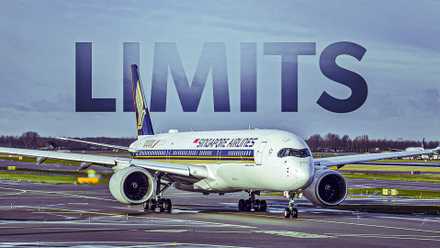
5 Routes That Push Aircraft To Their Range Limits
These services offer extra-long-range connectivity.
Small Events Can Cause Major Waves

The Perth-to-London flight path was permanently disrupted when geopolitical events led to sudden closures of traditional flight corridors over the Middle East in 2024. For an ultra-long-haul route operating with razor-thin fuel margins, a flight path is not a rigid line but an elastic sequence of coordinates that must constantly adapt to changing global conditions. After dispatchers had to design a more northerly routing to circumvent restricted airspace, the modification added a seemingly minor 30 to 45 minutes of extra flight time to an already exhausting schedule. On a shorter domestic or regional route, a 30-minute delay is merely an inconvenience, but on a 9,009-mile (14,499 km) mission, it represents an absolute barrier.
Volumetric tank limits under the hot Perth sun prevented the 787-9 from carrying even a single additional gallon of fuel, so the aircraft simply did not possess the capacity to absorb the detour and still maintain its required statutory reserves. Qantas could not solve the problem by further lowering passenger capacity without rendering the flight an absolute financial disaster, as cutting more seats would wipe out the remaining profit margin entirely. Faced with the unyielding reality of full fuel tanks that lacked the necessary mass, the airline had no choice but to temporarily dismantle the nonstop nature of the route, rerouting the westbound service to include a structured technical fuel stop at Singapore Changi Airport(SIN).
Even the smallest of adjustments can be catastrophic for a flight of this length, demonstrating how quickly the entire business case for an ultra-long-haul nonstop route can disappear when subjected to minor external disruptions. Cathay Pacific experienced a similar operational crisis when managing its long-standing route between New York and Hong Kong. Left to abandon its traditional polar route and implement a massive eastward detour over the Atlantic Ocean and Europe due to airspace closures, the flight expanded to nearly 10,300 miles (16,576 km). To keep the Airbus A350-1000 flight nonstop over this modified path, dispatchers had to strip lucrative commercial cargo out of the belly of the aircraft and sacrifice what would have been important revenue to keep the route itself alive.
The Better Aircraft For The Job

The fragility of the Perth to London corridor explains precisely why Qantas is treating its existing 787-9 fleet as a temporary stopgap rather than the definitive future of ultra-long-haul flight. To realize its grander ambition of connecting Sydney and Melbourne to London and New York nonstop, an initiative codenamed Project Sunrise, the carrier required an entirely different class of airframe. Attempting to connect those historic 10,573-mile (17,015 km) city pairs using a standard widebody platform would result in severe payload penalties, stripping so many seats off the manifest that the flights would become completely non-viable from a commercial standpoint.
Catch what other flight trackers miss
Emergency squawks, holds, NOTAMs — live signals, no signup.
Open tracker
Catch what other flight trackers miss
Emergency squawks, holds, NOTAMs — live signals, no signup.
Open tracker
The engineering solution arrived in the form of a heavily customized widebody variant, the Airbus A350-1000ULR, standing for Ultra Long Range. The first official prototype built under this program successfully completed its maiden test flight out of the manufacturer’s complex in Toulouse on June 2, 2026, keeping the official commercial launch date firmly on track for October 2027. Unlike the smaller Dreamliner, which operates right at the absolute threshold of its structural fuel capacity on maximum-range missions, this heavy-lifting twin-engine platform is manufactured to carry a massive fuel volume without forcing immediate trade-offs in passenger numbers.
To actually achieve this extreme range profile, engineers modified the fuel system of the baseline A350-1000 by installing a massive 5,283-gallon (20,000-liter) rear center auxiliary tank. The structural modification increases the overall fuel capacity of the aircraft significantly, providing flight dispatchers with the necessary energy reserves to absorb localized weather delays, jet stream variations, and geopolitical airspace detours. Adding this massive fuel buffer directly into the core design of the airframe, Qantas now has the ability to operate flights without the constraints of the volumetric and thermal limits that continue to compromise its operations out of Western Australia.
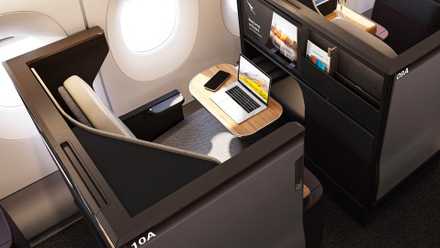
Only 238 Seats: What Qantas Sacrificed To Make 22-Hour Nonstop Flights Possible
Project Sunrise flights are coming soon.
Still Limiting Seat Count

A standard commercial A350-1000 is typically delivered with a dense layout designed to carry between 350 and 400 passengers across short or medium-range hub networks. For Project Sunrise, however, carrying that many individuals would create a heavy-weight profile that even the auxiliary fuel tanks could not lift over a 22-hour flight length. Consequently, Qantas has capped the total capacity of its upcoming fleet at a highly restricted 238 seats, representing an unprecedented reduction in overall passenger density.
This ultra-low-density concept completely flips the standard layout found on legacy aircraft. The cabin is engineered to favor premium, high-yield travelers, allotting six first class suites, 52 business class pods, 40 premium economy seats, and a highly restricted block of just 140 standard economy seats. As well as this, the airframe features a dedicated on-board wellbeing zone situated between the cabins, giving passengers a space to stretch and move during day-long journeys. By reducing the physical passenger count so drastically, the airline can cut thousands of pounds of cabin weight, including luggage, seating structures, and required catering supplies.
True ultra-long-haul capability cannot be achieved by simply pushing a standard airframe to its limits, as Qantas has quite easily proven. To ensure consistent year-round dispatch reliability, an airline must make a deliberate, upfront choice to sacrifice raw volume in favor of premium yields. The job ultimately becomes trying to engineer the cabin weight out of the aircraft from day one, which means that dispatchers can guarantee that a hot afternoon or a minor 30-minute flight path modification will not force an unpredicted stopover or leave travelers stranded on the tarmac.
The New Non-Stop Era

The ongoing operational struggles surrounding the Perth to London flight path highlight a vital reality check for the global aviation industry. Operating commercial flights at the absolute boundary of an aircraft’s range will always remain an inherently volatile decision when relying on standard widebody fleets. When an infrastructure model is so brittle that a routine summer afternoon or a minor airspace detour can shatter the nonstop business model entirely, the system will therefore need a complete structural evolution to remain reliable.
As the industry prepares for the deployment of custom-built heavy-lifters like the Airbus A350-1000ULR in late 2027, the financial and operational focus is shifting away from mere survival at the margins toward built-in structural resilience. True operational stability over immense distances demands a fundamental retreat from mass-market passenger density in favor of specialized, premium cabin layouts.
Ultimately, the future of ultra-long-haul travel belongs not to the aircraft that can barely scratch the distance on a perfect day, but to the platforms engineered to absorb the chaotic realities of a dynamic global atmosphere. The aircraft of choice as a result is inevitably the A350-1000ULR, though the Boeing 777X may well be another alternative. Airlines like  Turkish Airlines have already opted for the Airbus platform, while others like
  Lufthansa have gone in the direction of
  Boeing‘s option. Regardless of the aircraft type, the final frontier of nonstop aviation is being broken, meaning that this is just the start of an era where anywhere can be accessible without a stopover.