dailynewsnblog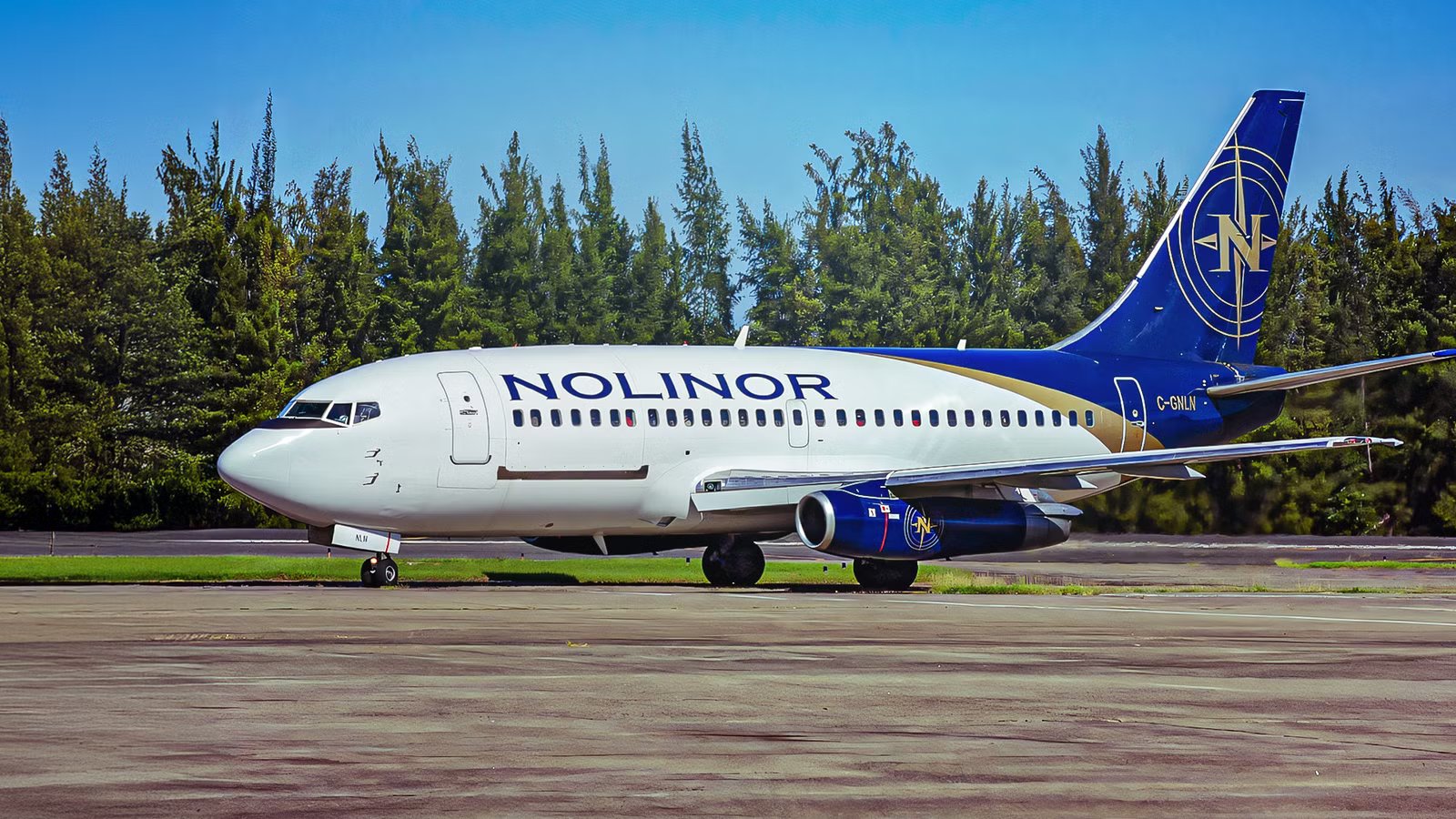
The Boeing 737 has come to be one of the best-selling series of commercial aircraft ever. In excess of 17,000 examples from a range of 20-plus distinct variants have rolled off the production line to grace the skies over the 737’s almost 60-year history. Key to its success has been commonality across different variants, ever-improving efficiency, and, perhaps most importantly, the versatility of the twin-engine jet itself. Indeed, where the earlier Boeing 707 and Boeing 727 did well to serve long-haul and longer US domestic routes, the 737 looked to fill a hole in the market for a smaller jet able to be used on a variety of missions.
But what happened when the versatility offered by the 737 was just not enough? What happened if, say, an operator had to land and take off from unpaved runways but still required the size and payload offered by a jet like the 737? Well,  Boeing actually set out to address this very problem back in the 737’s early days, giving rise to arguably some of the most unique models ever built.
Boeing’s Solution For Remote 737 Operations

Met with demand from operators for aircraft capable of landing in some of the most remote regions of the globe, Boeing came up with its optional Unpaved Strip Kit. This opened up a wider array of airports, where a grass, dirt, gravel, or even frozen landing strip was the only option, to the 737. Available from early 1969, the kit only ever featured as an option for the first aircraft in the family: The Boeing 737-100 and far more popular Boeing 737-200.
Airports where investing in a paved runway was unfeasible, and that were previously limited to handling smaller aircraft, could now welcome the larger 737 as a result, whether that be for passenger or cargo services. These Unpaved Strip Kit-equipped 737s became particularly useful in the likes of Alaska and northern Canada, where a handful can still be spotted to this day under Nolinor Aviation and Air Inuit colors.
But the nature of this tiny market meant that there was only ever going to be a finite need for the Boeing aircraft capable of landing on unpaved runways. As remote communities paved landing strips over time, demand dwindled, leaving Boeing to refrain from offering the option on any of its 737 variants after the -200.
Unpaved Strip Kit In Practice

That is not to say that such options, like Boeing’s Unpaved Strip Kit, became obsolete over time. Larger jets routinely operating on such runways to this day still require some form of modification to do it safely. Boeing’s kit itself was designed with this very purpose in mind. Namely, it helped prevent damage to engines, as well as the underside of the wings and fuselage areas from rocks and other loose elements found on unpaved runways.
Specialized nose-gear gravel deflectors and engine inlet vortex dissipators were most notably included in the modifications from Boeing to reduce the likelihood of projectiles being kicked up or sucked into engines. Alongside these, the aircraft surfaces were reinforced to minimize any damage if the likes of rocks did end up hurtling towards the jets.
Boeing Unpaved Strip Kit components, from The Boeing 737 Technical Site:
Nose-gear gravel deflector to keep gravel off the underbelly. |
Smaller deflectors on the oversized main gear to prevent damage to the flaps. |
Protective metal shields over hydraulic tubing and brake cables on the main gear strut. |
Protective metal shields over speed brake cables. |
Glass fiber reinforced underside of the inboard flaps. |
Metal edge band on elephant ear faring. |
Abrasion-resistant Teflon-based paint on wing and fuselage undersurfaces. |
Strengthened under-fuselage aerials. |
Retractable anti-collision light. |
Vortex dissipators fitted to the engine nacelles. |
Screens in the wheel well to protect components against damage. |
Both the deflectors and dissipators made the Unpaved Gravel Strip-equipped 737s easily distinguishable. Mounted on the front gear, the deflector might have been compared to a giant mudflap protruding backwards to direct anything picked up by the wheel downwards or sideways during takeoff or landing. The dissipator then stuck out from under each engine, acting like a leaf blower, using compressed bleed air to direct any debris away before it was sucked upwards and into the power units.
5 Of The Most Remote Airports In The World
Most passengers won’t have traveled to these facilities.
Boeing 737s Constrained By Gravel Kits

Modifications came with constraints, though. Operators had to ensure gears were deployed at “drastically reduced speeds,” according to The Boeing 737 Technical Site. Pilots were limited to using the wheels at speeds below 180 knots as a result. Special procedures were also required for the use of the dissipators that ultimately reduced engine performance.
An Unpaved Strip Kit by far opened the door to landings and takeoffs from wherever operators pleased, too. While designed to enable safer use of the likes of gravel runways, specific guidelines had to be adhered to. These stated that: The surface was generally smooth, with no bumps raised more than three inches; It had good drainage and no standing water; And that the material used was at least six inches thick, with no deep loose gravel.
Catch what other flight trackers miss
Emergency squawks, holds, NOTAMs — live signals, no signup.
Open tracker
Catch what other flight trackers miss
Emergency squawks, holds, NOTAMs — live signals, no signup.
Open tracker
Still, the constraints and guidelines did not appear to pose enough of a problem to prevent airlines from opting for the modified 737s. Rather, what has probably caused more headaches over the years is the maintenance required to keep the aircraft flying.
Nolinor Aviation Still Clinging Onto Modified 737-200s

Nolinor, a Montreal-based charter carrier, boasts on its website of holding the world’s largest 737- 200 fleet. Per Planespotters.net, this numbered eight of the models at the time of writing, with an average age of just over 46 years. Despite their age, Nolinor wrote in January that the “fleet retains multiple decades of potential service life,” in part due to low utilization as charter aircraft.
In fairness to the airline, the aircraft does offer a versatile option “to fly the missions no other airline will take,” as it writes itself. Each of these Boeing 737-200C – for “Combi” – can be configured to carry up to 119 passengers, cargo, or a mixture of both. Payload capacity is said to rise up to approximately 30,000 lb (13,600 kg), with a range of 2,000 nautical miles (3,700 km). What is more, these offer the option of landing on unpaved surfaces.
Nolinor Boeing 737-200C configurations, from airline:
Configuration | Payload |
119 passengers | 50.7 lb (23 kg) baggage per passenger |
77 passengers | 2 pallets / 11,000 lb (4,990 kg) |
59 passengers | 3 pallets / 15,180 lb (6,886 kg) |
34 passengers | 4 pallets / 21,560 lb (9,779 kg) |
29 passengers | 5 pallets / 22,440 lb (10,179 kg) |
11 passengers | 6 pallets / 26,620 lb (12,075 kg) |
Cargo only | 30,580 lb (13,871 kg) |
Tanker | 4,200 US gallons (15,900 liters) of petroleum products |
The caveat is the amount of work required behind just one flight, however. Per flight hour, Nolinor invests 20 hours in maintenance. As the airline noted itself earlier this year: “Gravel runways and Arctic conditions introduce additional maintenance demands.” In order to do this, Nolinor handles all inspections and repairs in-house, rather than outsourcing the work. In terms of the cost involved, a recent move by the carrier to spend $3 million on the reactivation of just one 737-200 would suggest that it is by no means an operation run on a shoestring budget.
How Many Boeing 737-200s Are Left?
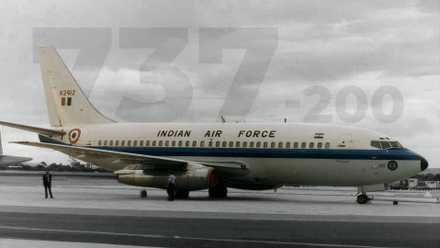
Currently, seventeen different Boeing 737-200s are still listed as active.
Boeing 737-200 Now Serves A Niche Market

Why Nolinor would rather splash out on reviving just one of these vintage jets over moving to another option is realistically simple: The airline serves an incredibly niche market, and one that itself can often only be catered for via the 737-200. Air Inuit, another of those still clinging to 737-200s with Unpaved Strip Kits, is in a similar boat.
Four 737-200s with an average age of over 46 years old are on the rival Quebec-based airline’s books. While it does boast other aircraft capable of serving unpaved runways, these De Havilland Canada DHC-8s and -6s turboprops are well off the 737-200 in terms of capacity. The airline’s other larger jets, Boeing 737-300s and Boeing 737-800s, then simply cannot be modified to carry out the type of flights an aircraft with a gravel kit might make.
So for Air Inuit, the 737-200 offers that flexibility to cater for customers requiring larger payloads or capacity over and above the capabilities of the smaller De Havilland models. Again, however, this represents a niche market that might involve very specific missions such as “mining exploration […] in the Canadian Arctic,” as the carrier notes on its website.
Demand Ever Dwindling

While demand is there for larger jets capable of serving unpaved airports in extreme cases, the overwhelming needs of the aviation industry have ultimately shifted in a different direction over the years. Newer commercial aircraft increasingly adopt engines with wider fan diameters to improve efficiency, making the prospect of keeping any loose debris on unpaved landing strips from getting sucked in almost impossible. Coupled with the fact that airport infrastructure has improved in many cases since the gravel kit’s inception, the reality is that the few remaining 737-200s fitted with such modifications are capable of sustaining whatever demand is left.
How long these final variants can stave off retirement, time will tell. But the 737-200, once responsible for over 2,000 movements a year from unpaved runways alongside its older counterpart, is no doubt slowly being phased out.  Alaska Airlines, among the first to boast the modified variant, ditched it between 2005 and 2007. Canada North then followed suit in 2023. Both offered similar reasons: Increasing difficulty and costs around maintenance.