dailynewsnblog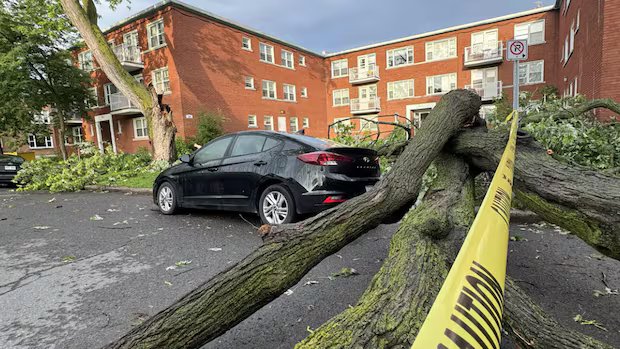

Listen to this article
Estimated 4 minutes
The audio version of this article is generated by AI-based technology. Mispronunciations can occur. We are working with our partners to continually review and improve the results.
Several Ottawa city councillors and MPPs have signed an open letter calling on the province to make disaster relief funding available for residents facing financial burdens after last week’s storm.
On Canada Day, torrential rain in Ottawa forced groups all over the city to cancel activities as highways flooded and trees fell on roads.
More than 3,200 basements flooded because of the storm, according to the City of Ottawa, and Jennifer Johnston’s was one of them.
“[The water] started to flow so heavy, we couldn’t stop it,” said Johnston, who lives in Crystal Beach.
“It was like when the tide comes in at the Bay of Fundy,” she said.
Johnston said while her furnace, water heater and air conditioner all need to be replaced, her insurance denied her claim because she didn’t have added flood coverage.

Those sorts of sudden expenses aren’t easy to deal with, said Knoxdale-Merivale Coun. Sean Devine, whose ward was among the worst hit by the storm.
Devine was one of four city councillors and five local MPPs to sign an open letter calling on the Ontario government to activate the Disaster Recovery Assistance for Ontarians (DRAO) program.
The DRAO program is intended to help people who are uninsured or underinsured recover costs associated with natural disasters.
‘Astronomical’ premiums
Devine said that people in his ward have had the “full range” of experiences with their insurance companies: some have been able to get in touch with insurance, others are still waiting to hear back, and still others have been told they won’t be covered.
Johnston said her family didn’t have added flood insurance on their plan because her house has flooded in the past, which prompted one insurance company to drop them.
Other companies wanted an “astronomical” premium — around $800 per month, she recalled — to provide added flood insurance, on top of what she was already paying for home insurance.
“The insurance industry is not your friend,” she said, adding they plan to appeal the denial of their damage claims.
Many of her neighbours are also struggling, according to Johnston. Some have coverage, she said, but not enough to cover all the damage, and they can’t afford to pay the rest.
“The majority of us in this neighbourhood are in a real bind,” she said.

City should be eligible, says councillor
Devine said that the city is working to qualify for DRAO, but has to demonstrate that the Canada Day storm was a sudden and widespread natural disaster before anyone will be able to apply.
That could take time, he added, as the city will have to gather the necessary information and send it to the province, and then wait for a final decision.
“From what I understand the program to be, it looks like what we’ve gone through is something that is certainly eligible,” Devine said.
According to the DRAO program’s website, financial help is limited to $250,000 per application.
CBC has reached out to Ontario’s ministry of municipal affairs and housing for comment.

‘We haven’t really heard a peep’
Tyler Watt, the Liberal MPP for Nepean, signed and released the letter to the province. He told CBC it was “unfortunate that we haven’t heard really heard a peep from the provincial government yet.”
Watt praised front-line workers for “working overtime” to restore power after the storm and make the city safe.
“They shouldn’t have to fight alone, right?” he said. “They shouldn’t have to fight for Queen’s Park to help.”
Meanwhile, the Insurance Bureau of Canada (IBC) wrote that it’s launched a helpline for people in Ottawa.
Maximilien Roy, IBC’s vice-president of strategy, told Radio-Canada that people should take as many photos as possible, keep notes of what happened and hold on to any receipts for flood-damaged items and expenses like hotels.