dailynewsnblog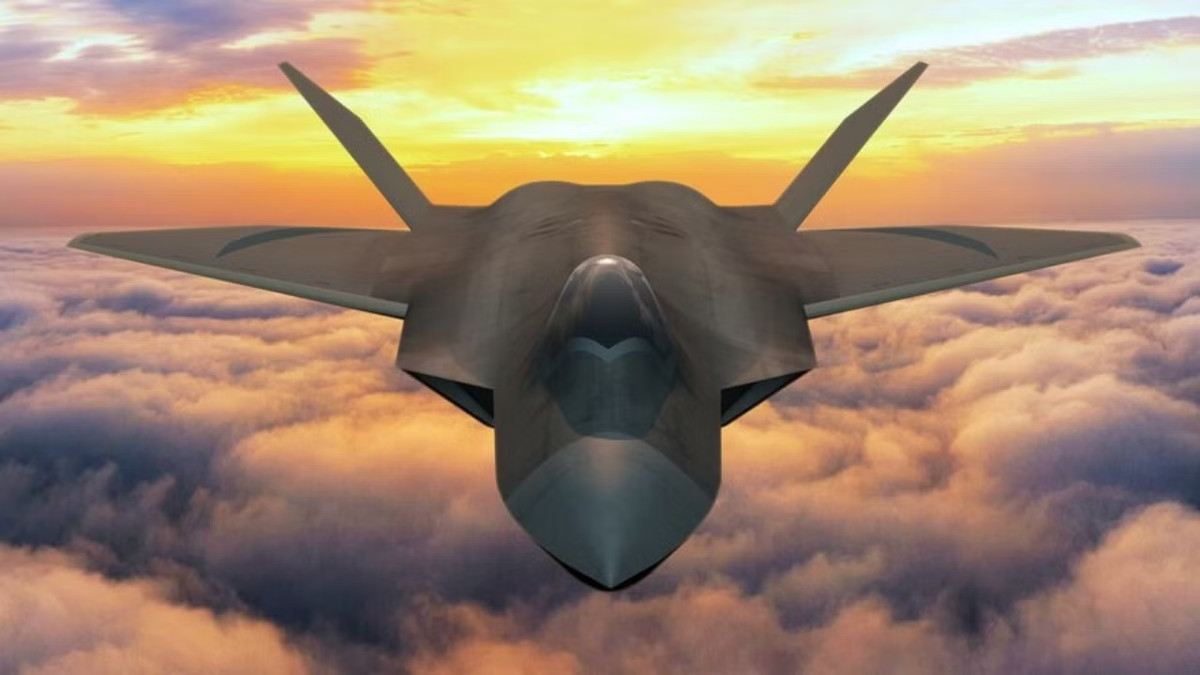
In June 2026, Germany announced it was withdrawing from the FCAS 6th-generation fighter jet project with France and Spain. This left the GCAP/Tempest as the only credible European-led sixth-generation fighter jet program. The GCAP intends to be a reasonably heavy sixth-generation air superiority fighter jet built with an emphasis on multirole missions. It is also being designed explicitly with an eye to exports.
Developing a true sixth-generation fighter jet that functions as part of a fully integrated networked kill chain is now so complicated and so expensive that it can strain any nation’s aerospace industry to the breaking point (with the possible exceptions of the US and China). Even so, there is discussion in Washington over whether the US aerospace industry has the bandwidth to develop two next-generation fighter jets side by side. Some advocate delaying the F/A-XX until after the F-47 is more developed.
The Geopolitics Of Fighter Jet Purchases

Fighter jet purchases are high-profile political affairs that can become politically heated quickly. This is often seen in South America and now in Canada, on the topic of purchasing US fighter jets (vs Swedish Gripens). Many countries do not wish to purchase US fighter jets for geopolitical reasons. Indonesia is an extreme example of a country exploring purchasing fighter jets from half a dozen countries to ensure no country has too much control over its fighter jet fleet (through spare parts and software updates).
Indonesia has indicated that Turkish KAAN fighters would need to be free from US ITAR restrictions, a very tall ask. A range of factors, from Russia’s annexation of Crimea in 2014 to the passage of CAASTA in 2017 to the sanctions of 2022, have contributed to Russia’s fighter jet export market collapsing.
It has become infeasible for dozens of countries, including all NATO member Eastern European countries, to purchase Russian fighters. Indeed, Serbia said it was infeasible to purchase Russian fighters and so opted for French Rafales. Elsewhere, China is emerging on the stage as a serious export market for higher-end fighter jets.
However, while some countries like Egypt, the UAE, and Argentina have openly touted purchasing Chinese fighters, only Pakistan has done so (J-10Cs and possibly upcoming J-35s). Many African countries and others have purchased lower-end Chinese fighters or advanced trainers. For many countries, purchasing Chinese fighters remains geopolitically complicated and is out of the question for non-aligned countries like Vietnam and India.
The Geopolitical Attractiveness Of The GCAP

Being developed by the UK, Italy, and Japan, the GCAP offers an alternative to the US, China, and Russia that can be more geopolitically salient for many countries. This is somewhat similar to how Canadians are currently viewing the Saab Gripen. It’s not an ‘enemy’ Chinese or Russian fighter, but it’s not fully American either.
Australia, Saudi Arabia, and India have expressed interest in GCAPand the collapse of FCAS has reduced their options. It has also opened the door to the possibility of Germany (and possibly Spain) joining the program in some capacity. It would be a major boon for the GCAP if Germany were to join, as the trio (and particularly the UK) is currently struggling with financing the ambitious program by itself.
Another important aspect is that any country can market its fighter jet as whatever generation they like. Pakistan has promoted later JF-17 variants, particularly the Block III, as possessing capabilities associated with 4.5-generation fighters (sometimes 4.5 ‘plus’). Sukhoi’s marketing suggested its proposed Su-75 Checkmate low-cost fighter would be a fifth-generation fighter rivaling the F-35.
Fighter jet generation labels are part marketing, part clickbait, and part useful. The engineering of a next-generation aircraft is less about visible features (such as tailless vs large vertical stabilizers) and more about internal features (thermal management, sensor fusion, and networking).
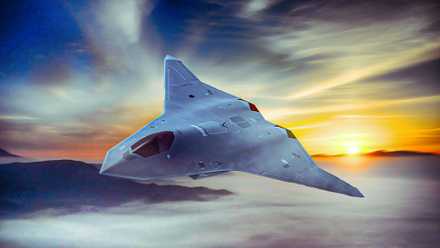
Why The Boeing F-47’s Stealth Design Makes The F-22 Raptor Look Like A First Draft
A new era in air dominance dawns.
Post-FCAS Options

Without Germany, serious analysts do not think France will have the capacity to develop a fully-fledged sixth-generation fighter jet alone. France’s Dassault has said it plans to go it alone and develop a next-generation fighter, although analysts expect this to be a lighter-weight, less ambitious carrier-based aircraft and closer to something like a fifth-generation ‘plus’ fighter.
Perhaps a more important question is what Germany will do. Germany could partner with Sweden (and/or Spain) and develop a sixth-generation fighter jet that could compete with the GCAP. Even if it does, the GCAP has a head start, although such a jet could compete with GCAP sometime in the 2040s. Germany could throw its weight behind the GCAP, or another option could be for it to purchase more F-35s and focus on developing advanced teaming combat drones.
Select ‘sixth-gen’ projects | Role | Country | Note (per BAE Systems) |
|---|---|---|---|
F-47 | Air dominance | US | Highly specialized and niche |
F/A-XX | Multirole strike fighter | US | Carrier-based |
Tempest/GCAP | Air superiority/multirole | UK/Italy/Japan | Planned to be in service in 2035 |
FCAS | Multirole fighter | France/Germany/Spain | Collapsed |
MiG-41/PAK DP | Interceptor | Russia | No update since 2021 |
J-36 | Multirole fighter/long range | China | Prototype/demonstrator flying, three-engined |
J-50 | Smaller advanced fighter | China | Prototype/demonstrator flying |
Other programs, like South Korea’s KF-21 and Turkey’s KAAN fighter jet, are 4.5-generation fighter jets with low observable characteristics. These countries have plans to introduce later block upgrades to make them closer to fifth-generation jets. But they are not likely to compete in the GCAP’s segment directly. Sweden could theoretically go it alone and develop a next-generation successor to the Saab Gripen, but it would likely be much less ambitious than the GCAP.
Catch what other flight trackers miss
Emergency squawks, holds, NOTAMs — live signals, no signup.
Open tracker
Catch what other flight trackers miss
Emergency squawks, holds, NOTAMs — live signals, no signup.
Open tracker
Issues With The US F-47 & F/A-XX

For now, the primary advanced frontline fighter jet the US offers on the export market is the F-35. In practice, in the late 2030s and 2040s, it could be a future F-35 Block 5 that will be the primary export competitor to the GCAP, although this is somewhat speculative. A future F-35 Block 5 could be a fifth-generation ‘plus’ fighter or thought of as a fifth-generation fighter with sixth-generation characteristics.
The primary 6th-generation jet the US is developing is the F-47. This is intended as the tip of the spear air dominance fighter. Its niche role is seen in how few the Air Force states it wants to purchase (185+), around a tenth of its program of record for the F-35A. The F-47 is designed to replace the F-22 and complement the F-35. Importantly, it is designed for USAF requirements without much regard for export air force requirements (unlike the GCAP and the F-35).
In March 2025, US President Donald Trump said a downgraded version of the F-47 would be available for export, although this is not his Administration’s decision to make. It is the decision of later administrations. The export ban on the F-22 provides precedent for a future export ban. Even less is known about the Navy’s F/A-XX, and it is possible land-based variants could be attractive on the export market (like the Hornet/Super Hornet were), but again, this is speculative.
China & Russia’s Next-Generation Jets

As stated, many countries have geopolitical issues with purchasing Chinese and Russian fighters. But there are other issues. One is that China has imposed an export ban on its high-end J-20 Mighty Dragon, much like the US and its F-22. This offers a precedent that China might be reluctant to export its leading next-generation fighter (possibly the J-36), but may be willing to export lower-level jets (such as the J-50).
The US and China are the only two countries large enough to comfortably develop sixth-generation fighter jets exclusively for their own needs. Other countries like Russia, Japan, the UK, and France are forced to partner with other countries to spread the burden and/or design the aircraft for export in mind. As a rule, export jets need to be multirole, and able to fill many missions for smaller air forces. The French ‘omnirole’ Rafale is a great example.
For Russia, there is another issue. It doesn’t appear to have a credible sixth-generation fighter program. The last major update from Rostec on the MiG-41/PAK DP (often termed a fifth-generation ‘plus’ interceptor) was in 2021, and there is no evidence that the program is a fully funded program with full state backing and commitment. Instead, it appears Russia is focusing on producing its mature Su-30/34/35 series, developing russified commercial aircraft, and maturing its Su-57 Felon.
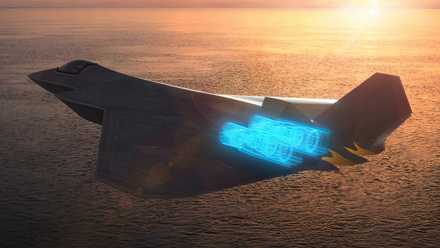
Rolls-Royce Recycles and Reuses Tornado Parts in Tempest
Additive manufacturing is being used to build Rolls-Royce turbofans.
The GCAP/Tempest’s Success Is Not Yet Assured

For now, it seems the GCAP/Tempest is the world’s only credible, fully-funded sixth-generation program designed as a multirole platform useful to a range of air forces. The US F-47 appears highly niche, and the US’s willingness to export the jet remains questionable. Before the US banned the highly specialized F-22, Japan, Israel, and Australia were considered three of the very few potential customers.
But it should be emphasized that the GCAP is far from being out of the proverbial woods yet. As of the time of writing, its funding is being negotiated in the UK, with some suggesting there are voices to delay the program. On June 15th, Breaking Defense reported that “the UK says a sixth-generation fighter contract is to be signed in a matter of weeks.” However, this is taking place in the context of UK Defence Secretary John Healey and Armed Forces Minister Al Carns resigning in protest in June.
They said the UK was not committing enough funds to defence. While concerning, the GCAP remains the most ambitious next-generation program for the export market with committed funding. The first demonstrator is now being built by BAE Systems and is expected to fly in 2027. Japan remains adamant that it wants the jet to be in service by 2035, which would easily make it the first non-US and non-Chinese 6th-generation fighter to enter service.