dailynewsnblog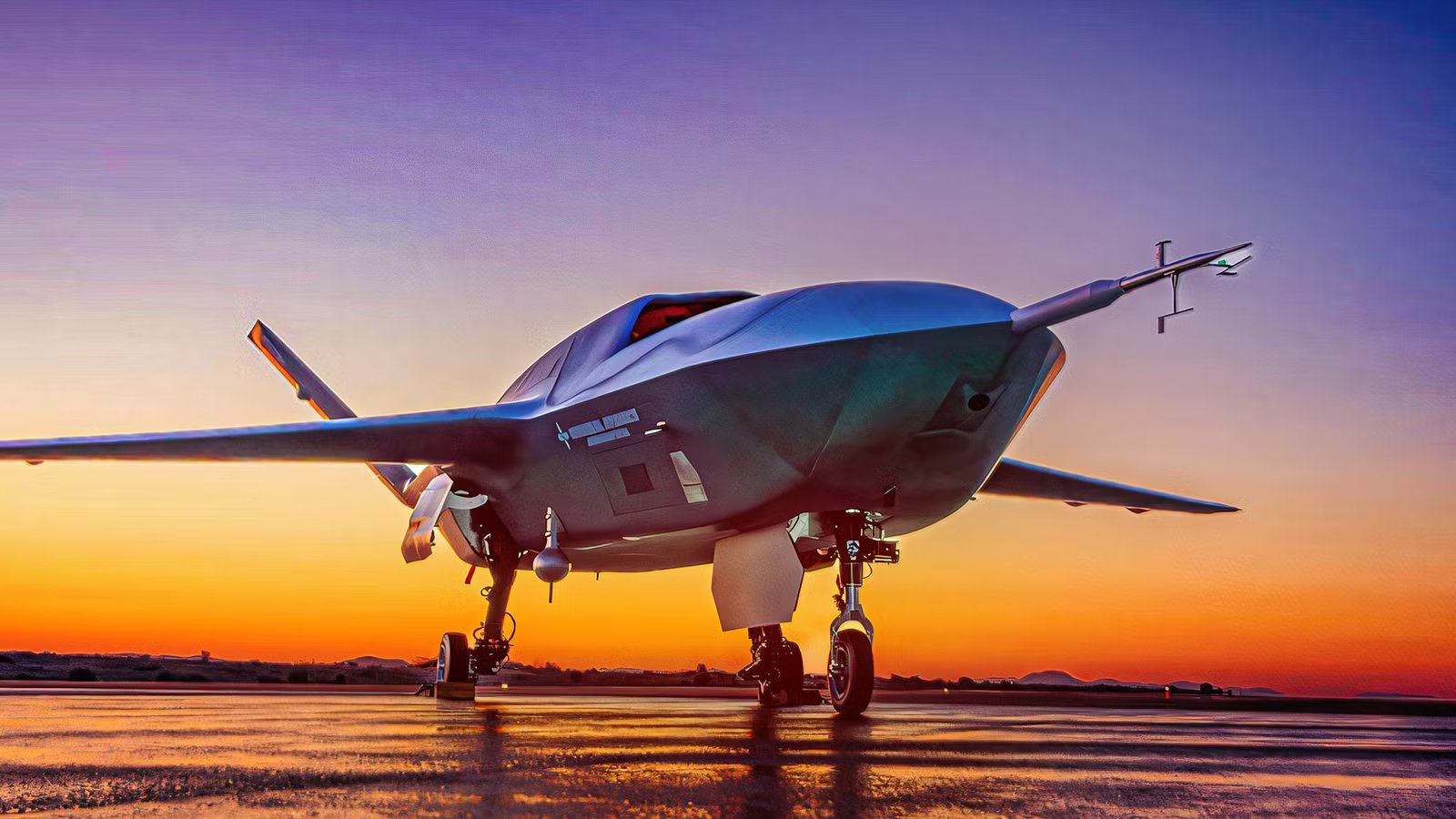
In the era of exponentially advancing weapons technology, the US Air Force is transitioning to a completely different fleet strategy that will ensure its force is ready for any challenge on the battlefield of tomorrow. As opposed to maintaining an armada of aircraft, the USAF will transform its flight line into a ‘system of systems’ with crewed stealth fighter jets and bombers as the central platforms in a fleet supported by swarms of advanced drones.
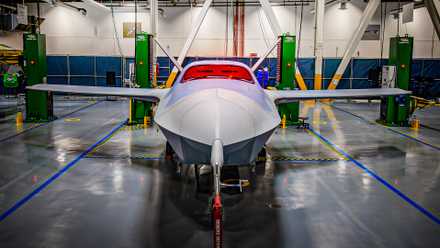
The Collaborative Combat Aircraft (CCA), also known as the Loyal Wingman, is nearing the final stages of testing to imminently begin pre-production. These advanced uncrewed aircraft will be able to navigate on their own thanks to artificial intelligence or be controlled by operators on the ground, and even aircrew in other aircraft through remote pilot connections. Although they will offer a fraction of the performance and lethality of the exquisite fifth and sixth-generation crewed airframes, their much lower cost will make them expendable support assets.
This is crucial to the Air Force’s strategy for agile combat employment in the modern era against both near-peer conventional adversaries, like the People’s Republic of China, and asymmetrical combatants, such as Iran. Combining the qualities of both ends of the spectrum, with high-tech super fighters on the high end and attritable drones on the low end, will give the service mission flexibility as well as the resilience to dominate virtually any combat scenario.
Affordable Mass For The Air Force In The 21st Century

The Pentagon wants to build an Air Force that can do it all without breaking the budget. That means solving a critical capacity crisis, which has been further exacerbated by production issues with both the current fifth-generation Lockheed Martin F-35 Lightning II and the slow development of sixth-generation fighter jets to succeed it. The Air Force can buy hundreds of CCAs rapidly, utilizing modular open architectures to bypass the slow, decades-long acquisition cycles of crewed jets.
At $80M+ per plane, losing an F-35 or a sixth-generation F-47 is a strategic blow. At $25M, a CCA is attritable, meaning it is inexpensive enough to be risked and lost in combat without causing financial or operational ruin. CCAs force the enemy to expend expensive, advanced air-defense missiles to shoot down low-cost, uncrewed targets, flipping the financial balance of war in favor of the US. By keeping CCAs cheap, the Air Force solves its numbers problem. By integrating them into the system of systems, it solves its vulnerability problem.
The Air Force does not view the CCA as a standalone weapon but rather the ‘linebackers’ for F-35s, F-47s, and B-21s acting as the ‘quarterback’ in the kill web of a highly contested battle space. The crewed jets will act as high-level mission managers, directing waves of forward-deployed CCAs to draw enemy fire, map out radar networks, or strike deeply buried targets, according to CSIS.
Even legacy platforms like the Boeing F-15EX Eagle II 4.5-generation fighter will contribute to the new ‘high-low’ fleet hierarchy. These older and high-performance jets lack stealth but act as missile trucks while CCAs provide the expendable mass and forward presence to win the fight. Combining the qualities of these complementary aircraft will make the USAF a well-rounded force for any challenge that tomorrow brings, whether it’s tactical or budgetary.
Pivot To The Pacific: The PLAAF’s Emerging Air Power

Building a force exclusively out of human-crewed, multi-million-dollar stealth fighters is unsustainable against a peer threat like China’s massive industrial engine. The People’s Liberation Army Air Force successfully test-flew two prototypes of sixth-generation fighter jets in 2024, and the Department of Defense quickly awarded a contract to Boeing to develop the F-47 Next Generation Air Dominance in early 2025.
Although this program is pursuing an ambitious iterative prototyping schedule with the first flying example expected in 2028 and reports of flight demonstrators being seen over Area 51 just weeks ago, it is very unlikely that a production-ready aircraft would be airworthy until 2030. At least the US Air Force has its most capable platforms years away, while the current F-35 Joint Strike Fighter is consistently below expectations with a low fleet readiness due to technological hurdles that continue to pop up.
Bringing CCA drones online rapidly would greatly improve the mission capability of the entire force until these two programs are fully mature. China sparked a major impetus in the West to develop advanced tactical aircraft due to the perception that Western defense contractors were losing their edge. In that time, China has not produced any noticeable progress on those two prototypes; however, it is ramping up production of its fifth-generation Chengdu J-20 Mighty Dragon stealth fighter to epic proportions that could eventually match the JSF multinational production line.
The Impending Reboot Of The US Air Force
America’s Air Force has a paradigm change on the horizon.
Next Generation Close Air Support

The F-35 and the new F-47 will fundamentally change the USAF tactical operations and force structure by shifting from a traditional ‘one manned jet per mission’ approach to a highly integrated system of systems centered around manned-unmanned teaming and network-centric warfare. The open-systems architecture and built-to-adapt design philosophy of the new aircraft enable quick hardware and software upgrades, which will also help these platforms address changing threats more quickly than legacy aircraft.
Sensor fusion is already a strong suit for the F-35, providing pilots with a comprehensive view of the battlefield. With AI-assisted processing and sophisticated networking, the F-47 will advance this and enable quick decision-making throughout the entire integrated force with satellites, drones, and other jets.
Both fighters will be able to command swarms of drones, enhancing operational effectiveness without endangering pilots. In complex environments, this results in a much shorter ‘kill chain’ that allows US air crews to be further removed from the line of fire while delivering better air support to troops on the ground.
Compete To Succeed: The Loyal Wingman Fly-Off

The US Air Force is currently conducting a dual-vendor production competition to pick out the first generation of its CCA drones. Instead of assigning a single ‘winner-take-all’ contract that would put all its eggs in one basket, like the F-35, it is distributing the production to multiple companies. Currently, the General Atomics FQ-42 Dark Merlin and the Anduril Industries FQ-44 Fury are the final contestants. At the same time, the Hermeus Quarterhorse supersonic prototype CCA is also conducting testing.
Currently, the Dark Merlin and the Fury are on track to achieve production-level refinement and stability to fly as subsonic wingmen to the F-15EX and the F-35 in the near future. Pre-production assembly lines are being established this year, with the Air Force intending to deploy early combat-ready examples in 2027 to begin operational evaluation and testing. If the drones can complete all the validation expected of their systems, they can potentially enter active duty service alongside fighter squadrons by the end of the decade.
Specification | FQ-44 Fury (Anduril) | FQ-42 Dark Merlin (GA) | Quarterhorse Mk 2.1 (Hermeus) |
|---|---|---|---|
Estimated Unit Cost | $25 million | $25 million | TBD |
Wingspan | 17 feet (5.2 m) | 29.5 feet (9.0 m) | TBD Delta wing |
Max Takeoff Weight | 5000 pounds (2268 kg) | 17637 pounds (8000 kg) | 20000 pounds class (9071 kg class) |
Top Flight Speed | Mach 1.2 | Mach 1.0+ | Mach 3.0+ |
Powerplant Thrust | 4000 pounds of thrust (17.8 kN) | TBD medium-class turbofan | 29000 pounds of thrust (129.0 kN) |
The Quarterhorse, on the other hand, is currently conducting hypersonic testing to de-risk hypersonic technologies. Simultaneously, the Air Force Materiel Command is working to refine rapid iterative development cycles as a blueprint for future aerospace projects. The drone has already achieved Mach 1.21 with its unique turbine-based combined cycle engine, with the goal of pushing that up to Mach 3.0 by 2027.
If the Quarterhorse is successful in conducting reliable high-speed autonomous flight, its successor, the Darkhorse, could potentially fly alongside the F-47 as a follow-on program to the current increment of CCA drones.
The US Air Force Wants 1,000 AI Drones To Fly Alongside Its F-35s
The grand plan for an uncrewed air force.
The Aftermath Of Operation Epic Fury

The war in Ukraine served as the initial catalyst for the US Air Force’s doctrinal shift toward uncrewed systems, but Operation Epic Fury has solidified that slow transition into an absolute, non-negotiable paradigm change. While the US was able to observe and analyze the battlefield conditions during the Russian invasion of Ukraine, OEF brought the tactical and strategic lessons close to home in quick order. Together, the two conflicts illustrated the issue with Western military doctrine relying on low-volume, high-cost, ‘exquisite’ weapons platforms.
Before Western forces were directly tested, the war in Ukraine shattered decades of military assumptions regarding air superiority and electronic warfare. The density of modern, cheap surface-to-air missiles and man-portable air defense systems functionally neutralized traditional manned air superiority. Neither Russia nor Ukraine could achieve total control of the skies. Meanwhile, during OEF, the US expended roughly half of its reserve of multimillion-dollar sophisticated missiles like the Patriot and THAAD to shoot down cheap Shahed suicide drones, according to CSIS.
During the OEF campaign, the massive volume of Iran’s asymmetric retaliation overwhelmed localized defenses. The Jerusalem Post reported that one American F-15 pilot who was shot down described encountering a dense, interconnected ‘jellyfish’ formation of Iranian drones. The high-low fleet will solve both the strategic need to have a cutting-edge Air Force that can deter advanced adversaries like Russia and China while also delivering the affordable mass required to deal with a guerrilla-style enemy such as Iran.