dailynewsnblog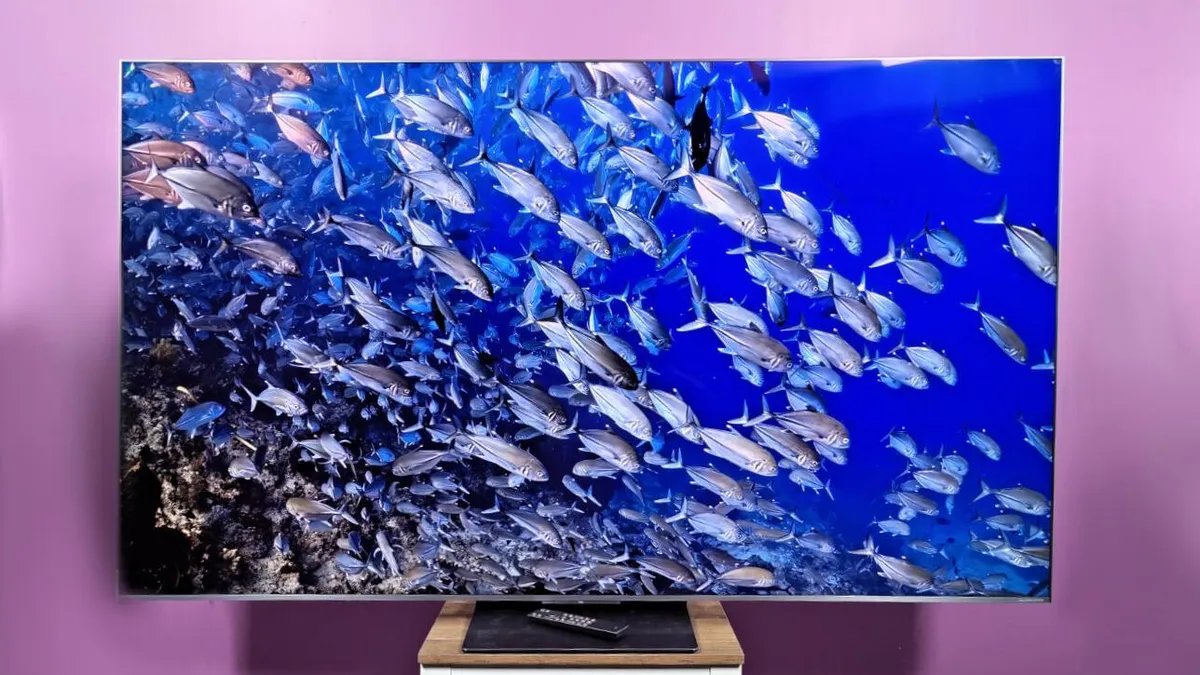

Pros
- One of the brightest TVs yet
- Excellent color and contrast
- Simply great for gaming
Cons
- LG C6 OLED has better contrast at the same price
- More reflective of ambient light than its peers
In 2026, every TV manufacturer is betting on a new technology to help wring extra colors out of your favorite content. That technology is known by various names, the best of which is Micro RGB, and it uses a backlight made of red, green and blue LEDs. While TCL has its own Micro RGB TV this year, the company is ushering people toward its own color-enhancing solution instead: Super Quantum Dots, or in TCL’s nomenclature, SQD-Mini LED.
I’ve tested most of the major TVs of 2026 and can say that picture quality has been a mixed bag. In general, there haven’t been the usual improvements year over year, with the LG G6 and Samsung S95H even taking a small step backwards. The TCL QM8L is one of the few TVs that’s demonstrably better than its predecessor. Picture quality is once again top-notch for an LED TV, and it’s also one of the brightest TVs ever produced. If you want the best LED TV for your money in 2026, this is it.
As I write this, the 75-inch QM8L costs just $200 more than the 65-inch model, making it well worth the upgrade if you have the space. That said, if you’re deciding between this TV and an OLED, and you can get a comparable OLED for less, buy the OLED.
Read more: Best TVs of 2026
TCL QM8L series TV sizes
I performed hands-on testing of the picture quality of the 75-inch TCL QM8L, but this review also applies to the other screen sizes in the series. All sizes have similar specifications and should offer similar picture quality.
Little black box
The TCL QM8L remote includes a voice assistant button.
I tested six 2026 TVs head-to-head, including the TCL QM8L. But one thing this lineup hammered home is that most TVs look the same. It was difficult to tell them apart without getting close enough to see the brand. If you’re a TV manufacturer, there’s only so much you can do to make your TV’s design stand out — it’s still just a black oblong!
The Samsung S95H went a different route this year and added a 1-inch silver bezel, but there’s none of that on the TCL QM8L. In effect, the company has gone the other way from a bezel, with what it calls a “Zero Border.” The way TCL has chosen to nab potential buyers instead is by making its screen ridiculously bright, which I’ll get into shortly.
The TV comes with a silver pedestal stand to complete its minimalist look but does nothing to help differentiate it from the other TVs with silvers stands, such as the LG C6, for instance.
The TCL comes with a hefty silver remote that has all the features you’d want, including a dedicated input button — and maybe one you don’t: a microphone button for the onboard assistant.
Halo control takes center stage for TCL
While a TV’s design can be an important aspect, it’s the picture quality we’re all here for. For the past few years, competitors Hisense and TCL have gone tit for tat, with similar pricing and technologies in their flagship TVs. Yet in 2026, Hisense tried something new with Micro RGB, while the QM8L sticks with a more traditional QLED design — an approach TCL has proven it’s very good at.
The TCL QM8L is a 4K LCD TV that offers two main technology upgrades. There’s TCL’s SQD-Mini LED with its mini-LED backlight and Super Quantum Dots for extra-wide color. And then there’s the company’s Halo Control, which is designed to prevent light leakage and backlight bleed.
Full-array local dimming, as featured on the QM8L, allows the screen to dim and brighten different areas simultaneously, and this ultimately increases contrast and therefore picture quality. For the past few years, the QM8 TVs have been piling on more and more dimming zones, but this year, there’s actually a reduction. While the QM8K had over 5,000 local dimming zones, the QM8L now has over 4,000. Does this make much of a difference? I wasn’t able to watch the two TVs next to each other, but I doubt you’d spot any discrepancies in most content. One of the reasons for the QM8L having fewer dimming zones could be a result of its much, much higher brightness — a claimed 5,000 nits.
The TV includes compatibility with Dolby Vision IQ (with room lighting detection), HDR10-plus, HDR10, HLG and Dolby Atmos. If you connect a console or PC to the TV via its HDMI 2.1 ports, you’ll find that you have variable refresh rate capability, as well as a 144Hz native refresh rate.
The 2026 model also includes a Filmmaker mode, which is a helpful inclusion for people who want the best picture quality with less fiddling around.
The TV has a speaker system by Bang & Olufsen, which is Dolby Atmos-ready. The TV is also compatible with the company’s version of Dolby FlexConnect, but not LG’s (unless you buy the LG soundbar, but that also works with any TV).
Connections include:
- RF Input with ATSC and ATSC 3.0 tuners
- Ethernet
- USB 2.0 (x2), USB 3.0
- HDMI (x4, one with eARC support)
- Optical digital audio
Gemini on your TV
The TCL QM8L Google TV interface offers plenty of entertainment options.
After Roku took development of most of its TVs in-house, the majority of TCLs now include Google’s smart TV interface instead. The thing I like about Google TV is that it does a great job of surfacing content in a similar way to Amazon Fire TV. You can also set up shortcuts to include your favorite apps.
The latest version of Google TV incorporates the Gemini assistant and deeper integration with a Nest-based smart home. For example, you can ask Gemini questions using the remote or view your security cameras on the Home tab. Unlike some TVs, such as the Samsung S95H, which have an always-on microphone built into the TV, the TCL relies on the microphone in the remote. You can also control the TV using a separate Gemini or Nest device.
TCL’s Google TV interface is relatively zippy. If you want more power or customization, you could add a separate set-top from Apple or Roku, although most people won’t need to. Roku has undergone some changes to its interface this year, but I still prefer Google’s layout.
TCL QM8L vs. Hisense UR8 vs. LG G6 vs. Sony Bravia 9 II: Picture quality compared
In my original write-up of the TCL QM8L from CES 2026, I said this TV could put Micro RGB televisions to shame. Having tested it against three high-profile Micro RGB TVs, I can now say that this is indeed the case. For instance, the TCL was able to keep up with the Sony Bravia 9 II TV in terms of picture quality, but for half the price. The Sony did have plenty of saturation and punchy contrast, but those strengths comes at a steep price.
In a side-by-side comparison of the QM8L, U7, UR8 and Sony, all playing the debut episode of Squid Game, the two Hisense TVs stood out — but for different reasons. The episode follows Seong Gi-hun (Lee Jung-jae) down dingy streets as he struggles to support his gambling habit. The UR8 looked overly green in the gray-cast scenes compared with the others, while the U7 was very bright but a little undersaturated. The QM8L and the Sony Bravia 9 II looked the best here, especially in the darker scenes, with similarly accurate color.
At the start of the Netflix remake of All Quiet on the Western Front, there’s a shot of foxes in a den. The TCL TV was able to show them with appropriate levels of shadow, and the Hisense showed the faces of the foxes the clearest. While the QM8 finely balanced the color and contrast, it was the ultrabright U7 that showed more of what was going on in the shadows.
With the Spears & Munsil 4K HDR test disc in play, the TCL preserved the white detail of a snowy scene with white horses. During the shots of sunsets, the TCL maintained the warmer colors of the orange-red sun and clouds. Compared to the LG C6, you can still see the limitations of TCL’s QLED versus OLED. While the C6 looked crisp on the contrasting shots of bright objects on black backgrounds, you can still see some minor haloing along the edges of the TCL, but much less so than with the Hisense UR8.
Bright room
TVs are getting progressively brighter, and the QM8L is one of the brightest I’ve ever tested. It didn’t quite hit 5,000 nits, but at a measured 4,240, it’s still ridiculously bright. While testing the TV with test patterns, I was surprised when a white square appeared on screen — I actually recoiled.
When it came to actual bright room performance, I tested the antireflective coating of all of the assembled TVs together. The TCL came in last, with its slightly reflective sheen. So if you have a window behind you, for instance, you’ll need curtains to reduce any direct reflections. The Sony was the next worst, while the two Hisense TVs and the Samsung R95 had the best anti-reflective coatings.
Gaming
If you’re wondering where a really bright TV can be useful, it’s in gaming — especially on current-gen consoles such as the Xbox Series X and PlayStation 5. I played a bunch of games on Sony, LG, TCL and Samsung TVs and the brightness of the TCL really helped improve immersion.
Gaming response is also one of the areas where the QM8L has improved on the previous generation; its lag scores are some of the fastest at 9.9 milliseconds, and up from an average of its predeccor’s 4 milliseconds. Every millisecond counts when you want an advantage in action gaming.
Settings and picture mode notes
One of the typical color problems that TVs can exhibit is an undersaturation of red. It’s an important color to get right, and is also present in some skin tones. Red looked “right” in HDR gamut coverage. What surprised me was that the measured HDR BT.2020 color gamut wasn’t higher in Filmmaker mode.
While TVs without Super Quantum Dots, such as the LG G6, can get 83% of BT.2020, the QM8L managed less at 77%. However, the difference would probably only be visible to birds of prey, and is not that important right now. There’s a lot of content out there still being enjoyed on DVD, and we’ll all be fine without the billions of colors that come with BT.2020 compatibility. At least for a while.
TCL QM8L picture performance
| Test | Result | Score |
|---|---|---|
| 1080p | ||
| Black luminance (0%) | 0.001 | Good |
| Peak white luminance (SDR) | 333 | Average |
| Avg. gamma (10-100%) | 2.26 | Good |
| Avg. grayscale error (10-100%) | 2.90 | Good |
| Dark gray error (30%) | 2.58 | Good |
| Bright gray error (80%) | 6.99 | Poor |
| Avg. color checker error | 3.83 | Average |
| Avg. saturation sweeps error | 3.00 | Good |
| Avg. color error | 3.14 | Average |
| 1080p/24 Cadence (IAL) | Pass | Good |
| Input lag (Game mode) | 10.87 | Good |
| HDR10 | ||
| Black luminance (0%) | 0.000 | Good |
| Peak white luminance (10% win) | 4240 | Good |
| Gamut % UHDA/P3 (CIE 1976) | 99.53 | Good |
| ColorMatch HDR error | 3.81 | Average |
| Avg. color checker error | 1.95 | Good |
| Input lag (Game mode, 4K HDR) | 9.90 | Good |
| Gamut % BT2020 (CIE 1976) | 76.62 | Average |